What is involved in non-ICSID arbitration?
Like commercial arbitration, investment arbitration outside ICSID Convention can be either
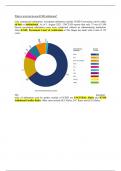
ad hoc or institutional. As of 1 August 2021, UNCTAD reports that only 75 out of 1104
known investment arbitration cases were conducted without an administering institution.
After ICSID, Permanent Court of Arbitration at The Hague has dealt with a total of 179
cases.
The principal
rules of arbitration used by parties outside of ICSID are UNCITRAL Rules and ICSID
Additional Facility Rules. Other rules include SCC Rules, ICC Rules and LCIA Rules.
,What are the key differences between ICSID Convention and ICSID Arbitration?
Regarding the applicable rules of arbitration, the parties’ chosen rules (not the ICSID
Arbitration Rules) will apply.
Awards made outside ICSID Convention are subject to the New York Convention.
Tribunal must consider the State’s public policy when rendering the award.
What are the UNCITRAL Arbitration Rules?
The United Nations Commission on International Trade Law (UNCITRAL) was created by
the General Assembly of the United Nations in 1966. Its principal objective is ‘the promotion
of the progressive harmonization and unification of the law of international trade’1. In April
1976, UNCITRAL adopted the UNCITRAL Arbitration Rules 2, which was meant primarily
for ad hoc arbitration. Later that year, the UN General Assembly endorsed those Rules 3. Its
adoption was facilitated by two factors. In 1981, the US and Iran decided that these rules
would be used by Iran-US Claims Tribunal to adjudicate claims between US nationals and
Iran after the 1979 Islamic Revolution in Iran4. Also, the 1976 UNCITRAL Arbitration Rules
is closely followed by the 1985 UNCITRAL Model Law widely adopted by States.
Furthermore, several arbitration institutions like ICC and LCIA started acting as appointing
authorities providing administrative services under UNCITRAL Arbitration Rules. This was
followed by BITs and MITs including the possibility of arbitration under the UNCITRAL
Rules. As of 1 August 2021, 1,635 BITs provide for investor-state arbitration under
UNCITRAL Rules5.
The 1976 version of the UNCITRAL Rules was updated in 2010 and later in 2013. The 2010
version of the Rules entered into force on 15 August 2010, and the 2013 version of the Rules
entered into force on 1 April 2014. Where an arbitration agreement concluded after 15
August 2010 provides for application of the UNCITRAL Rules, there is a presumption that
the Rules in force, as at the date the arbitration agreement was concluded, will apply.
However, the parties may agree to apply the 1976 Rules, and they will remain relevant to
arbitrations conducted under agreements concluded before 15 August 2010. It should be
noted that the 2013 version of the UNCITRAL Rules is identical to the 2010 version, except
for the addition of Article 1.4 to the 2013 Rules, which expressly incorporates the
UNCITRAL Rules on Transparency in Treaty-based Investor-State Arbitration.
UNCITRAL Rules 2013 incorporates the Rules on Transparency in Treaty-based
Investor-State Arbitration as seen in Article 1.4. Article 1 determines their application
ratione temporis. ‘1. The UNCITRAL Rules on Transparency in Treaty-based Investor-State
Arbitration (“Rules on Transparency”) shall apply to investor-State arbitration initiated under
the UNCITRAL Arbitration Rules pursuant to a treaty providing for the protection of
investments or investors (“treaty”) concluded on or after 1 April 2014 unless the Parties to
the treaty have agreed otherwise.’ ‘2. In investor-State arbitrations initiated under the
UNCITRAL Arbitration Rules pursuant to a treaty concluded before 1 April 2014, these
Rules shall apply only when: (a) The parties to an arbitration (the “disputing parties”) agree
1
UNGA Res 2205 (XXI) (17 December 1966) UN Doc A/RES/2205(WWI), Section I
2
(1976) 15 ILM 702
3
UNGA Res A/RES/31/98 (15 December 1976)
4
Declaration of the Government of the Democratic and Popular Republic of Algeria, Concerning the Settlement
of Claims by the Government of the United States of America and the Government of the Islamic Republic of
Iran, (1981) 20 ILM 230, Article III
5
https://investmentpolicy.unctad.org/international-investment-agreements/iia-mapping#iiaInnerMenu
, to their application in respect of that arbitration; or (b) The Parties to the treaty or, in the case
of a multilateral treaty, the State of the claimant and the respondent State, have agreed after 1
April 2014 to their application.’ Under Article 2, each party must communicate a copy of the
notice of arbitration to UNCITRAL’s ‘Transparency Registry’, which publishes their names,
their economic sector and the relevant treaty. Under Article 3, a large set of documents
(written submissions, parties’ submissions, third party submissions, hearing transcripts,
orders, decisions, awards) should be made available to the public, subject to Article 7’s
exceptions. Under Articles 4 and 5, submissions by third parties and non-disputing States
made be filed if the Tribunal permits them after consulting with the disputing parties. Under
Article 6, Tribunal’s oral hearings shall be public, unless there is a need to protect
confidential information or the procedure’s integrity, or if allowing public access is
unfeasible for logistical reasons.
To encourage the application of the Rules on Transparency, UN General Assembly adopted
the UN Convention on Transparency in Treaty-based Investor-State Arbitration (Mauritius
Convention) on 10 December 2014. It entered into force on 18 October 2017, which allows
for the Rules’ application towards cases arising under those treaties concluded before 1 April
2014, even if not brought under UNCITRAL Rules. As of 1 August 2021, 23 States signed
the Mauritius Convention and 9 states ratified it6.
What are the ICSID Additional Facility Rules?
The ICSID AF Rules comprise a principal set of Rules governing the Additional Facility and
three schedules: Schedule A: Fact-Finding Rules; Schedule B: Conciliation Rules;
Schedule C: Arbitration Rules (‘ICSID AF Arbitration Rules’).
Proceedings
The procedure under ICSID AF Arbitration Rules is similar to the one under ICSID
Convention. Thus, such rules were updated with ICSID Arbitration Rules in 2006. Also, the
ICSID Arbitration Rules include the AF Rules as part of its amendment. But arbitration under
the former is governed by the New York Convention, not ICSID Convention. Under Article
19, proceedings will be held in States that are parties to the New York Convention only.
Other mandatory procedural and substantive rules arising from requirements for arbitral
awards under the seat’s law must be considered by the Tribunal. Article 1 provides that
‘Where the parties to a dispute have agreed that it shall be referred to arbitration under the
Arbitration (Additional Facility) Rules, the dispute shall be settled in accordance with these
Rules, save that if any of these Rules is in conflict with a provision of the law applicable to
the arbitration from which the parties cannot derogate, that provision shall prevail.’ By virtue
of Article 5, the proceedings are governed by Regulations 14-16, 22-30 and 34(1) of the
ICSID Administrative and Financial Regulations. These regulations cover subjects such as
the costs of the proceedings and the role of the ICSID Secretariat in administering the
proceedings.
Disputes submitted to arbitration
Article 2 authorises the Centre to administer the following categories of proceedings between
a State (or constituent subdivision/agency of State) and a national of another State: (a)
conciliation and arbitration proceedings for the settlement of legal disputes arising directly
6
https://uncitral.un.org/en/texts/arbitration/conventions/transparency/status
Like commercial arbitration, investment arbitration outside ICSID Convention can be either
ad hoc or institutional. As of 1 August 2021, UNCTAD reports that only 75 out of 1104
known investment arbitration cases were conducted without an administering institution.
After ICSID, Permanent Court of Arbitration at The Hague has dealt with a total of 179
cases.
The principal
rules of arbitration used by parties outside of ICSID are UNCITRAL Rules and ICSID
Additional Facility Rules. Other rules include SCC Rules, ICC Rules and LCIA Rules.
,What are the key differences between ICSID Convention and ICSID Arbitration?
Regarding the applicable rules of arbitration, the parties’ chosen rules (not the ICSID
Arbitration Rules) will apply.
Awards made outside ICSID Convention are subject to the New York Convention.
Tribunal must consider the State’s public policy when rendering the award.
What are the UNCITRAL Arbitration Rules?
The United Nations Commission on International Trade Law (UNCITRAL) was created by
the General Assembly of the United Nations in 1966. Its principal objective is ‘the promotion
of the progressive harmonization and unification of the law of international trade’1. In April
1976, UNCITRAL adopted the UNCITRAL Arbitration Rules 2, which was meant primarily
for ad hoc arbitration. Later that year, the UN General Assembly endorsed those Rules 3. Its
adoption was facilitated by two factors. In 1981, the US and Iran decided that these rules
would be used by Iran-US Claims Tribunal to adjudicate claims between US nationals and
Iran after the 1979 Islamic Revolution in Iran4. Also, the 1976 UNCITRAL Arbitration Rules
is closely followed by the 1985 UNCITRAL Model Law widely adopted by States.
Furthermore, several arbitration institutions like ICC and LCIA started acting as appointing
authorities providing administrative services under UNCITRAL Arbitration Rules. This was
followed by BITs and MITs including the possibility of arbitration under the UNCITRAL
Rules. As of 1 August 2021, 1,635 BITs provide for investor-state arbitration under
UNCITRAL Rules5.
The 1976 version of the UNCITRAL Rules was updated in 2010 and later in 2013. The 2010
version of the Rules entered into force on 15 August 2010, and the 2013 version of the Rules
entered into force on 1 April 2014. Where an arbitration agreement concluded after 15
August 2010 provides for application of the UNCITRAL Rules, there is a presumption that
the Rules in force, as at the date the arbitration agreement was concluded, will apply.
However, the parties may agree to apply the 1976 Rules, and they will remain relevant to
arbitrations conducted under agreements concluded before 15 August 2010. It should be
noted that the 2013 version of the UNCITRAL Rules is identical to the 2010 version, except
for the addition of Article 1.4 to the 2013 Rules, which expressly incorporates the
UNCITRAL Rules on Transparency in Treaty-based Investor-State Arbitration.
UNCITRAL Rules 2013 incorporates the Rules on Transparency in Treaty-based
Investor-State Arbitration as seen in Article 1.4. Article 1 determines their application
ratione temporis. ‘1. The UNCITRAL Rules on Transparency in Treaty-based Investor-State
Arbitration (“Rules on Transparency”) shall apply to investor-State arbitration initiated under
the UNCITRAL Arbitration Rules pursuant to a treaty providing for the protection of
investments or investors (“treaty”) concluded on or after 1 April 2014 unless the Parties to
the treaty have agreed otherwise.’ ‘2. In investor-State arbitrations initiated under the
UNCITRAL Arbitration Rules pursuant to a treaty concluded before 1 April 2014, these
Rules shall apply only when: (a) The parties to an arbitration (the “disputing parties”) agree
1
UNGA Res 2205 (XXI) (17 December 1966) UN Doc A/RES/2205(WWI), Section I
2
(1976) 15 ILM 702
3
UNGA Res A/RES/31/98 (15 December 1976)
4
Declaration of the Government of the Democratic and Popular Republic of Algeria, Concerning the Settlement
of Claims by the Government of the United States of America and the Government of the Islamic Republic of
Iran, (1981) 20 ILM 230, Article III
5
https://investmentpolicy.unctad.org/international-investment-agreements/iia-mapping#iiaInnerMenu
, to their application in respect of that arbitration; or (b) The Parties to the treaty or, in the case
of a multilateral treaty, the State of the claimant and the respondent State, have agreed after 1
April 2014 to their application.’ Under Article 2, each party must communicate a copy of the
notice of arbitration to UNCITRAL’s ‘Transparency Registry’, which publishes their names,
their economic sector and the relevant treaty. Under Article 3, a large set of documents
(written submissions, parties’ submissions, third party submissions, hearing transcripts,
orders, decisions, awards) should be made available to the public, subject to Article 7’s
exceptions. Under Articles 4 and 5, submissions by third parties and non-disputing States
made be filed if the Tribunal permits them after consulting with the disputing parties. Under
Article 6, Tribunal’s oral hearings shall be public, unless there is a need to protect
confidential information or the procedure’s integrity, or if allowing public access is
unfeasible for logistical reasons.
To encourage the application of the Rules on Transparency, UN General Assembly adopted
the UN Convention on Transparency in Treaty-based Investor-State Arbitration (Mauritius
Convention) on 10 December 2014. It entered into force on 18 October 2017, which allows
for the Rules’ application towards cases arising under those treaties concluded before 1 April
2014, even if not brought under UNCITRAL Rules. As of 1 August 2021, 23 States signed
the Mauritius Convention and 9 states ratified it6.
What are the ICSID Additional Facility Rules?
The ICSID AF Rules comprise a principal set of Rules governing the Additional Facility and
three schedules: Schedule A: Fact-Finding Rules; Schedule B: Conciliation Rules;
Schedule C: Arbitration Rules (‘ICSID AF Arbitration Rules’).
Proceedings
The procedure under ICSID AF Arbitration Rules is similar to the one under ICSID
Convention. Thus, such rules were updated with ICSID Arbitration Rules in 2006. Also, the
ICSID Arbitration Rules include the AF Rules as part of its amendment. But arbitration under
the former is governed by the New York Convention, not ICSID Convention. Under Article
19, proceedings will be held in States that are parties to the New York Convention only.
Other mandatory procedural and substantive rules arising from requirements for arbitral
awards under the seat’s law must be considered by the Tribunal. Article 1 provides that
‘Where the parties to a dispute have agreed that it shall be referred to arbitration under the
Arbitration (Additional Facility) Rules, the dispute shall be settled in accordance with these
Rules, save that if any of these Rules is in conflict with a provision of the law applicable to
the arbitration from which the parties cannot derogate, that provision shall prevail.’ By virtue
of Article 5, the proceedings are governed by Regulations 14-16, 22-30 and 34(1) of the
ICSID Administrative and Financial Regulations. These regulations cover subjects such as
the costs of the proceedings and the role of the ICSID Secretariat in administering the
proceedings.
Disputes submitted to arbitration
Article 2 authorises the Centre to administer the following categories of proceedings between
a State (or constituent subdivision/agency of State) and a national of another State: (a)
conciliation and arbitration proceedings for the settlement of legal disputes arising directly
6
https://uncitral.un.org/en/texts/arbitration/conventions/transparency/status