Topic 1: Studying Culture (CH 1 & 2)
Lecture 1:
What is Culture?
• Concepts is used to cover everything and nothing
• Culture is broadly seen as a shared and learned world of experiences, meanings,
values and understandings which are expressed and reproduced partly in symbolic
form.
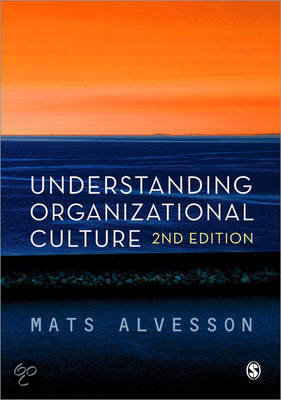
o Alvesson
• Culture as Social and Taken-for-granted
o culture is ‘done’ without anyone really thinking about it
o not ‘inside’ people’s heads, but ‘between’ people
o it is not fixed, but situationally adaptive
o shared interpretations reduce uncertainties
What is Organizational Culture?
• Shared assumptions about organizational culture
o related to history/ tradition
o collectively shared by members of a group
o to do with meanings, understandings, beliefs
o some depth
o difficult to grasp and must be interpreted
o emotional rather than strictly rational
o helps to understand richness of organizational life
• Most significant concepts of organizational culture
o Symbols
§ words, actions, material items that stand for something else
§ rich in meaning – calls for interpretation
§ collective (vs private) symbolism of interest
o Meanings
§ how an object or utterance is interpreted
§ makes more interpretations more homogeneous
§ socially shared meanings are of interest
• Edgar Schein’s Model of Organizational Culture (Iceberg)
o What we see – Artifacts (physical, behavioral, verbal)
§ physical – i.e., buildings, logo dress code
§ behavioral – i.e., traditions, rituals, rewards
§ verbal – i.e., stories, jargon, jokes
o What we can talk about – Values (strategies, goals, philosophies)
§ i.e., social principles, ideals, ethical code -> emotionally charged
o What we take for granted – Basic Assumptions (unconscious beliefs, how we
perceive, think, feel)
§ i.e., assumptions about human nature (people motivated vs lazy)
§ i.e., human relationships (competitive vs cooperative)
§ i.e., truth, reality, knowledge, time
• How to study organizational culture – three interests for studying a phenomenon
o Technical Interest – “improve efficiency and performance”
, § control organizational culture
§ improve organizational performance and effectiveness
o Practical-hermeneutic Interest – “knowledge for the sake of knowledge”
§ understand how shared meaning is created in organizational
communities
§ what the ‘natives’ think they are up to
o Emancipatory Interest – “protect from negative effects”
§ targets taken-for-granted beliefs and instrumentality
§ not interested in disadvantages for organizations, but for employees
Lecture 2:
Metaphors
• describes an object or person in a way that is not literally true
• states that one thing is (like) another thing
• when taken literally, it becomes absurd
• it transfers a term from one system of meaning to another
• metaphor leads to a particular way f seeing/ interpreting
• brings valuable insights, but is also one-sided, incomplete, biased and potentially
misleading
• No right or wrong perspective, each metaphor illuminates and hides
o solution: we need multiple metaphors/ perspectives
o images of organizations – Morgan
§ machine, organism, brain, culture, political system, psychic prison,
change/flux, domination
Culture: Critical Variable vs Root Metaphor
• Culture as variable
o culture is one of the several sub-systems making up the organization
o main idea: the organization has a culture (that can be measured)
o aim: improve organizations
o implications: cultural values can be instrumentalized
o aspired outcomes: getting the culture ‘right’ in order to increase loyalty and
productivity
• Culture as root metaphor
o culture is not outside anything: it permeates the entire organization
o main idea: the organizational is a culture (or as if it is a culture)
o aim: explore organizations as socially shared experience
o implications: nothing is ‘outside’ culture
o aspired outcomes: reflection versus increased effectiveness
How does Alvesson think about culture as metaphor:
• metaphors – help to think and talk about complex phenomena
• Culture metaphor: richer view of what goes on
o thoughts, feelings, values, actions
• Limitation: culture can become too general and too vague
• It should not be seen as a ‘final image’; need to go further to sharpen the perspective
• draw on other metaphors for culture
Lecture 1:
What is Culture?
• Concepts is used to cover everything and nothing
• Culture is broadly seen as a shared and learned world of experiences, meanings,
values and understandings which are expressed and reproduced partly in symbolic
form.
o Alvesson
• Culture as Social and Taken-for-granted
o culture is ‘done’ without anyone really thinking about it
o not ‘inside’ people’s heads, but ‘between’ people
o it is not fixed, but situationally adaptive
o shared interpretations reduce uncertainties
What is Organizational Culture?
• Shared assumptions about organizational culture
o related to history/ tradition
o collectively shared by members of a group
o to do with meanings, understandings, beliefs
o some depth
o difficult to grasp and must be interpreted
o emotional rather than strictly rational
o helps to understand richness of organizational life
• Most significant concepts of organizational culture
o Symbols
§ words, actions, material items that stand for something else
§ rich in meaning – calls for interpretation
§ collective (vs private) symbolism of interest
o Meanings
§ how an object or utterance is interpreted
§ makes more interpretations more homogeneous
§ socially shared meanings are of interest
• Edgar Schein’s Model of Organizational Culture (Iceberg)
o What we see – Artifacts (physical, behavioral, verbal)
§ physical – i.e., buildings, logo dress code
§ behavioral – i.e., traditions, rituals, rewards
§ verbal – i.e., stories, jargon, jokes
o What we can talk about – Values (strategies, goals, philosophies)
§ i.e., social principles, ideals, ethical code -> emotionally charged
o What we take for granted – Basic Assumptions (unconscious beliefs, how we
perceive, think, feel)
§ i.e., assumptions about human nature (people motivated vs lazy)
§ i.e., human relationships (competitive vs cooperative)
§ i.e., truth, reality, knowledge, time
• How to study organizational culture – three interests for studying a phenomenon
o Technical Interest – “improve efficiency and performance”
, § control organizational culture
§ improve organizational performance and effectiveness
o Practical-hermeneutic Interest – “knowledge for the sake of knowledge”
§ understand how shared meaning is created in organizational
communities
§ what the ‘natives’ think they are up to
o Emancipatory Interest – “protect from negative effects”
§ targets taken-for-granted beliefs and instrumentality
§ not interested in disadvantages for organizations, but for employees
Lecture 2:
Metaphors
• describes an object or person in a way that is not literally true
• states that one thing is (like) another thing
• when taken literally, it becomes absurd
• it transfers a term from one system of meaning to another
• metaphor leads to a particular way f seeing/ interpreting
• brings valuable insights, but is also one-sided, incomplete, biased and potentially
misleading
• No right or wrong perspective, each metaphor illuminates and hides
o solution: we need multiple metaphors/ perspectives
o images of organizations – Morgan
§ machine, organism, brain, culture, political system, psychic prison,
change/flux, domination
Culture: Critical Variable vs Root Metaphor
• Culture as variable
o culture is one of the several sub-systems making up the organization
o main idea: the organization has a culture (that can be measured)
o aim: improve organizations
o implications: cultural values can be instrumentalized
o aspired outcomes: getting the culture ‘right’ in order to increase loyalty and
productivity
• Culture as root metaphor
o culture is not outside anything: it permeates the entire organization
o main idea: the organizational is a culture (or as if it is a culture)
o aim: explore organizations as socially shared experience
o implications: nothing is ‘outside’ culture
o aspired outcomes: reflection versus increased effectiveness
How does Alvesson think about culture as metaphor:
• metaphors – help to think and talk about complex phenomena
• Culture metaphor: richer view of what goes on
o thoughts, feelings, values, actions
• Limitation: culture can become too general and too vague
• It should not be seen as a ‘final image’; need to go further to sharpen the perspective
• draw on other metaphors for culture