lOMoARcPSD|3013804
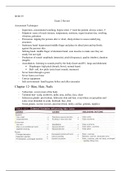
Essentials of Pathophysiology - Exam 1 review sheet
updated
Essentials of Pathophysiology (Rasmussen University)
, lOMoARcPSD|3013804
MODULE 1
Essentials of Pathophysiology – Exam #1 Review Sheet
Covers Modules 1, 2, and 3 – Chapters 1, 2, 6, 12, and 13
1. Define pathophysiology.
Pathophysiology is the study of abnormalities in physiologic functioning of living beings and seeks to
reveal physiologic responses of organisms to disruptions in its internal or external environment
What does the study of pathophysiology include?
a. Etiology - study of causes or reasons for phenomena
Identifies causal factors that, acting in concert, provoke a particular disease or injury
Idiopathic – unknown cause or origin
b. Pathogenesis - development or evolution of disease, from initial stimulus to ultimate
expression of manifestations of the disease
Affected by time, quantity, location, and morphologic changes
c. Clinical manifestations –
Signs: objective or observed manifestation of disease
Example – rash, change in temperature
Symptoms: subjective feeling of abnormality in the body
Example – pain, nausea
d. Treatment implications - Understanding the etiology, pathogenesis, and clinical
consequences of a particular disorder/disease/illness may determine which
treatments could be helpful.
▪ Cultural considerations - each culture defines health and illness in a manner that
reflects their experience
▪ Age differences - a normal value for a person at one age may not be normal for a
person at another age
▪ Gender differences - a normal value for men may not be normal for women or vice
versa; relevant in both health and disease
▪ Comorbidities – additional diseases/conditions the individual is facing
2. Review the difference between signs and symptoms/objective versus subjective data
a. Signs: objective or observed manifestation of disease (Dr. can see)
Example – rash, change in temperature
b. Symptoms: subjective feeling of abnormality in the body (patient can feel)
Example – pain, nausea
3. What is epidemiology? - study of the patterns of disease involving populations
Examining the occurrence, incidence, prevalence, transmission, and distribution of diseases in
large groups of populations/people
Review the different levels of disease prevention such as primary, secondary, and tertiary as well as
examples for each.
a. Primary - altering susceptibility or reducing exposure for susceptible persons
Focus is on disease prevention
Example – Immunizations
b. Secondary - early detection, screening, and management of disease
Example – cancer screening, performing monthly breast examinations
c. Tertiary – preventing further complications from the initial disease/disorder
Focuses on rehabilitation, supportive care, reducing disability, and restoring effective functioning
Example – PT/OT following stroke
Essentials of Pathophysiology - Exam 1 review sheet
updated
Essentials of Pathophysiology (Rasmussen University)
, lOMoARcPSD|3013804
MODULE 1
Essentials of Pathophysiology – Exam #1 Review Sheet
Covers Modules 1, 2, and 3 – Chapters 1, 2, 6, 12, and 13
1. Define pathophysiology.
Pathophysiology is the study of abnormalities in physiologic functioning of living beings and seeks to
reveal physiologic responses of organisms to disruptions in its internal or external environment
What does the study of pathophysiology include?
a. Etiology - study of causes or reasons for phenomena
Identifies causal factors that, acting in concert, provoke a particular disease or injury
Idiopathic – unknown cause or origin
b. Pathogenesis - development or evolution of disease, from initial stimulus to ultimate
expression of manifestations of the disease
Affected by time, quantity, location, and morphologic changes
c. Clinical manifestations –
Signs: objective or observed manifestation of disease
Example – rash, change in temperature
Symptoms: subjective feeling of abnormality in the body
Example – pain, nausea
d. Treatment implications - Understanding the etiology, pathogenesis, and clinical
consequences of a particular disorder/disease/illness may determine which
treatments could be helpful.
▪ Cultural considerations - each culture defines health and illness in a manner that
reflects their experience
▪ Age differences - a normal value for a person at one age may not be normal for a
person at another age
▪ Gender differences - a normal value for men may not be normal for women or vice
versa; relevant in both health and disease
▪ Comorbidities – additional diseases/conditions the individual is facing
2. Review the difference between signs and symptoms/objective versus subjective data
a. Signs: objective or observed manifestation of disease (Dr. can see)
Example – rash, change in temperature
b. Symptoms: subjective feeling of abnormality in the body (patient can feel)
Example – pain, nausea
3. What is epidemiology? - study of the patterns of disease involving populations
Examining the occurrence, incidence, prevalence, transmission, and distribution of diseases in
large groups of populations/people
Review the different levels of disease prevention such as primary, secondary, and tertiary as well as
examples for each.
a. Primary - altering susceptibility or reducing exposure for susceptible persons
Focus is on disease prevention
Example – Immunizations
b. Secondary - early detection, screening, and management of disease
Example – cancer screening, performing monthly breast examinations
c. Tertiary – preventing further complications from the initial disease/disorder
Focuses on rehabilitation, supportive care, reducing disability, and restoring effective functioning
Example – PT/OT following stroke