

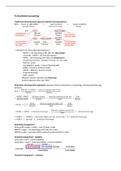
Formuleblad accounting
Traditional decomposition approach (DuPont decomposition):
ROE = return on sales (ROS) x asset turnover x equity multiplier
operating efficiency effective use of assets leverage
Definitions for alternative decomposition
- NOPAT = net operating profit after tax (Operating):
net profit – NIPAT + net interest expense
- NIPAT = net investing profit after tax (Investment):
(investment income + interest income) x (1 – tax rate)
- Business assets:
shareholder’s equity + interest bearing debt
- ROBA = return on business assets:
(NIPAT + NOPAT) / business assets
- Financial leverage:
debt / equity
- Effective interest rate after tax (financing):
interest expenses after tax / debt
Alternative decomposition approach separates financial statements in operating, investing and financing
activities.
𝑁𝑂𝑃𝐴𝑇 + 𝑁𝐼𝑃𝐴𝑇 𝐼𝑛𝑡𝑒𝑟𝑒𝑠𝑡 𝑒𝑥𝑝𝑒𝑛𝑠𝑒𝑠 𝑎𝑓𝑡𝑒𝑟 𝑡𝑎𝑥
𝑅𝑂𝐸 = −
𝐸𝑞𝑢𝑖𝑡𝑦 𝐸𝑞𝑢𝑖𝑡𝑦
NOPAT + NIPAT 𝐵𝑢𝑠𝑖𝑛𝑒𝑠𝑠 𝑎𝑠𝑠𝑒𝑡𝑠 𝐼𝑛𝑡𝑒𝑟𝑒𝑠𝑡 𝑒𝑥𝑝𝑒𝑛𝑠𝑒𝑠 𝑎𝑓𝑡𝑒𝑟 𝑡𝑎𝑥 𝐷𝑒𝑏𝑡
= x − 𝑥
Business assets 𝐸𝑞𝑢𝑖𝑡𝑦 𝐷𝑒𝑏𝑡 𝐸𝑞𝑢𝑖𝑡𝑦
𝐷𝑒𝑏𝑡 𝐼𝑛𝑡𝑒𝑟𝑒𝑠𝑡 𝑒𝑥𝑝𝑒𝑛𝑠𝑒𝑠 𝑎𝑓𝑡𝑒𝑟 𝑡𝑎𝑥 𝐷𝑒𝑏𝑡
= 𝑅𝑂𝐵𝐴 × >1 + @ − 𝑥
𝐸𝑞𝑢𝑖𝑡𝑦 𝐷𝑒𝑏𝑡 𝐸𝑞𝑢𝑖𝑡𝑦
𝐼𝑛𝑡𝑒𝑟𝑒𝑠𝑡 𝑒𝑥𝑝𝑒𝑛𝑠𝑒𝑠 𝑎𝑓𝑡𝑒𝑟 𝑡𝑎𝑥
= 𝑅𝑂𝐵𝐴 + 𝑅𝑂𝐵𝐴 ×. 𝐹𝑖𝑛𝑎𝑛𝑐𝑖𝑎𝑙 𝑙𝑒𝑣𝑒𝑟𝑎𝑔𝑒 − × 𝑓𝑖𝑛𝑎𝑛𝑐𝑖𝑎𝑙 𝑙𝑒𝑣𝑒𝑟𝑎𝑔𝑒
𝐷𝑒𝑏𝑡
= 𝑅𝑂𝐵𝐴 + (𝑅𝑂𝐵𝐴 − 𝑒𝑓𝑓𝑒𝑐𝑡𝑖𝑣𝑒 𝑖𝑛𝑡𝑒𝑟𝑒𝑠𝑡 𝑟𝑎𝑡𝑒 𝑎𝑓𝑡𝑒𝑟 𝑡𝑎𝑥) × 𝑓. 𝑖𝑛𝑎𝑛𝑐𝑖𝑎𝑙 𝑙𝑒𝑣𝑒𝑟𝑎𝑔𝑒
= 𝑅𝑂𝐵𝐴 + 𝑠𝑝𝑟𝑒𝑎𝑑 × 𝑓𝑖𝑛𝑎𝑛𝑐𝑖𝑎𝑙 𝑙𝑒𝑣𝑒𝑟𝑎𝑔𝑒
Operating management
Gross profit margin = (sales – cost of sales) / sales
NOPAT margin = net operating profit after tax / sales
EBITDA margin = earnings before interest tax depreciations / sales
Financial management - liquidity
Cash ratio = cash / current liabilities
Quick ratio = (cash + trade receivables) / current liabilities
Financial management – solvency
Traditional decomposition approach (DuPont decomposition):
ROE = return on sales (ROS) x asset turnover x equity multiplier
operating efficiency effective use of assets leverage
Definitions for alternative decomposition
- NOPAT = net operating profit after tax (Operating):
net profit – NIPAT + net interest expense
- NIPAT = net investing profit after tax (Investment):
(investment income + interest income) x (1 – tax rate)
- Business assets:
shareholder’s equity + interest bearing debt
- ROBA = return on business assets:
(NIPAT + NOPAT) / business assets
- Financial leverage:
debt / equity
- Effective interest rate after tax (financing):
interest expenses after tax / debt
Alternative decomposition approach separates financial statements in operating, investing and financing
activities.
𝑁𝑂𝑃𝐴𝑇 + 𝑁𝐼𝑃𝐴𝑇 𝐼𝑛𝑡𝑒𝑟𝑒𝑠𝑡 𝑒𝑥𝑝𝑒𝑛𝑠𝑒𝑠 𝑎𝑓𝑡𝑒𝑟 𝑡𝑎𝑥
𝑅𝑂𝐸 = −
𝐸𝑞𝑢𝑖𝑡𝑦 𝐸𝑞𝑢𝑖𝑡𝑦
NOPAT + NIPAT 𝐵𝑢𝑠𝑖𝑛𝑒𝑠𝑠 𝑎𝑠𝑠𝑒𝑡𝑠 𝐼𝑛𝑡𝑒𝑟𝑒𝑠𝑡 𝑒𝑥𝑝𝑒𝑛𝑠𝑒𝑠 𝑎𝑓𝑡𝑒𝑟 𝑡𝑎𝑥 𝐷𝑒𝑏𝑡
= x − 𝑥
Business assets 𝐸𝑞𝑢𝑖𝑡𝑦 𝐷𝑒𝑏𝑡 𝐸𝑞𝑢𝑖𝑡𝑦
𝐷𝑒𝑏𝑡 𝐼𝑛𝑡𝑒𝑟𝑒𝑠𝑡 𝑒𝑥𝑝𝑒𝑛𝑠𝑒𝑠 𝑎𝑓𝑡𝑒𝑟 𝑡𝑎𝑥 𝐷𝑒𝑏𝑡
= 𝑅𝑂𝐵𝐴 × >1 + @ − 𝑥
𝐸𝑞𝑢𝑖𝑡𝑦 𝐷𝑒𝑏𝑡 𝐸𝑞𝑢𝑖𝑡𝑦
𝐼𝑛𝑡𝑒𝑟𝑒𝑠𝑡 𝑒𝑥𝑝𝑒𝑛𝑠𝑒𝑠 𝑎𝑓𝑡𝑒𝑟 𝑡𝑎𝑥
= 𝑅𝑂𝐵𝐴 + 𝑅𝑂𝐵𝐴 ×. 𝐹𝑖𝑛𝑎𝑛𝑐𝑖𝑎𝑙 𝑙𝑒𝑣𝑒𝑟𝑎𝑔𝑒 − × 𝑓𝑖𝑛𝑎𝑛𝑐𝑖𝑎𝑙 𝑙𝑒𝑣𝑒𝑟𝑎𝑔𝑒
𝐷𝑒𝑏𝑡
= 𝑅𝑂𝐵𝐴 + (𝑅𝑂𝐵𝐴 − 𝑒𝑓𝑓𝑒𝑐𝑡𝑖𝑣𝑒 𝑖𝑛𝑡𝑒𝑟𝑒𝑠𝑡 𝑟𝑎𝑡𝑒 𝑎𝑓𝑡𝑒𝑟 𝑡𝑎𝑥) × 𝑓. 𝑖𝑛𝑎𝑛𝑐𝑖𝑎𝑙 𝑙𝑒𝑣𝑒𝑟𝑎𝑔𝑒
= 𝑅𝑂𝐵𝐴 + 𝑠𝑝𝑟𝑒𝑎𝑑 × 𝑓𝑖𝑛𝑎𝑛𝑐𝑖𝑎𝑙 𝑙𝑒𝑣𝑒𝑟𝑎𝑔𝑒
Operating management
Gross profit margin = (sales – cost of sales) / sales
NOPAT margin = net operating profit after tax / sales
EBITDA margin = earnings before interest tax depreciations / sales
Financial management - liquidity
Cash ratio = cash / current liabilities
Quick ratio = (cash + trade receivables) / current liabilities
Financial management – solvency


