033 Flight Performance & Planning 2
Introduction
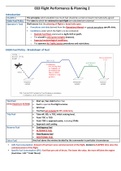
CS-OPS 1 The principles which establish how much fuel should be carried on board internationally agreed
EASA Fuel Policy The rules by which the minima for each flight are calculated are universal
Operator’s Task Shall ensure that the planning of flights is based only upon:
• Procedures and data derived from the Operations Manual or current aeroplane specific data,
• Conditions under which the flight is to be conducted:
o Realistic fuel flows expressed as kg/h, lb/h or gal/h,
o The aircraft’s anticipated weights (masses),
o Expected meteorological conditions,
o The operator Air Traffic Service procedures and restrictions.
EASA Fuel Policy - Breakdown of Fuel
Taxi Fuel • Start up, Taxi, Hold before Taxi
(Only Departure Airfield) • Fuel to operate Pre-Flight services
• APU fuel
• Taxi fuel not included in FPL endurance,
Trip Fuel • Take-off, SID, to TOC, initial cruising level,
• From TOC to TOD
• From TOD to approach point, including STARs
• Approach and Landing
Reserve Fuel • Contingency Fuel
• ALTERNATE FUEL
• Final Reserve Fuel
• ADDITIONAL FUEL
Extra Fuel Any fuel above the minima decided by the commander in particular circumstances
• AVG Fuel consumption: Amount of fuel burn since commencement of the flight, divided by ELAPSED time since the
commencement of the flight.
• Specific Fuel Consumption (SFC): Fuel flow per unit of thrust. The lower the value, the more efficient the engine
(Fuel Flow = SFC * Total Thrust)
,Reserve Fuel
An operator must ensure that every flight carries sufficient fuel for the planned operation, and reserves:
Contingency Fuel Reserves to cover any replanning necessary for In-flight contingencies (chance occurrence or
unforeseen event), compensate for deviations:
o From the expected fuel consumption data,
o From the forecast meteorological conditions,
o From the planned routing and/or cruising levels/altitudes.
Contingency fuel is the HIGHER OF:
A. 5% of planned trip fuel, or In-flight replanning: 5% of the trip fuel for remainder of the flight.
(or an amount of fuel based on a statistical method),
B. 5 minutes at HOLDING SPEED at 1500ft above the DESTINATION AERODROME in ISA
conditions.
Always consider CONTINGENCY, EXCEPT in the question with “NOT LESS” and “MINIMUM FUEL”
(EXPECT to use contingency, but ASSUME we won’t need it)
Alternate Fuel Fuel required to fly from missed approach at the destination to the planned alternate:
• It should take into account probable routing and expected wind component,
• If departure aerodrome is also alternate: Trip Fuel = Alternate Fuel
Final Reserve Fuel You should never land with less than Final Reserve Fuel (contingency and alternate used):
• Jet/Turboprop: 30 min at 1500’ above AAL (ALTERNATE) in ISA conditions, with:
o ESTIMATED MASS AT ALTERNATE,
o HOLDING consumption.
• Piston Engine: 45 min fuel consumption:
o ENDURANCE SPEED.
Additional Fuel (No Alternate): additional fuel carried in “Island Holding” situation if there is no alternate at
some isolated aerodrome.
NO EN-ROUTE ALTERNATE and Inability to Hold Height) (fuel should permit):
A. Engine fails / Pressurization lost at the most critical point:
o Aircraft to descend as necessary,
o Proceed to an adequate Alternate aerodrome,
o HOLD 15 min at 1500ft above the aerodrome elevation in ISA conditions,
o (except that this additional fuel is not required if adequate basic trip, contingency,
alternate and final reserve is sufficient to complete the above profile).
B. NO DESTINATION ALTERNATE AERODROME:
o HOLDING for 15 min at 1500ft
o Above the Destination aerodrome in ISA conditions.
• No alternate required: use additional fuel 15m holding consumption.
• Contingency fuel 3% when to En-Route alternate.
• Brake Release Mass: mass at the start of the runway (Taxi Fuel not included).
,Special Cases
Decision Point Procedure Contingency fuel can be reduced to that required between Decision Point and Destination.
Reduced Contingency Must be the HIGHER OF:
Fuel (RCF) A. Fuel from DEP to DESTINATION via Decision Point + 5% from (DP – DEST),
B. Fuel from DEP to EN-ROUTE ALTERNATE via Decision Point + 3% (DEP – DP – EA).
Decision Point: where the crew must verify that fuel onboard is at least 5%/3% of the
remaining trip fuel, sufficient to proceed to destination aerodrome.
The maximum fuel reduction available is the contingency fuel (3% or 5% of trip fuel)
between Departure and Decision Point.
Isolated Aerodrome Isolated aerodrome: aerodrome for which there is:
Procedure • No Destination Alternate (An island in an ocean),
• No option of diverting.
CS-OPS 1 specifies that the fuel must include:
• Taxi fuel,
• Trip fuel,
• Contingency fuel,
• ADDITIONAL FUEL:
• Reciprocating engines: the LESSER OF:
a. Fuel to fly for 45 min + 15% of the flight time planned, at CRUISING LEVEL,
b. 2h.
• Turbine engines (Always 2h):
a. 2h at NORMAL CRUISE CONSUMPTION overhead destination aerodrome,
including final reserve fuel.
, Predetermined point Planning to a destination alternate aerodrome where the distance between the
(PDP) procedure DESTINATION AERODROME and the DESTINATION ALTERNATE AERODROME is such that a
flight can only be routed (cannot be reached after first flying) via a predetermined point to
one of these aerodromes.
The amount of usable fuel, on board for departure, should be THE GREATER OF:
• Taxi fuel,
• Trip fuel,
• Contingency fuel,
A. ADDITIONAL FUEL (ISOLATED AERODROME procedure):
• Reciprocating engines THE LESSER OF:
a. Fuel to fly for 45 min + 15% of the flight time planned, at CRUISING LEVEL (TOC
to TOD),
b. 2h
• Turbine engines:
o 2h at normal cruise consumption overhead DESTINATION aerodrome.
B. ADDITIONAL FUEL (IN ANY SITUATION NOT LESS THAN FINAL RESERVE):
• Reciprocating engines:
o Fuel to fly for 45 min (DESTINATION ALTERNATE aerodrome)
• Turbine engines:
o 30 min at 1500’ above AAL (ALTERNATE AERODROME) in ISA conditions.
• PDP: Last point of diversion to any available en-route alternate (ERA),
• PDP Procedure followed in case of emergency while flying to an isolated aerodrome,
• Minimum fuel overhead destination alternate ONLY FINAL RESERVE fuel.
Introduction
CS-OPS 1 The principles which establish how much fuel should be carried on board internationally agreed
EASA Fuel Policy The rules by which the minima for each flight are calculated are universal
Operator’s Task Shall ensure that the planning of flights is based only upon:
• Procedures and data derived from the Operations Manual or current aeroplane specific data,
• Conditions under which the flight is to be conducted:
o Realistic fuel flows expressed as kg/h, lb/h or gal/h,
o The aircraft’s anticipated weights (masses),
o Expected meteorological conditions,
o The operator Air Traffic Service procedures and restrictions.
EASA Fuel Policy - Breakdown of Fuel
Taxi Fuel • Start up, Taxi, Hold before Taxi
(Only Departure Airfield) • Fuel to operate Pre-Flight services
• APU fuel
• Taxi fuel not included in FPL endurance,
Trip Fuel • Take-off, SID, to TOC, initial cruising level,
• From TOC to TOD
• From TOD to approach point, including STARs
• Approach and Landing
Reserve Fuel • Contingency Fuel
• ALTERNATE FUEL
• Final Reserve Fuel
• ADDITIONAL FUEL
Extra Fuel Any fuel above the minima decided by the commander in particular circumstances
• AVG Fuel consumption: Amount of fuel burn since commencement of the flight, divided by ELAPSED time since the
commencement of the flight.
• Specific Fuel Consumption (SFC): Fuel flow per unit of thrust. The lower the value, the more efficient the engine
(Fuel Flow = SFC * Total Thrust)
,Reserve Fuel
An operator must ensure that every flight carries sufficient fuel for the planned operation, and reserves:
Contingency Fuel Reserves to cover any replanning necessary for In-flight contingencies (chance occurrence or
unforeseen event), compensate for deviations:
o From the expected fuel consumption data,
o From the forecast meteorological conditions,
o From the planned routing and/or cruising levels/altitudes.
Contingency fuel is the HIGHER OF:
A. 5% of planned trip fuel, or In-flight replanning: 5% of the trip fuel for remainder of the flight.
(or an amount of fuel based on a statistical method),
B. 5 minutes at HOLDING SPEED at 1500ft above the DESTINATION AERODROME in ISA
conditions.
Always consider CONTINGENCY, EXCEPT in the question with “NOT LESS” and “MINIMUM FUEL”
(EXPECT to use contingency, but ASSUME we won’t need it)
Alternate Fuel Fuel required to fly from missed approach at the destination to the planned alternate:
• It should take into account probable routing and expected wind component,
• If departure aerodrome is also alternate: Trip Fuel = Alternate Fuel
Final Reserve Fuel You should never land with less than Final Reserve Fuel (contingency and alternate used):
• Jet/Turboprop: 30 min at 1500’ above AAL (ALTERNATE) in ISA conditions, with:
o ESTIMATED MASS AT ALTERNATE,
o HOLDING consumption.
• Piston Engine: 45 min fuel consumption:
o ENDURANCE SPEED.
Additional Fuel (No Alternate): additional fuel carried in “Island Holding” situation if there is no alternate at
some isolated aerodrome.
NO EN-ROUTE ALTERNATE and Inability to Hold Height) (fuel should permit):
A. Engine fails / Pressurization lost at the most critical point:
o Aircraft to descend as necessary,
o Proceed to an adequate Alternate aerodrome,
o HOLD 15 min at 1500ft above the aerodrome elevation in ISA conditions,
o (except that this additional fuel is not required if adequate basic trip, contingency,
alternate and final reserve is sufficient to complete the above profile).
B. NO DESTINATION ALTERNATE AERODROME:
o HOLDING for 15 min at 1500ft
o Above the Destination aerodrome in ISA conditions.
• No alternate required: use additional fuel 15m holding consumption.
• Contingency fuel 3% when to En-Route alternate.
• Brake Release Mass: mass at the start of the runway (Taxi Fuel not included).
,Special Cases
Decision Point Procedure Contingency fuel can be reduced to that required between Decision Point and Destination.
Reduced Contingency Must be the HIGHER OF:
Fuel (RCF) A. Fuel from DEP to DESTINATION via Decision Point + 5% from (DP – DEST),
B. Fuel from DEP to EN-ROUTE ALTERNATE via Decision Point + 3% (DEP – DP – EA).
Decision Point: where the crew must verify that fuel onboard is at least 5%/3% of the
remaining trip fuel, sufficient to proceed to destination aerodrome.
The maximum fuel reduction available is the contingency fuel (3% or 5% of trip fuel)
between Departure and Decision Point.
Isolated Aerodrome Isolated aerodrome: aerodrome for which there is:
Procedure • No Destination Alternate (An island in an ocean),
• No option of diverting.
CS-OPS 1 specifies that the fuel must include:
• Taxi fuel,
• Trip fuel,
• Contingency fuel,
• ADDITIONAL FUEL:
• Reciprocating engines: the LESSER OF:
a. Fuel to fly for 45 min + 15% of the flight time planned, at CRUISING LEVEL,
b. 2h.
• Turbine engines (Always 2h):
a. 2h at NORMAL CRUISE CONSUMPTION overhead destination aerodrome,
including final reserve fuel.
, Predetermined point Planning to a destination alternate aerodrome where the distance between the
(PDP) procedure DESTINATION AERODROME and the DESTINATION ALTERNATE AERODROME is such that a
flight can only be routed (cannot be reached after first flying) via a predetermined point to
one of these aerodromes.
The amount of usable fuel, on board for departure, should be THE GREATER OF:
• Taxi fuel,
• Trip fuel,
• Contingency fuel,
A. ADDITIONAL FUEL (ISOLATED AERODROME procedure):
• Reciprocating engines THE LESSER OF:
a. Fuel to fly for 45 min + 15% of the flight time planned, at CRUISING LEVEL (TOC
to TOD),
b. 2h
• Turbine engines:
o 2h at normal cruise consumption overhead DESTINATION aerodrome.
B. ADDITIONAL FUEL (IN ANY SITUATION NOT LESS THAN FINAL RESERVE):
• Reciprocating engines:
o Fuel to fly for 45 min (DESTINATION ALTERNATE aerodrome)
• Turbine engines:
o 30 min at 1500’ above AAL (ALTERNATE AERODROME) in ISA conditions.
• PDP: Last point of diversion to any available en-route alternate (ERA),
• PDP Procedure followed in case of emergency while flying to an isolated aerodrome,
• Minimum fuel overhead destination alternate ONLY FINAL RESERVE fuel.