QUESTION 1
1.1 . DO YOUR OWN RESEARCH ABOUT THE HISTORY OF CURRICULUM
DEVELOPMENT IN SOUTH AFRICA SINCE 1994. IDENTIFY AND
COMPARE MAJOR CHANGES THAT TOOK PLACE. (5)
Report 550
C2005 NCS(2002)
How the content has
(1997)
developed
CAPS(2012-
RNCS(2004)
2014)
One of the major changes that took place was to transform the curriculum to create a
non-racial education system that would erase the footprints of the apartheid regime
from the education system by providing students with the necessary support and
education, regardless of their socio-economic background, race or gender and
inaugurating students with the knowledge, skills and values necessary to be
independent and meaningful citizens in our society.
The changes that took place is the method on how we teach by transitioning from a
Traditional lecture method to an Interactive goal-orientated method as well as
changing how we assess our students by using a Continuous reflective process
instead of Traditional examinations. Other change that occurred was the increase of
instructional time, the Intermediate Phase subjects decreased to only 6 subjects
instead of 8 when assessing students A seven-point scale is to be used and one
single caps document is issued
3
,1.2 DESIGN A FORMATIVE ASSESSMENT ACTIVITY TO BE DONE IN CLASS.
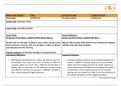
Subject Grade Topic Time allocation
Introduction to subtraction and
Maths 1 30 min
addition
Form of assessment Mark allocation
Formative assessment activity
- End week mathematical test to measure content
knowledge and understanding gained from content 8
taught during the week
ount forward
tand on and take umps
tand on and take umps
tand on ten and take two umps
ount backwards
tand on and ump steps back
tand on and ump steps back
4
tand on five and ump one step back
, 1.2.1 NAME LEARNING OUTCOMES FOR THE IDENTIFIED TOPIC.
• Number recognition
• Number name recognition
• Developing awareness and skills in subtraction and addition, as well as
introducing plus and minus sums
• Improving their counting skills
• Build on their background knowledge
1.2.2 LINK YOUR QUESTIONS TO THE IDENTIFIED LEARNING OUTCOMES.
• Can you count to 20?
• Can you count backwards from 20?
• On what number are we currently standing?
• On what number NAME are we currently standing?
• Did we subtract or add?
1.2.3 PROVIDE THE SOLUTIONS. (10)
Every day, from the beginning of the year, the teacher builds background knowledge
of counting by allowing students to practice counting from 1 to 100 and back.
Number charts are placed on students' desks to help them build content knowledge
on number recognition as well as to assist them when performing mathematical
sums or counting there for helping them in completing this mathematical activity with
ease.
MEMO
ount forward
tand on and take umps
tand on and take umps
5
tand on ten and take two umps
1.1 . DO YOUR OWN RESEARCH ABOUT THE HISTORY OF CURRICULUM
DEVELOPMENT IN SOUTH AFRICA SINCE 1994. IDENTIFY AND
COMPARE MAJOR CHANGES THAT TOOK PLACE. (5)
Report 550
C2005 NCS(2002)
How the content has
(1997)
developed
CAPS(2012-
RNCS(2004)
2014)
One of the major changes that took place was to transform the curriculum to create a
non-racial education system that would erase the footprints of the apartheid regime
from the education system by providing students with the necessary support and
education, regardless of their socio-economic background, race or gender and
inaugurating students with the knowledge, skills and values necessary to be
independent and meaningful citizens in our society.
The changes that took place is the method on how we teach by transitioning from a
Traditional lecture method to an Interactive goal-orientated method as well as
changing how we assess our students by using a Continuous reflective process
instead of Traditional examinations. Other change that occurred was the increase of
instructional time, the Intermediate Phase subjects decreased to only 6 subjects
instead of 8 when assessing students A seven-point scale is to be used and one
single caps document is issued
3
,1.2 DESIGN A FORMATIVE ASSESSMENT ACTIVITY TO BE DONE IN CLASS.
Subject Grade Topic Time allocation
Introduction to subtraction and
Maths 1 30 min
addition
Form of assessment Mark allocation
Formative assessment activity
- End week mathematical test to measure content
knowledge and understanding gained from content 8
taught during the week
ount forward
tand on and take umps
tand on and take umps
tand on ten and take two umps
ount backwards
tand on and ump steps back
tand on and ump steps back
4
tand on five and ump one step back
, 1.2.1 NAME LEARNING OUTCOMES FOR THE IDENTIFIED TOPIC.
• Number recognition
• Number name recognition
• Developing awareness and skills in subtraction and addition, as well as
introducing plus and minus sums
• Improving their counting skills
• Build on their background knowledge
1.2.2 LINK YOUR QUESTIONS TO THE IDENTIFIED LEARNING OUTCOMES.
• Can you count to 20?
• Can you count backwards from 20?
• On what number are we currently standing?
• On what number NAME are we currently standing?
• Did we subtract or add?
1.2.3 PROVIDE THE SOLUTIONS. (10)
Every day, from the beginning of the year, the teacher builds background knowledge
of counting by allowing students to practice counting from 1 to 100 and back.
Number charts are placed on students' desks to help them build content knowledge
on number recognition as well as to assist them when performing mathematical
sums or counting there for helping them in completing this mathematical activity with
ease.
MEMO
ount forward
tand on and take umps
tand on and take umps
5
tand on ten and take two umps