COURSE ALLOMETRY
Cases and lectures
, Case 1: How large was Pegasus?
WHAT IS ALLOMETRY AND HOW DO YOU DESCRIBE SCALING RELATIONS ?
Allometry (also called biological scaling), in biology, describes the change in organisms in relation to
proportional changes in body size. The term originally referred to the scaling relationship between
the size of a body part and the size of the body as a whole, as both grow during development.
However, more recently the meaning of the term allometry has been modified and expanded to refer
to biological scaling relationships in general.
Isometric growth = All body parts grow at approximately the same rate, and the adult proportions
are not significantly different from those of the juvenile.
Example: arms
Allometric growth = Body parts do not grow at the same rate, therefore the proportions of an adult
and juvenile will we significantly different.
Example: the head, brain
Postive, negative allometry and isometry
1
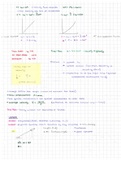
,Allometric scaling component defines the type of scaling relationship:
2
,Looking at different dimensions is required when comparing different dimensions:
We can also transform allometric data into linear functiosn also called logarithms:
3
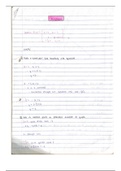
,Important formula’s
4
, Primary and secondary signals
Confidence interval
The confidence interval is used to test whether a deviation, secondary signal is significantly
meaningful. In this example the duck is outside the confidence interval.
Limitations of allometry
Allometric equations express convenient and valuable generalizations. However, there are important
limits where they can and can't be used, the following points should be remembered;
1. Allometric equations are descriptive; they are not biological laws.
2. Allometric equations are useful for showing how a variable quantity is related to body size,
all other things being equal (which most certainly they are not).
5
Cases and lectures
, Case 1: How large was Pegasus?
WHAT IS ALLOMETRY AND HOW DO YOU DESCRIBE SCALING RELATIONS ?
Allometry (also called biological scaling), in biology, describes the change in organisms in relation to
proportional changes in body size. The term originally referred to the scaling relationship between
the size of a body part and the size of the body as a whole, as both grow during development.
However, more recently the meaning of the term allometry has been modified and expanded to refer
to biological scaling relationships in general.
Isometric growth = All body parts grow at approximately the same rate, and the adult proportions
are not significantly different from those of the juvenile.
Example: arms
Allometric growth = Body parts do not grow at the same rate, therefore the proportions of an adult
and juvenile will we significantly different.
Example: the head, brain
Postive, negative allometry and isometry
1
,Allometric scaling component defines the type of scaling relationship:
2
,Looking at different dimensions is required when comparing different dimensions:
We can also transform allometric data into linear functiosn also called logarithms:
3
,Important formula’s
4
, Primary and secondary signals
Confidence interval
The confidence interval is used to test whether a deviation, secondary signal is significantly
meaningful. In this example the duck is outside the confidence interval.
Limitations of allometry
Allometric equations express convenient and valuable generalizations. However, there are important
limits where they can and can't be used, the following points should be remembered;
1. Allometric equations are descriptive; they are not biological laws.
2. Allometric equations are useful for showing how a variable quantity is related to body size,
all other things being equal (which most certainly they are not).
5