Entrepreneurial Finance
Chapter 1 Introduction to entrepreneurial finance
Entrepreneurial finance = the art and science of investing and financing entrepreneurial ventures.
Often involves private funding.
Corporate finance entrepreneurial finance
focuses on existing businesses and the challenges they focuses on the first challenge to acquire the funding to
face to grow in order to deliver a return on their be able to test whether there is an actual opportunity
investors for business
goal: increase shareholder value
assumes that there already is value challenge before there is even value
previous financial information available to forecast No previous history and the future is unknown
we assume that projects or investments have a positive losses are part of the game and mostly investments are
net present value (NPV) negative
based on the assumption that investors are rational; they difficult to estimate risk + these investors might not be
will estimate the risks and choose the lowest risk or ‘typical’ investors. Involves fun, passion and uncertainty
highest return
Topic Corporate finance Entrepreneurial finance
Funding sources Banks Friends and family
Capital markets Crowdfunding
Incubators/accelerators
Business angels
Venture capital
Private equity
Funding process Standard due diligence Deal sourcing and screening
Financial plan Financial plan
Collateral to back loan Valuation
Term sheet
Growth Capital budgeting Monitoring & key metrics
Mergers & acquisitions Corporate governance
Private equity Protecting knowledge
Initial public offering (IPO) Private equity
Harvesting Dividends Exiting (selling) initial public
offerings (IPO)
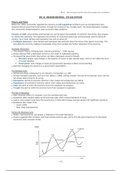
Stages of venture development and sources of financing
Seed Startup Growth expansion Maturity
from idea to first customer from sales to break-even launching new lines or company’s growth slow
(sales) (profit) entering new markets down
prototyping, testing to improving the product of new initiatives might be not many new initiatives
validate, reformulate service losing money but core for high growth
business is profitable
from few months to many growing the customer growth is the key driver of market and competition
years base the business have reached maturity
being efficient and scaling risk of new disruptive
up players
1
,Entrepreneurial Finance
Seed stage
In most cases, a company is not yet established, but the founders have identified an opportunity. The
seed stage varies according to the activity of the business and its characters. Founders will also need
funding to finance this period of time. This money can be used to pay salaries, investments in
tangible or intangible assets and other expenses.
Bootstrapping = founders’ own savings used for the first financing. Can be with help of 3F’s (family,
friends, fools)
3F is important: positive indication for other investors. 3F signals that they belief in the future of
the venture
Business angels are only interested in high-growing potential and healthy return long-term
Venture capitalists require much more information, deeper level of analysis and due diligence
Start-up stage
The company is already selling its products or services, or has some customers. It remains in the
start-up stage until it reaches break-even.
The customer acquisition costs (CAC) is a key metric. The value of a customer should be higher than
the cost of acquiring it.
Lifetime value (LTV) = the value of a customer to the business
If LTV > CAC, profitability is likely.
The most suitable source of financing will be business angels or venture capitalists.
Rule of thumb: <€1million required business angels
>€1million required venture capitalists
Growth stage
Starts once the company has reached break-even and becomes profitable. Additional financing can
be raised, but banks will be involved to meet credit control requirements.
Maturity stage
Once the growth of the market or the company stabilizes at normal rates. No more large
investments, but maintain current market share.
Financing most to least likely per stage
First round Second round
‘seed capital’ ‘series A’ and up
1. 3Fs 1. Venture capitalists
2. Crowdfunding, accelerator, incubator 2. Business Angels
3. Grants and public funding 3. Crowdfunding, accelerator, incubator
4. Business angels 4. Grants and public funding
5. Venture capitalists 5. 3F
2
, Entrepreneurial Finance
Seed Startup Growth Maturity
Entrepreneur Entrepreneur Crowdfunding Venture capital
Family and friends Family and friends Business angels Commercial bank loan
Incubator Incubator Government Private equity
Accelerator Accelerator programmes Mezzanine capital
Crowdfunding Crowdfunding Corporate strategic High yield bonds
Business angels Business angels partnerships Public debt
Government Government Venture capital IPO
programmes programmes Corporate venture capital
Corporate strategic Corporate strategic Venture debt
partnerships partnerships Asset-based loan
Venture capital Venture capital Trade credit
Venture debt Commercial bank loan
Asset-based loan Private equity
Trade credit Mezzanine capital
High yield bonds
Venture capitalist = professional that invests large amounts of capital (typically up to €10million) in
high-risk-high-return early-stage ventures
Corporate strategic partner builds credibility, get access to a corporate network that might be
useful, PR and branding benefits
Difference between asset-based loans and venture debt: the availability of assets in the venture
asset-based lending requires a security for the loan
venture debt is especially for venture capital backed ventures lacking assets
and a steady cash flow for more traditional financing
Trade credit = vendor loan without interest at the expense of foregoing a discount that would be
obtained when paying early. Spontaneous funding by allowing the entrepreneur to pay later for the
goods that he already obtained
Mezzanine capital = hybrid form of debt and equity funding used by ventures that have built an
established reputation and track record of positive cash flows.
3
Chapter 1 Introduction to entrepreneurial finance
Entrepreneurial finance = the art and science of investing and financing entrepreneurial ventures.
Often involves private funding.
Corporate finance entrepreneurial finance
focuses on existing businesses and the challenges they focuses on the first challenge to acquire the funding to
face to grow in order to deliver a return on their be able to test whether there is an actual opportunity
investors for business
goal: increase shareholder value
assumes that there already is value challenge before there is even value
previous financial information available to forecast No previous history and the future is unknown
we assume that projects or investments have a positive losses are part of the game and mostly investments are
net present value (NPV) negative
based on the assumption that investors are rational; they difficult to estimate risk + these investors might not be
will estimate the risks and choose the lowest risk or ‘typical’ investors. Involves fun, passion and uncertainty
highest return
Topic Corporate finance Entrepreneurial finance
Funding sources Banks Friends and family
Capital markets Crowdfunding
Incubators/accelerators
Business angels
Venture capital
Private equity
Funding process Standard due diligence Deal sourcing and screening
Financial plan Financial plan
Collateral to back loan Valuation
Term sheet
Growth Capital budgeting Monitoring & key metrics
Mergers & acquisitions Corporate governance
Private equity Protecting knowledge
Initial public offering (IPO) Private equity
Harvesting Dividends Exiting (selling) initial public
offerings (IPO)
Stages of venture development and sources of financing
Seed Startup Growth expansion Maturity
from idea to first customer from sales to break-even launching new lines or company’s growth slow
(sales) (profit) entering new markets down
prototyping, testing to improving the product of new initiatives might be not many new initiatives
validate, reformulate service losing money but core for high growth
business is profitable
from few months to many growing the customer growth is the key driver of market and competition
years base the business have reached maturity
being efficient and scaling risk of new disruptive
up players
1
,Entrepreneurial Finance
Seed stage
In most cases, a company is not yet established, but the founders have identified an opportunity. The
seed stage varies according to the activity of the business and its characters. Founders will also need
funding to finance this period of time. This money can be used to pay salaries, investments in
tangible or intangible assets and other expenses.
Bootstrapping = founders’ own savings used for the first financing. Can be with help of 3F’s (family,
friends, fools)
3F is important: positive indication for other investors. 3F signals that they belief in the future of
the venture
Business angels are only interested in high-growing potential and healthy return long-term
Venture capitalists require much more information, deeper level of analysis and due diligence
Start-up stage
The company is already selling its products or services, or has some customers. It remains in the
start-up stage until it reaches break-even.
The customer acquisition costs (CAC) is a key metric. The value of a customer should be higher than
the cost of acquiring it.
Lifetime value (LTV) = the value of a customer to the business
If LTV > CAC, profitability is likely.
The most suitable source of financing will be business angels or venture capitalists.
Rule of thumb: <€1million required business angels
>€1million required venture capitalists
Growth stage
Starts once the company has reached break-even and becomes profitable. Additional financing can
be raised, but banks will be involved to meet credit control requirements.
Maturity stage
Once the growth of the market or the company stabilizes at normal rates. No more large
investments, but maintain current market share.
Financing most to least likely per stage
First round Second round
‘seed capital’ ‘series A’ and up
1. 3Fs 1. Venture capitalists
2. Crowdfunding, accelerator, incubator 2. Business Angels
3. Grants and public funding 3. Crowdfunding, accelerator, incubator
4. Business angels 4. Grants and public funding
5. Venture capitalists 5. 3F
2
, Entrepreneurial Finance
Seed Startup Growth Maturity
Entrepreneur Entrepreneur Crowdfunding Venture capital
Family and friends Family and friends Business angels Commercial bank loan
Incubator Incubator Government Private equity
Accelerator Accelerator programmes Mezzanine capital
Crowdfunding Crowdfunding Corporate strategic High yield bonds
Business angels Business angels partnerships Public debt
Government Government Venture capital IPO
programmes programmes Corporate venture capital
Corporate strategic Corporate strategic Venture debt
partnerships partnerships Asset-based loan
Venture capital Venture capital Trade credit
Venture debt Commercial bank loan
Asset-based loan Private equity
Trade credit Mezzanine capital
High yield bonds
Venture capitalist = professional that invests large amounts of capital (typically up to €10million) in
high-risk-high-return early-stage ventures
Corporate strategic partner builds credibility, get access to a corporate network that might be
useful, PR and branding benefits
Difference between asset-based loans and venture debt: the availability of assets in the venture
asset-based lending requires a security for the loan
venture debt is especially for venture capital backed ventures lacking assets
and a steady cash flow for more traditional financing
Trade credit = vendor loan without interest at the expense of foregoing a discount that would be
obtained when paying early. Spontaneous funding by allowing the entrepreneur to pay later for the
goods that he already obtained
Mezzanine capital = hybrid form of debt and equity funding used by ventures that have built an
established reputation and track record of positive cash flows.
3