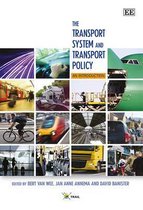
Transport samenvatting
Hoofdstuk 2: The traffic and transport system and effects
on accessibility, the environment and safety: an
introduction
People travel because they want to carry out activities such as living, working, shopping
etc. at different locations. Goods are transported because several stages of production
are spatially separated.
Development in transport is relevant, because without transport modern societies
wouldn’t be possible at all. What matters is the impact of changes in transport systems
on changes in the economy or wider society. Secondly, transport causes negative
effects such as environmental pressure, safety impacts and congestion. Thirdly,
development in transport triggers policies, such as infrastructure planning.
Transport volumes and their decomposition by modes and vehicle types result from:
1. The wants, need, preferences and choice options of people and firms;
2. The locations of activities such as living, working and shopping;
3. Transport resistance, often expressed in time, money or costs, which we refer to
as effort, which includes risks, reliability of the transport system and comfort.
,Needs, desires, wants, preferences and choice options of people
Wants etc. vary strongly between people. Economists often relate wants etc. to income:
if someone's income rises they may fulfil more needs. Psychologists also look at wants
etc.. For instance, people can fulfil their needs with respect to status by buying a car.
Time also constrains people’s choice of options. The time people need for different
activities varies strongly for each individual. The role the transport system plays in
fulfilling people’s needs depends on time and space. For instance: the aeroplane is a
common means of transport in the US, but in 3rd world countries this isn’t the case.
Important note: the choice of options is different for every individual!
Location
Transport volumes depend on the locations of activities. In this case only location-
related activities are relevant. It’s not only the distribution of activities over space that’s
relevant, but also the distribution of people over houses and other destinations. For
instance: if people living in London work in Cambridge, much more transport results
than if people who live in London also work in London.
Transport resistance
The resistance needed to travel between locations is also relevant. This resistance
includes travel time, monetary costs, safety, comfort etc. The sum of these costs is
referred to as generalised transport costs (GTC). Lower GTC results in more transport.
For the monetary costs not only the fuel price is relevant, but the fuel efficiency as well.
Other costs include maintenance etc.
The travel time budget seems to remain constant. For instance: if average speed
doubles, so does the distance travelled.
Demography
Demographic changes also have an impact on travel volumes. Here we refer to
population composition with factors such as age and household classes (amount of
children).
Travel for the fun of it
Not all people only travel because they need to, some do because they like it. Think
about recreational car trips for tourists or cycling for recreation. This type of travel isn’t
relevant in the rest of the chapters.
Goods transport
For goods transport the same categories of factors apply as for passenger transport.
Technology
,The technologies applied in transport include both those for vehicles and those for
infrastructure. They may have an impact on transport volumes. For example: more fuel-
efficient cars result in lower fuel costs and may therefore lead to an increase in car use.
Technology also has an impact on safety, environment and accessibility. For instance
the emissions of pollutants have decreased while the use of cars has grown.
Active safety: possibilities of avoiding crashes (quality of tires and brakes)
Passive safety: possibilities of reducing the impact of crashes once they take place.
(airbags)
Technology also has an impact on accessibility. Letting traffic lights regulate the
volumes and timing of cars entering the motorway network, congestion levels on
motorways have decreased.
Not only the way the technologies are used are relevant, but also the way people use
them. The way vehicles are used is relevant for environmental impacts. Driving during
congestion results in higher emissions due to much braking and accelerating, cars
make more noise at higher speeds etc..
Spatial and temporal distribution of traffic and activities
This includes the breakdown of road class, for example into motorways, rural roads and
urban roads. Cars driving on rural roads cause more noise and health impacts related to
emissions compared to cars driving in non-urban areas. If vehicles are travelling on
urban roads, less people will want to live close to those roads. So, not only spatial
distribution of traffic is important, but also the spatial distribution of the activities of
people and how they are located in relation to the roads. Finally, driving at night gives
more noise annoyance than driving during daytime.
Accessibility
Accessibility is defined here as ‘the extent to which land-use and transport systems
enable companies, facilities and other activity places to receive people, goods and
information at various times of the day.’ The level of accessibility depends on the
location of activities, quantity and quality of infrastructures, and needs of people and
companies. The level of accessibility has an impact on the economy, because a well-
functioning transport system in combination with the land-use system is a condition for
economic development. Accessibility isn’t only relevant for the economy, but also from a
social point of view. People want to visit relatives and friends within certain time
budgets.
Environment
Transport is a major contributor to environmental problems. Not only emissions, but also
negative visual effects, noise nuisance etc.
Safety
, Internal safety: risks of being mobile.
External safety: the risk of being part of a crash or accident.
Hoofdstuk 3: Individual needs, opportunities and travel
behaviour: a multidisciplinary perspective based on
psychology, economics and geography
The problem of congestion and climate change is hard to solve. This might be due to
the following factors:
1. Economic growth and increase in population size.
2. Many interventions in transport are not sufficiently tuned in to each other, so they
suffer in effectiveness.
3. Owing to the routine-based character of travel behaviour.
Conceptual model travel behaviour
Understanding travel behaviour is dependent on the activities in which individuals want
to participate at their destination or while travelling and the options they have to fulfil
these needs. The NOA model distinguishes three general factors that influence travel
behaviour.
Needs: the motivation for behaviour
● Factors determining the attractiveness of travel behaviour
○ Rational considerations (considering travels costs, time, comfort)
○ Social factors (status)
○ Emotions (for example, driving give some people a kick)
Opportunities: the presence of opportunities to fulfil these needs
Abilities: available time, money, skills and capacity for certain travel choices
Hoofdstuk 2: The traffic and transport system and effects
on accessibility, the environment and safety: an
introduction
People travel because they want to carry out activities such as living, working, shopping
etc. at different locations. Goods are transported because several stages of production
are spatially separated.
Development in transport is relevant, because without transport modern societies
wouldn’t be possible at all. What matters is the impact of changes in transport systems
on changes in the economy or wider society. Secondly, transport causes negative
effects such as environmental pressure, safety impacts and congestion. Thirdly,
development in transport triggers policies, such as infrastructure planning.
Transport volumes and their decomposition by modes and vehicle types result from:
1. The wants, need, preferences and choice options of people and firms;
2. The locations of activities such as living, working and shopping;
3. Transport resistance, often expressed in time, money or costs, which we refer to
as effort, which includes risks, reliability of the transport system and comfort.
,Needs, desires, wants, preferences and choice options of people
Wants etc. vary strongly between people. Economists often relate wants etc. to income:
if someone's income rises they may fulfil more needs. Psychologists also look at wants
etc.. For instance, people can fulfil their needs with respect to status by buying a car.
Time also constrains people’s choice of options. The time people need for different
activities varies strongly for each individual. The role the transport system plays in
fulfilling people’s needs depends on time and space. For instance: the aeroplane is a
common means of transport in the US, but in 3rd world countries this isn’t the case.
Important note: the choice of options is different for every individual!
Location
Transport volumes depend on the locations of activities. In this case only location-
related activities are relevant. It’s not only the distribution of activities over space that’s
relevant, but also the distribution of people over houses and other destinations. For
instance: if people living in London work in Cambridge, much more transport results
than if people who live in London also work in London.
Transport resistance
The resistance needed to travel between locations is also relevant. This resistance
includes travel time, monetary costs, safety, comfort etc. The sum of these costs is
referred to as generalised transport costs (GTC). Lower GTC results in more transport.
For the monetary costs not only the fuel price is relevant, but the fuel efficiency as well.
Other costs include maintenance etc.
The travel time budget seems to remain constant. For instance: if average speed
doubles, so does the distance travelled.
Demography
Demographic changes also have an impact on travel volumes. Here we refer to
population composition with factors such as age and household classes (amount of
children).
Travel for the fun of it
Not all people only travel because they need to, some do because they like it. Think
about recreational car trips for tourists or cycling for recreation. This type of travel isn’t
relevant in the rest of the chapters.
Goods transport
For goods transport the same categories of factors apply as for passenger transport.
Technology
,The technologies applied in transport include both those for vehicles and those for
infrastructure. They may have an impact on transport volumes. For example: more fuel-
efficient cars result in lower fuel costs and may therefore lead to an increase in car use.
Technology also has an impact on safety, environment and accessibility. For instance
the emissions of pollutants have decreased while the use of cars has grown.
Active safety: possibilities of avoiding crashes (quality of tires and brakes)
Passive safety: possibilities of reducing the impact of crashes once they take place.
(airbags)
Technology also has an impact on accessibility. Letting traffic lights regulate the
volumes and timing of cars entering the motorway network, congestion levels on
motorways have decreased.
Not only the way the technologies are used are relevant, but also the way people use
them. The way vehicles are used is relevant for environmental impacts. Driving during
congestion results in higher emissions due to much braking and accelerating, cars
make more noise at higher speeds etc..
Spatial and temporal distribution of traffic and activities
This includes the breakdown of road class, for example into motorways, rural roads and
urban roads. Cars driving on rural roads cause more noise and health impacts related to
emissions compared to cars driving in non-urban areas. If vehicles are travelling on
urban roads, less people will want to live close to those roads. So, not only spatial
distribution of traffic is important, but also the spatial distribution of the activities of
people and how they are located in relation to the roads. Finally, driving at night gives
more noise annoyance than driving during daytime.
Accessibility
Accessibility is defined here as ‘the extent to which land-use and transport systems
enable companies, facilities and other activity places to receive people, goods and
information at various times of the day.’ The level of accessibility depends on the
location of activities, quantity and quality of infrastructures, and needs of people and
companies. The level of accessibility has an impact on the economy, because a well-
functioning transport system in combination with the land-use system is a condition for
economic development. Accessibility isn’t only relevant for the economy, but also from a
social point of view. People want to visit relatives and friends within certain time
budgets.
Environment
Transport is a major contributor to environmental problems. Not only emissions, but also
negative visual effects, noise nuisance etc.
Safety
, Internal safety: risks of being mobile.
External safety: the risk of being part of a crash or accident.
Hoofdstuk 3: Individual needs, opportunities and travel
behaviour: a multidisciplinary perspective based on
psychology, economics and geography
The problem of congestion and climate change is hard to solve. This might be due to
the following factors:
1. Economic growth and increase in population size.
2. Many interventions in transport are not sufficiently tuned in to each other, so they
suffer in effectiveness.
3. Owing to the routine-based character of travel behaviour.
Conceptual model travel behaviour
Understanding travel behaviour is dependent on the activities in which individuals want
to participate at their destination or while travelling and the options they have to fulfil
these needs. The NOA model distinguishes three general factors that influence travel
behaviour.
Needs: the motivation for behaviour
● Factors determining the attractiveness of travel behaviour
○ Rational considerations (considering travels costs, time, comfort)
○ Social factors (status)
○ Emotions (for example, driving give some people a kick)
Opportunities: the presence of opportunities to fulfil these needs
Abilities: available time, money, skills and capacity for certain travel choices