Communication and Organizations CM1014
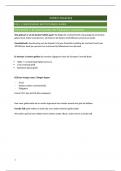
(All) Article summaries
Important term used in lecture
Concept/important person
2022
Articles:
Week 2: In the Shadow by Marschan-Piekkari
Week 4: My Job Sucks by Gosset and Kilker
Week 5: Becoming a Character for Commerce by Tracy
Week 7: The Role of Identification in Giving Sense to Unethical
Organizational Behavior by Ploeger and Bisel
Noor Borggreven 612552 09/02/2022
, Article week 2: In the Shadow by Marschan-Piekkari
The impact of language on structure, power and communication in the multinational
This article explores the impact of language on communication within large and
geographically dispersed multinationals. Importance lies in horizontal communication and
coordination mechanisms in organizations and the role of language. This study also shows
that the official company language is English.
- Horizontal communication - the communication that occurs between two people in an
organization. Such as emailing or phoning each other.
An organization is an information organism. Dealing with information is, some say, the whole
purpose of organizations.
Language as a barrier to inter-unit communication and cross-border communication.
There are cultural and language differences that disturb international flows of info,
particularly at lower organizational levels such as problems in written communication.
- Limited language skills cause constraints in possibilities in building relationships with
other units and headquarters which are important for informal networks. This then
causes lost opportunities for advice and speed up decisions which prevent attending
training programs.
Despite English as the official language, mother tongue plays an important role in inter-unit
communication.
Language as an intermediary role causes people speaking their mother tongue using each
other as stepping stones which causes them to establish their own informal network.
Language as a facilitator
- The possession of a required language skill gives a powerful facilitator of inter-unit
communication flows that have shared languages other than the company language.
Language as a source of power
Superior language abilities create dependencies across social networks in the workplace.
Language is an important channel of influence through which power is exerted.
Language as a shadow structure
Lays behind the formal organization structure that is based on language.
- Clusters - interlinkages between subsidiaries common language
Week 4: My Job Sucks by Gosset and Kilker
Noor Borggreven 612552 09/02/2022
(All) Article summaries
Important term used in lecture
Concept/important person
2022
Articles:
Week 2: In the Shadow by Marschan-Piekkari
Week 4: My Job Sucks by Gosset and Kilker
Week 5: Becoming a Character for Commerce by Tracy
Week 7: The Role of Identification in Giving Sense to Unethical
Organizational Behavior by Ploeger and Bisel
Noor Borggreven 612552 09/02/2022
, Article week 2: In the Shadow by Marschan-Piekkari
The impact of language on structure, power and communication in the multinational
This article explores the impact of language on communication within large and
geographically dispersed multinationals. Importance lies in horizontal communication and
coordination mechanisms in organizations and the role of language. This study also shows
that the official company language is English.
- Horizontal communication - the communication that occurs between two people in an
organization. Such as emailing or phoning each other.
An organization is an information organism. Dealing with information is, some say, the whole
purpose of organizations.
Language as a barrier to inter-unit communication and cross-border communication.
There are cultural and language differences that disturb international flows of info,
particularly at lower organizational levels such as problems in written communication.
- Limited language skills cause constraints in possibilities in building relationships with
other units and headquarters which are important for informal networks. This then
causes lost opportunities for advice and speed up decisions which prevent attending
training programs.
Despite English as the official language, mother tongue plays an important role in inter-unit
communication.
Language as an intermediary role causes people speaking their mother tongue using each
other as stepping stones which causes them to establish their own informal network.
Language as a facilitator
- The possession of a required language skill gives a powerful facilitator of inter-unit
communication flows that have shared languages other than the company language.
Language as a source of power
Superior language abilities create dependencies across social networks in the workplace.
Language is an important channel of influence through which power is exerted.
Language as a shadow structure
Lays behind the formal organization structure that is based on language.
- Clusters - interlinkages between subsidiaries common language
Week 4: My Job Sucks by Gosset and Kilker
Noor Borggreven 612552 09/02/2022