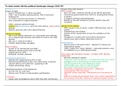
To what extent did the political landscape change 1918-79?
1918-31 Impact of the 1922 election
Impact of WW1 Rise of Labour
- Loss of 750,000 men, 2 million wounded - Won 142 seats, replacing Liberals as the official opposition
- 1918 – loss of leading trading position, 20% of merchant - Formed two governments from 1924-31, showing their fitness
shipping lost to govern
- 3.5 million receiving war pension or allowance - In support of female enfranchisement
- Over investment in staple industries - Backed by TUs who wanted to improve worker’s pay and
conditions
- 1918 – post-war political division
- Liberals and Conservatives were the main parties, Labour yet to Decline of the Liberals
emerge - WW1 caused a loss of values, couldn’t fulfil promises, loss of
- Women could not vote in the General Election morale
- Emerged from war divided
Decline of Liberals - Actions of DLG caused them to lose the confidence of the
- War forced illiberal measures e.g. conscription and rationing people
- LG vs. Asquith split the party who failed to unite for the 1918 - Struggled to compete with Conservative dominance
election - Labour party were a better alternative to the LP
- War was a ‘rampant omnibus’
- Divided, deteriorating, damaged Conservatives
- Natural party of the government – adjusted to change and
Rise of Labour embraced all groups
- Growth of TU membership post WW1 - 1920s ‘Safety First’ motto, Baldwin – reassured presence, aura
- Replaced Liberals as the voice of the WC of confidence e.g. in 1926 General strike
- Largest party by 1929
- Emerging, socialist, potential First Labour administration: January – October 1924, Ramsay
MacDonald
Conservative dominance - Minority needing LP support
- Widened WC appeal gaining 25% of vote - Passed the 1924 Housing Act – increased the amount of money
- Disraeli promoted them as the ‘one nation party’ of empire, available to LAs to build homes for low-income workers,
national defence and patriotism, appealing to WC 521,000 homes built in the following 10 years
- United, dominating, strong - Undid Geddes Axe, aimed to help the people
- More public funds being put into education
1918 Representation of the People Act - Commonly compared to communism – disliked by
- All men over 21 could vote Conservatives, 1917 Red Scare
- Women over 30 had to meet property qualifications - Industrial unrest continued – MacDonald not in the pocket of
TUs
Limitations - Difficult to break the perception that it was a party representing
- Labour seen as dangerous due to their links with communism the interests of the WC, meaning TU expected support during
, To what extent did the political landscape change 1918-79?
which was on the rise, e.g. the 1917 Red Scare in the US industrial disputes
- Labour campaign was ruined by the Daily Mail story that they - TUs felt betrayed following the London Transport workers strike
promoted communism through their communication with the in March 1924 when MacDonald declared a state of emergency
Soviet Union, a letter containing instructions on how to organise and was prepared to bring in troops
revolution - Difficult to win trust e.g. Campbell Affair
- Women did not gain enfranchisement on the same terms as - Labour’s campaign in 1924 election was ruined by the Daily
men until 1928 Mail story, promoting communism by recognising the Soviet
Union
Conservative dominance, 1924-29 1931 – 39
- Weak alternatives – Labour seen as a threat because of 1931 – 35: National Government
socialism, Liberals deteriorating (e.g. loss of 118 seats in the - Wall Street Crash caused a decline in trade and production
1924 General election - Temporary response to national emergency state of finances
- Middle ground in the emergence of extreme parties
Stanley Baldwin - Introduced spending cuts and tariffs to protect domestic
- Liked Disraeli’s rebranding industry
- Pioneered use of radio - Policies were generally conservative and limited in scope
- Keen to promote harmony between workers and employees
- Aimed to destroy Liberals and promotion of class-based politics Economic policies
- Adopted protectionism in 1923 – use of tariffs to make foreign - 1932 Import Duties Act – 10% tariffs on most imports
goods more expensive than domestic, protecting domestic - 1933 – end of the Gold Standard
producers from foreign competitors but abandoned following its - Interest rates reduced from 6-2%, stimulated economic
rejection in the 1924 election recovery
- Aimed to attract remaining wealthy Liberals as defence against - NG popularity increased
Labour’s socialism
Unemployment
Second Labour administration - 1934 Unemployment Act – introduced means test for those
- Minority government dominated by economic crisis – whose unemployment insurance had run out, benefits only
unemployment doubled and foreign investors lost confidence in lasted for 15 weeks a year
British economy
- 1931 – MacDonald entered a coalition government with the Depressed Areas
Conservatives (National Government) - 1934 Special Areas Act – introduced grants to stimulate growth
in depressed areas
Social reforms
- 1930 Housing Act – cleared 750,000 slum houses, replacing Public order
them with modern homes by 1939 - 1936 Public Order Act – introduced in face of threats of
- 1930 Coal Mines Act – attempted to ensure better pay for extremist groups, banning inflammatory political meetings and
workers and more efficient pits but mine owners could ignore it the wearing of military-style uniforms
- Unemployment Act - £25 million in funding giving government
powers to create public work schemes to alleviate Rearmament
1918-31 Impact of the 1922 election
Impact of WW1 Rise of Labour
- Loss of 750,000 men, 2 million wounded - Won 142 seats, replacing Liberals as the official opposition
- 1918 – loss of leading trading position, 20% of merchant - Formed two governments from 1924-31, showing their fitness
shipping lost to govern
- 3.5 million receiving war pension or allowance - In support of female enfranchisement
- Over investment in staple industries - Backed by TUs who wanted to improve worker’s pay and
conditions
- 1918 – post-war political division
- Liberals and Conservatives were the main parties, Labour yet to Decline of the Liberals
emerge - WW1 caused a loss of values, couldn’t fulfil promises, loss of
- Women could not vote in the General Election morale
- Emerged from war divided
Decline of Liberals - Actions of DLG caused them to lose the confidence of the
- War forced illiberal measures e.g. conscription and rationing people
- LG vs. Asquith split the party who failed to unite for the 1918 - Struggled to compete with Conservative dominance
election - Labour party were a better alternative to the LP
- War was a ‘rampant omnibus’
- Divided, deteriorating, damaged Conservatives
- Natural party of the government – adjusted to change and
Rise of Labour embraced all groups
- Growth of TU membership post WW1 - 1920s ‘Safety First’ motto, Baldwin – reassured presence, aura
- Replaced Liberals as the voice of the WC of confidence e.g. in 1926 General strike
- Largest party by 1929
- Emerging, socialist, potential First Labour administration: January – October 1924, Ramsay
MacDonald
Conservative dominance - Minority needing LP support
- Widened WC appeal gaining 25% of vote - Passed the 1924 Housing Act – increased the amount of money
- Disraeli promoted them as the ‘one nation party’ of empire, available to LAs to build homes for low-income workers,
national defence and patriotism, appealing to WC 521,000 homes built in the following 10 years
- United, dominating, strong - Undid Geddes Axe, aimed to help the people
- More public funds being put into education
1918 Representation of the People Act - Commonly compared to communism – disliked by
- All men over 21 could vote Conservatives, 1917 Red Scare
- Women over 30 had to meet property qualifications - Industrial unrest continued – MacDonald not in the pocket of
TUs
Limitations - Difficult to break the perception that it was a party representing
- Labour seen as dangerous due to their links with communism the interests of the WC, meaning TU expected support during
, To what extent did the political landscape change 1918-79?
which was on the rise, e.g. the 1917 Red Scare in the US industrial disputes
- Labour campaign was ruined by the Daily Mail story that they - TUs felt betrayed following the London Transport workers strike
promoted communism through their communication with the in March 1924 when MacDonald declared a state of emergency
Soviet Union, a letter containing instructions on how to organise and was prepared to bring in troops
revolution - Difficult to win trust e.g. Campbell Affair
- Women did not gain enfranchisement on the same terms as - Labour’s campaign in 1924 election was ruined by the Daily
men until 1928 Mail story, promoting communism by recognising the Soviet
Union
Conservative dominance, 1924-29 1931 – 39
- Weak alternatives – Labour seen as a threat because of 1931 – 35: National Government
socialism, Liberals deteriorating (e.g. loss of 118 seats in the - Wall Street Crash caused a decline in trade and production
1924 General election - Temporary response to national emergency state of finances
- Middle ground in the emergence of extreme parties
Stanley Baldwin - Introduced spending cuts and tariffs to protect domestic
- Liked Disraeli’s rebranding industry
- Pioneered use of radio - Policies were generally conservative and limited in scope
- Keen to promote harmony between workers and employees
- Aimed to destroy Liberals and promotion of class-based politics Economic policies
- Adopted protectionism in 1923 – use of tariffs to make foreign - 1932 Import Duties Act – 10% tariffs on most imports
goods more expensive than domestic, protecting domestic - 1933 – end of the Gold Standard
producers from foreign competitors but abandoned following its - Interest rates reduced from 6-2%, stimulated economic
rejection in the 1924 election recovery
- Aimed to attract remaining wealthy Liberals as defence against - NG popularity increased
Labour’s socialism
Unemployment
Second Labour administration - 1934 Unemployment Act – introduced means test for those
- Minority government dominated by economic crisis – whose unemployment insurance had run out, benefits only
unemployment doubled and foreign investors lost confidence in lasted for 15 weeks a year
British economy
- 1931 – MacDonald entered a coalition government with the Depressed Areas
Conservatives (National Government) - 1934 Special Areas Act – introduced grants to stimulate growth
in depressed areas
Social reforms
- 1930 Housing Act – cleared 750,000 slum houses, replacing Public order
them with modern homes by 1939 - 1936 Public Order Act – introduced in face of threats of
- 1930 Coal Mines Act – attempted to ensure better pay for extremist groups, banning inflammatory political meetings and
workers and more efficient pits but mine owners could ignore it the wearing of military-style uniforms
- Unemployment Act - £25 million in funding giving government
powers to create public work schemes to alleviate Rearmament