
CHAPTER 5:
RESEARCH DESIGN AND
PROPOSAL
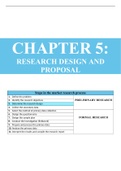
Steps in the market research process
1. Define the problem
2. Identify the research objectives PRELIMINARY RESEARCH
3. Determine the research design
4. Collect the secondary data
5. Select the method of primary data collection
6. Design the questionnaire
7. Design the sample plan FORMAL RESEARCH
8. Conduct the investigation (fieldwork)
9. Prepare and process the primary data
10. Analyze the primary data
11. Interpret the results and compile the research report
, RESEARCH DESIGN is the outline, framework, or plan for conducting a marketing research
project. It is a plan indicating the required data, the sampling plan, and the methods of data
collection and analysis.
Research design can help eliminate mistakes and inaccuracies. The purpose of a research
design is to plan and structure the research project in a way that will increase the ultimate
validity of the research findings.
A research design should include the following:
► information on the researcher, research team, and their skills
► the nature of the problem and the study objectives
► the data inputs, or causal data, on the basis of which the solution is to be reached
► the analytical method with which the inputs will be treated or calculated
► resources, time, and money available for the research project
Steps in preparation of research design
1.
Define the research problem
2.
Estimate the value of the information to be provided by the researcher
3
Select the data collection method (secondary/ primary)
4.
Select the measurement technique (survey, observation, focus group)
5.
Select the sample
6.
Select the analytical approach
7.
Evaluate the ethics of the research
8. Specify the time and financial costs
9.
Prepare the research proposal
RESEARCH DESIGN AND
PROPOSAL
Steps in the market research process
1. Define the problem
2. Identify the research objectives PRELIMINARY RESEARCH
3. Determine the research design
4. Collect the secondary data
5. Select the method of primary data collection
6. Design the questionnaire
7. Design the sample plan FORMAL RESEARCH
8. Conduct the investigation (fieldwork)
9. Prepare and process the primary data
10. Analyze the primary data
11. Interpret the results and compile the research report
, RESEARCH DESIGN is the outline, framework, or plan for conducting a marketing research
project. It is a plan indicating the required data, the sampling plan, and the methods of data
collection and analysis.
Research design can help eliminate mistakes and inaccuracies. The purpose of a research
design is to plan and structure the research project in a way that will increase the ultimate
validity of the research findings.
A research design should include the following:
► information on the researcher, research team, and their skills
► the nature of the problem and the study objectives
► the data inputs, or causal data, on the basis of which the solution is to be reached
► the analytical method with which the inputs will be treated or calculated
► resources, time, and money available for the research project
Steps in preparation of research design
1.
Define the research problem
2.
Estimate the value of the information to be provided by the researcher
3
Select the data collection method (secondary/ primary)
4.
Select the measurement technique (survey, observation, focus group)
5.
Select the sample
6.
Select the analytical approach
7.
Evaluate the ethics of the research
8. Specify the time and financial costs
9.
Prepare the research proposal


