Relational Data Model and its Importance
So, let's get started with our first topic of today's lesson - the relational data model.
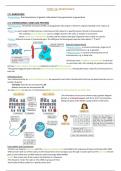
The relational data model represents data in the form of relation, which is basically a table
of values.
In this example, each row in a table in a relational database is a record with a unique ID
called the key, which can be used to create links between tables.
In this example, each row in a table in a relational database is a record with a unique ID
called the key. Which can be used to create links between tables.
Some popular relational database software used to create relational data models include
Oracle, Microsoft SQL Server, and MySQL.
Among these, we will be focusing on ‘Oracle Database Management System’ in our course.
,Now, let’s take a look at an example to understand the relational data model better.
Let’s suppose, we have a database consisting of two relations or tables - course and
students.
Here, we can see that course and students are interrelated by the attribute “course ID”
since it is present in both tables.
, Likewise, to better understand the relational data model, we must first learn what rows, columns,
and tables mean. For that, let’s take a look at another example.
Let’s suppose, we must record the details of students in a tabular format. To do so, we must
first create a table and provide the respective headings as student ID, student name, course,
and fee. These can also be referred to as columns.
Then, we add the details of the students simultaneously in a horizontal direction.
Hence, from this example, we can say that a table comprises a structured format that can
be used to store and display data, which is called a relation.
Similarly, a row represents a set of fields for specific entities or objects in a table. For
instance, in the students table, a particular row represents information regarding a
particular student, which is called a record or tuple.
Also, a column represents a set of facts that must be maintained as per the type of object.
For instance, to maintain the details of students in this table, we have used the columns
student ID, student name, course, and fee.
So, let's get started with our first topic of today's lesson - the relational data model.
The relational data model represents data in the form of relation, which is basically a table
of values.
In this example, each row in a table in a relational database is a record with a unique ID
called the key, which can be used to create links between tables.
In this example, each row in a table in a relational database is a record with a unique ID
called the key. Which can be used to create links between tables.
Some popular relational database software used to create relational data models include
Oracle, Microsoft SQL Server, and MySQL.
Among these, we will be focusing on ‘Oracle Database Management System’ in our course.
,Now, let’s take a look at an example to understand the relational data model better.
Let’s suppose, we have a database consisting of two relations or tables - course and
students.
Here, we can see that course and students are interrelated by the attribute “course ID”
since it is present in both tables.
, Likewise, to better understand the relational data model, we must first learn what rows, columns,
and tables mean. For that, let’s take a look at another example.
Let’s suppose, we must record the details of students in a tabular format. To do so, we must
first create a table and provide the respective headings as student ID, student name, course,
and fee. These can also be referred to as columns.
Then, we add the details of the students simultaneously in a horizontal direction.
Hence, from this example, we can say that a table comprises a structured format that can
be used to store and display data, which is called a relation.
Similarly, a row represents a set of fields for specific entities or objects in a table. For
instance, in the students table, a particular row represents information regarding a
particular student, which is called a record or tuple.
Also, a column represents a set of facts that must be maintained as per the type of object.
For instance, to maintain the details of students in this table, we have used the columns
student ID, student name, course, and fee.