01/03
MN10500 Lecture 4: Investment Decision Rules
Lecture Summary
● Calculations:
○ Payback Period
○ NPV (not the 'normal' IRR)
○ Investment decisions under Capital Rationing
○ Modified IRR
● Advantages and disadvantages of alternative investment appraisal techniques:
○ NPV is the most accurate method in most cases.
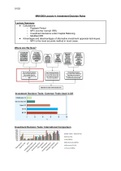
Where Are We Now?
Investment Decision Tools: Common Tools Used in UK
Investment Decision Tools: International Comparison
, 01/03
The Basics 1: Book Rate of Return (Accounting Rate Of Return)
● It is the average income divided by the average book value over the life of the
project.
● It is also called the accounting rate of return.
● Its components reflect tax and accounting figures, not market values or cash flows.
The Basics 2: Payback Period
● Payback Period: The number of years before cumulative cash flow equals initial
outlay.
● Payback Rule: The rule is to only accept projects that pay back within the desired
time frame.
● This ignores later year cash flows and present value of future cash flows.
Payback Period: Example
The Payback Rule ignores the time value of money.
The Basics 3: NPV & NPV Rule (Revisited)
● The net present value (NPV) of a project or investment is the difference between the
present value of its benefits and the required investment.
● Net Present Value Rule: Managers increase shareholders' wealth by accepting all
projects that are worth more than they cost. Therefore, managers should accept all
projects with a positive net present value (NPV).
Example: Use NPV Rule to Choose Among Projects
● Mutually Exclusive Projects: Taking one investment makes the other one
redundant because they both serve the same purpose.
MN10500 Lecture 4: Investment Decision Rules
Lecture Summary
● Calculations:
○ Payback Period
○ NPV (not the 'normal' IRR)
○ Investment decisions under Capital Rationing
○ Modified IRR
● Advantages and disadvantages of alternative investment appraisal techniques:
○ NPV is the most accurate method in most cases.
Where Are We Now?
Investment Decision Tools: Common Tools Used in UK
Investment Decision Tools: International Comparison
, 01/03
The Basics 1: Book Rate of Return (Accounting Rate Of Return)
● It is the average income divided by the average book value over the life of the
project.
● It is also called the accounting rate of return.
● Its components reflect tax and accounting figures, not market values or cash flows.
The Basics 2: Payback Period
● Payback Period: The number of years before cumulative cash flow equals initial
outlay.
● Payback Rule: The rule is to only accept projects that pay back within the desired
time frame.
● This ignores later year cash flows and present value of future cash flows.
Payback Period: Example
The Payback Rule ignores the time value of money.
The Basics 3: NPV & NPV Rule (Revisited)
● The net present value (NPV) of a project or investment is the difference between the
present value of its benefits and the required investment.
● Net Present Value Rule: Managers increase shareholders' wealth by accepting all
projects that are worth more than they cost. Therefore, managers should accept all
projects with a positive net present value (NPV).
Example: Use NPV Rule to Choose Among Projects
● Mutually Exclusive Projects: Taking one investment makes the other one
redundant because they both serve the same purpose.