100% satisfaction guarantee Immediately available after payment Both online and in PDF No strings attached 4.2 TrustPilot
logo-home
Other

NURSING 101 Complete Hurst Packet

Rating
-
Sold
-
Pages
469
Uploaded on
02-03-2022
Written in
2021/2022

NURSING 101 Complete Hurst Packet TABLE OF CONTENTS Fluids and Electrolytes 3 Acid-Base Balance 13 Burns… 16 Oncology… 22 Endocrine 38 Cardiac 52 Psychiatric Nursing… 71 Gastrointestinal 92 Neuro… 104 Maternity Nursing… 114 Respiratory… 139 Orthopedics… 144 Renal 150 Questions 158 Final Thoughts 178 Evaluations 186 Table of Contents for CD 188 Pediatric… 189 Hurst Review does not condone the discussion of the NCLEX-RN exam post- test. Thank you. NOTICE TO FACULTY All materials used during any Hurst Review Services seminar are copyrighted and are not for use without the sole permission of Marlene Hurst in any form or fashion. This material is not intended for lecture use by any School of Nursing without permission. NOTICE TO STUDENTS If you are a student who has obtained this book from a past participant of my workshops SHAME, SHAME, SHAME!!! Please understand that this book is written to accompany the live or video lectures presented in the class itself or my Internet Tutorials. This book is only an outline of what is needed to pass NCLEX. I hope you will join me in a live or video class or on the Internet to reap the full benefits of my materials. General Class Information - Please turn off ALL cell phones and pagers. -This class MAY NOT be recorded in any manner. (This included tape recording or videoing.) -Class Time: 8AM-4PM * Please note that each class is presented in a particular sequence if your instructor completes the material for that day, you may get out prior to 4 PM. FLUID VOLUME EXCESS: HYPERVOLEMIA Define: too much volume in the l. Causes: a. CHF: heart is , CO , decreased perfusion, UO *the volume stays in the b. RF: Kidneys aren't c. Alkaseltzer Fleets enemas All 3 have a lot of IVF with Na d. Aldosterone (steroid, mineralocorticoid) Where does aldosterone live? -Normal action: when blood volume gets low (vomiting, blood loss, etc.) →aldosterone secretion increases→ retain Na/water→ blood volume ** Diseases with too much aldosterone: -also seen with liver disease and heart disease 1. 2. **Disease with too little aldosterone: 1. e. ADH (anti-diuretic hormone) Normally makes you retain or diurese? Retain? 2 ADH problems Too Much Not enough Retain Lose (diuese) Fluid Volume Fluid Volume SIADH DI Syndrome of Inappropriate ADH Secretion Diabetes Insipidus Urine Urine Blood Blood *Concentrated makes #’s go up specific gravity, Na *Dilute makes #’s go down ADH lives in pituitary; key words to make you think potential ADH problem: craniotomy, head injury, sinus surgery, transphenoidal hypophysectomy *Another name for anti-diuretic hormone (ADH) is Vasopressin. The drug Vasopressin (Pitressin or DDAVP (Desmopressin acetate) may be utilized as an ADH replacement in Diabetes Insipidus. f. S/Sx of FVE: Distended neck veins/peripheral veins: vessels are Peripheral edema, third spacing: vessels can't hold anymore so they start to CVP: measured where? ; number goes More More Lung sounds: Polyuria: kidneys trying to help you Pulse: ; your heart only wants fluid to go If the fluid doesn't go forward it's going to go into the BP: move volume more Weight: any acute gain or loss isn't fat-it’s fluid g. Treatment: Low Na diet Diuretics Loop *Bumex® may be given when Lasix® doesn’t work. Thiazide (HCTZ) * Watch lab work with all diuretics *Dehydration and electrolyte problems K-sparing Bed rest induces *when you are supine you perfuse your kidneys more h. Interventions: Physical Assessment Give IVF’s slowly to elderly FLUID VOLUME DEFICIT: HYPOVOLEMIA Big Time Deficit=Shock l. Causes: Loss of fluids from anywhere Thoracentesis, paracentesis, vomiting, diarrhea, hemorrhage Third spacing (when fluid is in a place that does you no good) *burns *ascites Polyuria- Diseases with polyuria Oliguric- Anuric- 2. Weight Decreased Skin Turgor Dry mucous membranes Decreased Urine Output kidneys either aren't being or they are trying to BP? (less , less ) Pulse? , heart is trying to pump what little is left around CVP? , less volume, less Peripheral Veins/Neck veins Cool Extremities (peripheral in an effort to shunt blood to ) Urine Specific Gravity , if putting out any urine at all it will be 3. Tx and Nursing Interventions: Mild Deficit: Severe Deficit: Quickie IV Fluid Lecture Isotonic: Go in the vascular space and stays there! Examples of Isotonic Solutions: , , Hypotonic: Go in the vascular space, hang out a little while and rehydrate, but they do not stay in the vascular space.....If they stayed in the vascular space they wouldn't be hypotonic they would be These solutions go in and hang out and rehydrate, then they move into the cell and the cell burns the remainder up in cellular metabolism. They are hydrating solutions, but they won't drive your pressure up because they do not stay in the vascular space. Hypertonic Solution: - Volume expander and solution that draws fluids into the vascular space. - Examples: D10W, 3% NaCl, 5% NaCl, D5 LR, D5 ½ NaCl, D5 NaCl, TPN Hypotonic Solution: - Causes a fluid shift from the vascular space into the cells. - Examples: D2.5 W, ½ NaCl, 0.33% NaCl MAGNESIUM AND CALCIUM Fact: Magnesium is excreted by kidneys and it can be lost other ways, too (GI tract) Hypermagnesemia Hypercalcemia Causes: Renal Failure Causes: Hyperparathyroidism: too much Antacids Thiazides (retain ) DTR's Muscle Tone Immobilization (you have to bear weight to keep Ca in ) Flushing Arrhythmias bones Warmth LOC Mg makes you Pulse kidney stones Respirations *majority made of calcium Tx: Ventilator Tx: Move! Dialysis Calcium gluconate Fluids! *Calcium gluconate in the presence of magnesium- they inactivate each other Phospho Soda & Fleets enema -both have phosphorous *Ca has inverse relationship with . *When you drive Phos up, Ca goes . Steroids Add what to diet? Safety Precautions? *Must have Vitamin to use Ca. *Calcitonin serum Ca HINT: If you want to get Mg & Ca questions right, think muscles 1st. HYPOMAGNESEMIA HYPOCALCEMIA Causes: Diarrhea - lots of Mg in intestines Causes: Hypoparathyroidism Alcoholism Radical Neck *alcohol suppresses ADH & it’s Thyroidectomy hypertonic -not eating -drinking HINT: If you want to get Mg & Ca questions right, think muscles 1st. S/Sx: Muscle Tone -Could my patient have a seizure? Stridor/laryngospasm - airway is a +Chvostek's - tap cheek +Trousseau's - pump up BP cuff Arrhythmias - heart is a DTR's Mind Changes Swallowing Probs - esophagus is a Tx: Give some MG Tx: Vit D Check function Amphogel® (before and during IV Mg) Phosphorous binding drug NCLEX scenario answers: IV Ca A. call the doctor Always make sure on a B. decrease the infusion C. Stop the infusion D. Reassess in 15 min. Seizure Precautions What do you do if your patient begins to c/o flushing and sweating when you start IV Mg? SODIUM Your Na level in your blood is totally dependent on how much water you have in your body. Hypernatremia=Dehydration Hyponatremia=Dilution Too much Na; not enough water Too much water; not enough Na Causes: Causes: hyperventilation -vomiting, sweating then drinking H2O *this only replaces the water heat stroke -psychogenic polydypsia DI *loves to drink S/Sx: -D5W (sugar & water) Dry mouth -SIADH Thirsty - already dehydrated by the time you're thirsty Swollen tongue Neuro changes - Brain doesn't like it when Na's messed up Tx: Tx: Restrict . Pt needs Dilute pt with IV Fluids Pt doesn't need . Diluting makes serum Na go If having neuro probs: Needs hypertonic saline Daily weights -means "packed with particles" If you've got a Na problem you've I & O got a problem. 3-5% NS Lab work Feeding tube pts - tend to get POTASSIUM Excreted by kidneys Kidneys not working well, the serum potassium will go Hyperkalemia Hypokalemia Causes: Causes: kidney troubles -vomiting aldactone - makes you retain . -NG suction -diuretics -not eating S/Sx: Begins with muscle twitching Life- S/Sx: Muscle Cramps Then proceeds to weakness, Threatening & weakness Then flaccid paralysis Arrhythmias Tx: Tx: Dialysis - Kidneys aren't working Give K! Calcium gluconate Aldactone -decreases Eat K Glucose and insulin - Insulin carries & into the cell - Any time you give IV insulin worry about & Kaexalate® - given for hyperkalemia - exchanges Na for K in the GI tract Extras! Major problem with PO K? Assess UO before/during IV K. Always put IV K on a . Mix well! Never give IV K ! Burns during infusion? Is it okay to add to a bag that's already up and running? ACID-BASE BALANCE Major chemicals you have to remember = Bicarb, Hydrogen, CO2 Lung chemical→CO2 Kidney chemicals →B and H There's only one way to get rid of CO2. What is it? These chemicals can either make you sick or compensate. It depends on which imbalance you have. In respiratory acidosis/alkalosis, which organs are sick? Who's going to fix everything (compensate)? What are the chemicals the kidneys use to compensate with? In metabolic acidosis/alkalosis which organs are sick? If they are sick, who's going to fix things (compensate)? What is the only chemical the lungs have to compensate with? Do the lungs compensate slowly or quickly? Do the kidneys compensate slowly or quickly? Compensation acidosis metabolic respiratory lungs compensate kidneys compensate RR to blow off C02 retain/secrete B PCO2 alkalosis excrete H Bicarb on ABG’s metabolic respiratory lungs compensate kidneys compensate RR to save C02 excrete B PCO2 Respiratory Acidosis (hypoventilating) Is this a lung problem or a kidney problem? What's the problem chemical? Do we have too much or too little of this chemical in the body? How did this happen? Who's going to compensate? Increased C02→Decreased LOC retain H Bicarb on ABG’s Increased C02→ Decreased 02 early hypoxia late hypoxia Treatment→ Fix the problem!!!! Drug to help correct acidosis? Be aware of drugs that decrease RR. Restless pt? Respiratory Alkalosis (hyperventilating) Think about the name. Who’s sick? Who’s going to compensate? Situation: Hysterical patient. Well, are we going to wait until the kidneys kick in? Breathe into a . Maybe sedate. TX: Treat the problem. Metabolic Acidosis Think about the name. Who’s sick? Who’s going to compensate? Scenario: DKA, Starvation When you're starving you break down , produce , ketones are . TX: Treat the problem Metabolic Alkalosis Think about the name. Who’s sick? Scenario: Vomiting TX: Treat the problem. Who’s going to compensate? What would these cause? Pneumothorax R. acid R. alk M. acid M. alk Pneumonia R. acid R. alk M. acid M. alk Alka Seltzer/Antacids R. acid R. alk M. acid M. alk NG to suction R. acid R. alk M. acid M. alk Contusion to lung parenchyma R. acid R. alk M. acid M. alk Broken ribs R. acid R. alk M. acid M. alk Patient getting lots of IVP bicarb R. acid R. alk M. acid M. alk Factoid: acidosis=hyperkalemia (acidosis makes K leak out of cell) alkalosis=hypokalemia (alkalosis pushes K back into the cell) BURNS -The risk of death increases in the very and the very . -Where do most burns occur? -After a burn many different pathophysiological changes occur. WHY? a. Why does plasma seep out into the tissue? Increased permeability b. When does the majority of this occur? c. Why does the pulse increase? Anytime you're in a FVD, Pulse d. Why does the cardiac output decrease? Less to pump out. e. Why does the urine output decrease? Kidneys are either trying to hold on or they aren't being f. Why is epinephrine secreted? Makes you , shunts blood to vital organs g. Why are ADH and aldosterone secreted? Retain & with aldosterone and Retain with ADH Therefore your blood volume will go -What is the most common airway injury? poisoning -Normally oxygen should bind with hemoglobin. Carbon monoxide can run much faster than oxygen . . . . Therefore, it gets to the hemoglobin first and binds Can oxygen bind now yes/no - Carbon monoxide poisoning cannot be determined with O2 saturations; the sat monitor picks up anything that is bound to hemoglobin so if carbon monoxide is bound to the Hb then the sat may appear normal - Carboxyhemoglobin: blood test to determine carbon monoxide poisoning Now the patient is . Tx: From this information do you think it would be important to determine if the burn occurred in an open or closed space? -When you see a patient with burns to the neck/face/chest you had better think what? -A patient is burned over 40% of their body. How do you think this is determined? *Estimate of Total Body Surface Area Head= Each arm= Each leg= Anterior trunk= Posterior trunk= Genitalia= -One of the most important aspects of burn management is . -It is not uncommon for albumin to be given after a major burn. (Not given during the first 24 hours). You know that albumin holds onto in the vascular space. -This will increase/decrease the vascular volume. -What will it do to kidney perfusion? -What will it do to BP? -What will it do to cardiac output? -Will this help correct a fluid volume deficit? -When you start giving a patient albumin you know that the vascular volume will increase. What will happen to the work load of the heart? -If you stress the heart too much you know that the patient could be thrown into fluid volume . -If this occurs what will happen to CO? -What will the lung sounds be like? -On any patient who is receiving fluids rapidly, what is a measurement (hint: heart) you can take hourly to make sure you’re not overloading them? -Is it important to know that the burn occurred at 11:00 p.m.? Why? Because you know that fluid therapy (for the first 24 hours) is based on the time the injury occurred, not when treatment was started. Common rule: Calculate what is needed for the first 24 hours and give half of it during the first 8 hours. This is the Parkland Formula. 1st 8 hours = ½ of total volume 2nd 8 hours = ¼ of total volume 3rd 8 hours = ¼ of total volume To calculate fluid replacement properly you also need to know the patient’s weight and TBSA affected. If the patient is restless it may mean fluid replacement is inadequate, pain, or hypoxia. *Priority: If you had to pick, which of the following would you choose to determine if a patient’s fluid volume is adequate? Their weight or their urine output? -A patient’s respirations are shallow. You know they are retaining what? Therefore, which acid-base imbalance will they have? -A patient was given only 5 mg of Morphine when the order was for a maximum of 10mg. Why did the nurse do this? -Why are IV pain meds preferred over IM with burns? -Why is the patient given a tetanus toxoid plus the immune globulin? (1) Tetanus Toxoid: (active immunity) *takes 2-4 weeks to get the AB’s (2) Immune globulin: think immediate protection (passive immunity) -Do you think there is more death with upper or lower body burns? -A patient has a circumferential burn on their arm. What does this mean and what should you be checking? -If a patient’s vascular checks in this arm are bad the doctor may do what procedure to relieve pressure? -A patient was wrapped in a blanket to stop the burning process. Since the flames are gone does that mean the burning process had stopped? -What else could have been done to stop the burning process? -How else did the blanket help? Held in and kept out . -Why is it important that jewelry be removed? -What kinds of things do you look for to determine if any airway injury has occurred? -A foley catheter was inserted so you could measure urine output. -How often will this need to be monitored? -Is it possible that when you insert the catheter that no urine will return? Why? Kidneys are either attempting to the fluid or they might not be being perfused adequately. -What would you do if the urine was brown/ red? -If there is no urine output or if it is less than 20cc/hour, what would you start worrying about? -What drugs might be ordered to increase kidney perfusion? -After 48 hours, the patient will begin to diurese. Why? Because fluid is going back into the space. Now we have to worry about fluid volume . What will naturally happen to urine output during this time? -The patient’s serum potassium level is 5.8. You know that potassium likes to live inside or outside of the cell? With a burn, what happens to cells? So, what happens to the number of potassiums in the serum (vascular space)? Therefore, you better monitor your patient for which electrolyte imbalance? hypokalemia or hyperkalemia -Why do you think Mylanta®, Protonix®, Pepcid®, and Reglan® are ordered? -Why do you think the doctor wants the patient to be NPO and have an NGT hooked to suction? -If a patient doesn’t have bowel sounds, what will happen to the abdominal girth? -Do you think the patient will need more or less calories than before? -The NGT will be removed when you hear what? -When you start GI feedings, what could you measure to ensure that the supplement was moving through the GI tract ok? -What is some lab work you could check to ensure proper nutrition and a positive nitrogen balance? -Since the patient has 2nd and 3rd degree burns, is it possible that they could have problems with contractures? -Since they have burns on their hands, what are some specific measures that may be taken? -Neck? -If a patient has a perineal burn, what do you think the number one complication will be? -What is eschar? -Does it have to be removed? -If it’s not removed can new tissue regenerate? -What likes to grow in eschar? -What type of isolation will you use with the patient? -Travase® or Collagenase®: enzymatic drug→ eats dead tissue -Don’t use on face -Don’t use over large nerves -Don’t use if pregnant -Don’t use if area opened to a body cavity -Hydrotherapy is also used to debride. -Why should these drugs be alternated? -Broad spectrum antibiotics are avoided to prevent super-infections. However, they will be used until the wound cultures have returned. -If grafting is done, a pressure dressing will be applied in surgery….Then when the bleeding has stopped the wound will be left open to air. -If the skin graft should become blue or cool what would this mean? -Sometimes the doctor will order for you to roll sterile Q-tips over the graft with steady, gentle pressure from the center of the graft out to the edges. Why? -If a patient has a chemical burn what do you do? -If the patient has an electrical burn there will usually be 2 wounds. What are they? -If a patient comes in with an electrical injury what is the first thing you should do? -What arrhythmia is this patient at high risk for? -With electrical burns toxins can build up and cause damage. -It is not uncommon for this patient to be placed on a spine board with a c-collar. Why? Electrical injuries tend to occur in places. -Are amputations common? Why? -Other complications of electrical wounds: cataracts, gait problems, and just about any type of neurological deficit. ONCOLOGY General Information: - Alcohol + tobacco = co-carcinogenic -Tobacco is the #1 cause of preventable cancer. -Suspected dietary causes of cancer: - Low fiber diet -Nitrites (processed sandwich meat) - Increased red meat - Alcohol - Increased animal fat -Preservative and additives -Increased incidents of cancer in the immunosuppressed *that is why there is a higher incident of cancer > age 60 -The most important risk factor for cancer = aging -Cruciferous veggies (broccoli, cauliflower, and cabbage), Vitamin A foods (Colored veggies), and Vitamin C could decrease risk -African Americans have a greater incident than Caucasians. -Primary Prevention: Ways to prevent actual occurrence (sunscreen and no smoking) -Secondary Prevention: Using screenings to pick up on cancer early when there is a greater chance for cure or control -Chronic brings about uncontrolled growth of abnormal cells. -Female: a. Monthly self- breast exam b. Yearly clinical breast exam for women >40 years old - Between ages 20-39 needed every 3 years c. Annual pelvic exam d. Pap smear every 3 years if there's been no problem e. Mammogram-baseline at 35-40, yearly after 40 (2 views of each breast) f. Colonoscopy at age 50 then every 10 years. -Male: a. Monthly self-breast exam b. Monthly testicular exam - testicular tumors grow fast c. Yearly digital rectal exam and yearly PSA (prostate specific antigen) for men over age 50 d. Colonoscopy at age 50 then every 10 years CAUTION: (Change in bowel/bladder habits; A sore that does not heal; Unusual bleeding/discharge; Thickening or lump in breast or elsewhere; Indigestion or difficulty swallowing; Obvious change in wart or mole; Nagging cough or hoarseness) -Cancer can invade bone marrow→ anemia and thrombocytopenia - Cachexia- extreme wasting and malnutrition -Radiation therapy: a. Internal Radiation (brachytherapy) - With all brachytherapy, the radioactive source is inside the patient; radiation is being emitted 1. Unsealed: patient and body fluid emit radiation -isotope is given IV or PO -usually out of system in 48 hours 2. Sealed or solid: patient emits radiation; body fluids not radioactive -implanted close or in the tumor -In general terms, do radiation implants emit radiation to the general environment? - Nursing assignments should be rotated daily, so that the nurse is not continuously exposed - The nurse should only care for one patient with a radioactive implant in a given shift -Precautions: -private room -restrict visitors *no visitors less than 16 years of age -no pregnant visitors/nurses -mark the room -wear a film badge at all times - limit each visitor to 30 min per day -visitors must stay at least 6 feet from source -How can you help prevent dislodgment of the implant? -Keep the patient on . -Decrease in the diet. -Prevent bladder . -What do you do if the implants become dislodged and you see it? *Don’t forget this patient is immunosuppressed. b. External Radiation (teletherapy, beam radiation) -Usual side effects: usually limited to the exposed tissues *erythema, *shedding of skin, *altered taste, *fatique *pancytopenia (all blood components are decreased) **many signs and symptoms are location and dose related. - Is it okay to wash off the markings? - Is it okay to use lotion on the markings? - Protect site from sun for 1 year after completion of therapy -Chemotherapy: works on the cell cycle - Usually scheduled every 3-4 weeks - Most Chemo drugs are given IV via port - Many absorb through the skin and mucous membranes; be careful handling them -Usual side effects: alopecia, N/V, mucositis, immunosuppression, anemia, thrombocytopenia -A patient's WBC count must be at least before they will receive their treatment. -A vesicant is a type of chemo drug that if it infiltrates (extravasates) will cause tissue . -What are s/sx of extravasation? - The number one thing to remember with extravasation is PREVENTION! -What do you do if this happens? General ways to prevent infection: - Private room - Wash hands - Have own supplies in room - Limit people (visitors and nurses) in room - Change dressings daily and IV tubing - Cough and deep breath - No fresh flowers or potted plants - Avoid crowds - Do not share toiletries - Bath warm moist areas daily - Wash hands after touching pet - Avoid raw fruits and veggies - Drink only fresh water -Slight increase in temp may mean sepsis -Absolute neutrophil count most important Specific Types of Cancer: Cervical Cancer -Risk Factors: sex/pregnancy at young age, repeated STD's - Often asymptomatic in pre-invasive cancer - Invasive cancer classic symptom: painless vaginal bleeding - Other general S/Sx: watery, blood-tinged vaginal discharge, leg pain along sciatic nerve, and back/flank pain -l00% cure if detected early Tx: -What is the test that helps diagnose this? Abnormal ? Repeat test - electrosurgical excision, laser, cryosurgery - radiation and chemo for late stages -conization- remove part of cervix -hysterectomy Uterine Cancer -Risk Factors: greater than 50 years of age, + family hx, late menopause, no pregnancy Major Symptom: post menopausal bleeding Other s/sx: watery/ bloody vaginal discharge, low back/abd pain, pelvic pain Dx: CA-125 (blood test) to R/O ovarian involvement Test to evaluate for metastasis: -CXR -CT -IVP -liver and bone scan -BE The most definitive diagnostic test is D&C (dilatation & curettage) and endometrial biopsy Treatment: 1. Surgery: Hysterectomy *TAH (total abd hysterectomy) = uterus and cervix only! Tubes & ovaries removed? -bilateral oophorectomy (ovaries) -bilateral salpingectomy (tubes) Radical Hysterectomy -may remove all of the pelvic organs -pt may have colostomy, ileal conduit *The greatest time for hemorrhage following this surgery is during the first 24 hours. Why? Pelvic congestion of . *Major complication with abd hysterectomy? *Major complication with vaginal hysterectomy? *Will probably have a foley; if she doesn't you better make sure she does what in the next 8 hours? *Why is it so important to prevent abdominal distension after this surgery? *We do not want tension on the . *Dehiscence and Evisceration *Why do we avoid high-fowler's position in this patient? *May have an abdominal and perineal dressing to check. *As this patient is at risk for pneumonia, thrombophlebitis, and constipation what is one thing you can do to prevent these complications? *Avoid sex and driving.  Also avoid girdles and douches. *Any exercise, including lifting heavy objects that increases pelvic congestion should be avoided. *Is it possible that the patient could hemorrhage l0-l4 days after this surgery? *Is a whitish vaginal d/c okay? *Showers or baths? 2. Radiation: intra-cavitary radiation to prevent vaginal recurrence 3. Chemotherapy: Doxorubicin®, Cisplatin® 4. Estrogen inhibitors: Depro-Provera®, Tomoxifen®, Novadex® Breast Cancer - One has a 3 fold risk increase of developing breast cancer if a first degree relative (mother, sister, daughter) had pre-menopausal breast cancer - Known risk factors: -High dose radiation to thorax prior to age 20 -Period onset prior to age 12 -Menopause after age 50 -No pregnancies (null parity) -First birth greater than 30 -S/Sx: Change in the appearance of the breast (orange peal appearance, dimpling, retraction, discharge from breast), or lump -Tail of Spence: -Tx: 1. Surgery -Post-op care -Bleeding? → dressings, back, hemovac, Jackson- Pratt drain -Elevate arm on side -Associated nursing care: Stay away from arm on affected side for lifetime of patient: No constriction, no BP's or injections, wear gloves when gardening, watch small cuts, no nail biting, and no sunburn, no IV -Brush hair, squeeze tennis balls, wall climbing, flex and extend elbow. Why? Promotes circulation -Look at incision -Reach to Recovery (Support Group) -Lymphedema * Two functions of the lymphatic system: fights infection and promotes drainage 2. Chemotherapy drugs: Taxol®, Adriamycin® 3. Estrogen receptor blocking agents: Tomxifen® (Nolvadex®, Tamofen®) 4. Estrogen synthesis inhibitors: Lupron®, Zoladex® 5. Radiation Lung Cancer -Leading cause of cancer death worldwide -5 Year survival rate is 14% Major risk factor: Smoking *when you have stopped smoking for 15 years, the incidence of lung cancer is almost like that of a non-smoker S/Sx: hemoptysis, dyspnea (may be confused with Tb, but Tb has night sweats), hoarseness, cough, change in endurance, chest pain, pleuritic pain on inspiration, displaced trach *may metastasize to bone Dx: a. Bronchoscopy -NPO pre and NPO until returns -Watch for respiratory depression, hoarseness, dysphagia, SQ emphysema b. Sputum specimen -Best time to obtain? -Is this sterile? -What should the pt do first? *Trying to decrease bacterial count in the mouth. c. CT d. MRI Tx: Surgery: The main tx for stage I and II a. Lobectomy: -chest tubes and surgical side up b. Pneumonectomy -Position on side - No chest tubes. Why? Avoid severe lateral positioning→ mediastinal shift  Laryngeal Cancer Risk factors: Smoking (any form of tobacco use), alcohol, voice abuse, chronic laryngitis, industrial chemicals S/Sx: Hoarseness, difficulty swallowing, burning, sore throat, swelling in neck, loss of speech, no early signs, mouth sores, lump in neck, color changes in mouth/tongue, dentures do not fit anymore, unilateral ear pain Dx: Laryngeal exam, MRI Tx: 1. Surgery: Total laryngectomy (removal of vocal cords, epiglottis, thyroid cartilage) -Since the whole larynx (remember this includes the epiglottis) is removed this patient will have a permanent . -Position post-op? -NG feedings to protect the suture line (peristalsis could disrupt suture line) -Monitor drains -Watch for carotid artery rupture -Rupture of innominate artery-medical emergency -Frequent mouth care - decrease bacterial count in the mouth - NPO patients tend to get pneumonia -Bib (acts like a filter) -Humidified environment *Remember, with a total laryngectomy ALL breathing is done through the stoma. 2. Radiation 3. Chemotherapy Obturater Can you patient with a total laryngectomy …. Whistle? Use a straw? Smoke? Swim? Suctioning -Sterile or Non-sterile technique? -Hyperoxygenate when? -When do you stop advancing the catheter? -Apply suction when? -Intermittent or continuous? *Don’t be mean. -Suction no longer then seconds. -Watch for arrhythmias. -Which nerve can be stimulated? -When vagus nerve is stimulated, heart rate - Is this patient hypoxic? Colorectal Cancer (CRC) -May start as a polyp -2/3 colorectal cancer occurs in the rectosigmoidal region - Most frequent site of metastasis: liver -take bleeding precautions - Other problems to watch for: Bowel obstruction, perforation, fistula to bladder/vagina -Risk Factors: inflammatory bowel diseases, genetic, chronic constipation (retaining carcinogens), dietary factors (refined carbs, low fiber, high fat, red meat, fried and broiled foods), if you have a first degree relative with CRC your risk just increased 3X the norm - 95% of those who get CRC are > 50 years old -Screening: -Fecal occult blood testing should begin at 50 -Flexible sigmoidoscopy every 5 years after age 50 or colonoscopy every 10 years after age 50 -The definitive test for CRC = colonoscopy S/Sx: -Most common signs are: rectal bleeding, anemia, and changes bowel habits/ stool -Other S/Sx: blood in the stool, vague abdominal pain, fatigue, abd fullness, unexplained weight loss -May become obstructed (visible peristaltic waves with high pitched tingling bowel sounds) Tx: -Surgery, radiation and chemo (DOC= 5-FU®) -May have a colostomy post-op a. colectomy-part of colon removed -may not need colostomy b. abdomino-perineal resection-removal of colon, anus, rectum *Can you take a rectal temp on this client? Don’t take rectal temp if thrombocytopenic, abdominal-perineal resection, immunosuppressed. Bladder Cancer -Greatest risk factor: smoking -Major Symptom: Painless intermittent gross/microscopic hematuria Dx: Cystoscopy Tx: Surgery (all/part of bladder) → Urinary diversion (urostomy) -Ileal conduit (a piece of the ileum is turned into a bladder; ureters are placed in one end; the other end is brought to the abd. surface as a stoma) -May be impotent -Hourly -Increase fluids: ( - cc of fluid per day) -flush out conduit -Mucus normal? - Intestines always make mucus -Change appliance in a.m. (This is when output will be at its lowest). *It is OK to place a little piece of 4 X 4 inside stoma during skin care to absorb urine….just don’t forget to remove it. Prostate Cancer -This pt. comes to the doctor with s/sx of benign prostatic hyperplasia (BPH): hesitancy, frequency, frequent infections, nocturia, urgency, dribbling. - Most common sign is gross painless hematuria -Digital rectal exam done and prostate is hard/ nodular; this usually means prostate cancer. Dx: -Tx: 1. Lab work: -PSA increased - Prostatic Specific Antigen (PSA) - this is a protein that is only produced by the prostate - normal= <4 ng/ml - if you have a two or more 1st degree relative with prostate CA, start PSA by at least age 45 -alkaline phosphatase (if ↑ means bone metastasis) *prostate Ca likes to go to spine, sacrum, and pelvis -Increased acid phosphatase 2. Biopsy -when prostate CA is suspected, a biopsy must be done for confirmation prior to surgery. 1. Watchful Waiting: in early stages (for asymptomatic, older adults with other illnesses) 2. Surgery: a. Radical Prostatectomy (done with localized prostate CA) -take out the prostate and the patient is cancer free -may have ED due to pudendol nerve damage -may have incontinence (Kegel) -patient is sterile -if there is no lymph node involvement, no ↑ in acid phosphatase, and no metastasis the surgeon will try to preserve the pudendol nerve b. Prostatectomy (TURP – transurethral resection of the prostate) -Usually reserved for BPH to help urine flow, not a cure for prostate CA -No incision -Most common complication? -With other procedures you have to explain risk of impotency/infertility -Is it normal to see bleeding after this surgery? -Continuous bladder irrigation – maintains patency, flush out clots *3-way catheter *no kinks *subtract irrigant from output -keep up with amount of irrigant instilled -Rule: Never hand or manually irrigate catheter with fresh surgery without a surgeon’s order. -What drug do you give for bladder spasms? B & O suppository®, Ditropan® *always assess prior to selecting an implementation answer *always assess the patient first -When catheter is removed what do you watch for? -Temporary incontinence expected (perineal exercises) -Avoid sitting, driving, strenuous exercise; do not lift more than 20 lbs. Why? -Colace® (avoid straining) -Increase fluids 3. Radiation 4. Chemotherapy 5. Hormone therapy - may decease testosterone through bilateral orchiectomy -Estrogens -Lupron® Stomach Cancer Risk factors: -H-pylori -Pernicious anemia If you have either of these, your risk for stomach -Achlorhydria cancer just went UP Related to: -pickled foods, salted meats/fish, nitrates, increased salt -Billroth II (partial gastrectomy with an anastomosis) *causes atrophic gastritis -Tobacco and Alcohol S/Sx: Most common: Heart burn and abd discomfort Other S/Sx: loss of appetite, weight loss, bloody stools, coffee-ground vomitus, jaundice, epigastric and back pain, feeling of fullness, anemia, stool + for occult blood, achlorhydria (no HCL in the stomach), obstruction (→abdominal distension, NPO, n/v, pain, NG tube to suction for abd decompression) Dx: Upper GI, CT, EGD Tx: 1. Surgery (preferred): Gastrectomy -Fowlers position (decrease stress on ) -Will have NG tube (for decompression) *Is it ok to reposition? -2 major complications: A. dumping syndrome B. B-12 deficient anemia – Pernicious anemia - Schilling’s test (measures the urinary excretion of Vitamin B-12 for diagnosis of pernicious anemia) → no stomach→ no intrinsic factor → can’t absorb oral B-12→ can’t make good RBC’s →pt is anemic 2. Chemotherapy: 5-FU®, Doxorubicin®, Mitomycin-C®, Cisplatin® 3. Radiation ENDOCRINE l. Thyroid Problems -Produces 3 hormones (T3, T4, Calcitonin) -You need to make these hormones. (This is dietary iodine) -Thyroid hormones give us ! Hyperthyroid TOO MUCH ENERGY!! (Graves Disease) -nervous -appetite -weight -irritable -sweaty/hot -GI -exophthalmus -BP -attention span -thyroid *If you drew a serum T4 level on this patient would it be increased or decreased? Diagnosis: thyroid scan TX: A. Antithyroids: Propacil®, PTU®, Tapazole® -Stops the thyroid from making TH's -We want this pt to become euthyroid (eu=normal) -Tapered and discontinued B. Iodine Compounds (Potassium iodide®, Lugol's solution®, SSKI®) -Decreases vascularity -Give in milk, juice, and use straw C. Beta Blockers: Inderal® decreases myocardial contractility - could decrease cardiac output -Decreases HR, BP -Rule: Do not give beta blockers to asthmatics or diabetics. D. Radioactive Iodine (one dose) -Destroys thyroid cells→ hypothyroid -Follow radioactive precautions 1) Stay away from for hours 2) Don’t anyone for hours -Watch for thyroid storm *Thyroid storm, thyrotoxicosis, and thyrotoxic crisis are the same. *It is hyperthyroidism multiplied by l00 E. Surgery: thyroidectomy (partial/complete) -Post-op: *Teach how to support neck *Positioning *Check for bleeding *Nutrition (pre & post-op) *Assess for recurrent laryngeal nerve damage * could lead to vocal cord paralysis, if there is paralysis of both cords airway obstruction will occur requiring immediate trach *Trach set at bedside * Hypocalcemia * Swelling * Recurrent laryngeal nerve damage *Teach to report any c/o pressure *Assess for parathyroid removal Hypothyroid (no energy) (Myxedema) -When this is present at birth it's called cretinism (very dangerous, can lead to slowed mental and physical development if undetected) -S/S: -fatigue -GI -weight -hot/cold -speech -no expression You may be taking care of a totally immobile patient -Tx: -Synthroid®, Proloid®, Cytomel® -Do they take these meds forever? -What will happen to their energy level when they start taking these meds? -People with hypothyroidism tend to have 2. Parathyroid Problems *The parathyroids secrete which makes you pull calcium from the and place it in the blood. Therefore, the serum calcium level goes . *If you have too much parathormone in your body the serum calcium level will be . *If you do not have any parathormone in your body the serum calcium level will be . Hyperparathyroidism = Hypercalcemia=Hypophosphatemia -Too much . -Serum calcium is . Serum phos is . -Tx: Partial parathyroidectomy - when you take out 2 of your parathyroids PTH secretion decreases Hypoparathyroidism=Hypocalcemia=Hyperphosphatemia -Not enough . -Serum calcium is . Serum phos is . -Tx: 3. Adrenal Problems: got to have adrenals to handle stress 2 parts: a. Adrenal medulla (epinephrine, norepinephrine) 1. Adrenal Medulla Problems: Pheochromocytoma -benign tumors that secrete epi and norepi -BP -Pulse -Flushing/diaphoretic -VMA (vanylmandelic acid test): a 24 hour urine specimen is done and you are looking for increased levels of epi/norepi (also called catecholamines) *With a 24° urine you should the first voiding and the last voiding. -Tx: surgery b. adrenal cortex 1. Glucocorticoids *Change your mood *Alter defense mechanisms *Breakdown protein/fat *Inhibits insulin 2. Mineralocorticoids *Aldosterone *Make you retain & *Make you lose . Too Much a. Vascular Space b. Serum Potassium Not Enough a. Vascular Space b. Serum Potassium 3. Sex hormones *Adrenocorticotropin hormones (ACTH) and cortisol mean the same thing. They refer to the hormones of the adrenal cortex. When you hear the word “steroid” this is referring to the same things. Too many steroids = Hypercortisolism (just another word) A. Adrenal Cortex Problems l. Addison’s disease (adrenocortical insufficiency) -If this patient is insufficient do they have enough glucocs., mineralos., or sex hormones? -Focus on aldosterone *Normally, aldosterone makes us retain Na/Water and lose K Now we don't have enough (insufficient) so we will lose and and retain . -The serum K will be . -The majority of the s/sx are a result of the Hyperkalemia initially. * Beginning with muscle twitching, then proceeds to weakness, then flaccid paralysis S/Sx: *Some s/sx have an unknown etiology. -anorexia/nausea -hyperpigmentation -decreased bowel sounds -GI upset -hypoglycemia -white patchy area of depigmented skin (vitiligo) -Hypotension (due to ↑ capillary permeability and ↓ability for vessels to constrict) *If you checked this patient's blood/urine for adrenocorticotropin hormones... would they be present or absent? -Tx: -combat shock (losing and ) - processed fruit juice/broth (has lots of ) -I & O -If this patient is losing Na their BP will probably be . - losing Na & water -They will probably be gaining/losing weight? -Nursing DX: Fluid Volume -Will be placed on a mineralocorticoid (drug aldosterone) . . . Florinef® -WEIGHT is very important in adjusting their meds. Pt has an overnight gain of 7 lbs. → what do we do with their AM dose? (Test taking strategy: Fluid retention…… think heart problems first) Overnight loss of 7 lbs. → what do we do with their AM dose? *Pt has edema or their BP is up→ *Pt's BP is steadily going down→ -Addisonian Crisis- severe hypotension and vascular collapse 2. Cushing's Syndrome (Exogenous administration: someone who is taking steroids for the treatment of asthma, autoimmune disorders, organ transplantation, cancer chemotherapy, allergic responses,) Cushing’s disease (Endogenous: bilaterally adrenal hyperplasia, pituitary adenoma increases secretion of ACTH, malignancies, adrenal adenoma or carcinoma) -These pts have too many glucocorticoids, mineralocorticoids, and sex hormones. -growth arrest -thin extremities/skin (cortisol can promote lipolysis) -increased risk for infection -hyperglycemia -psychoses to depression -central obesity (fat redistribution; lipogenesis) -buffalo hump (fat redistribution) -heavy trunk (fat redistribution) -oily skin/acne -women with male traits -poor sex drive (libido) * High levels of adrenal steroids interfere with the ability of the pituitary gland to secrete LH and FSH and for the testes to make testosterone. -high BP Fluid Volume -CHF -weight gain -moon faced (can be due to fat redistribution or fluid retention) *Since this pt has too much mineralocorticoids (aldosterone), the serum K will . *If you did a 24 hour urine on this patient the cortisol levels would be . Tx: -adrenalectomy (unilateral or bilateral) -if both are removed→ lifetime replacement -quiet environment -What does this patient need in their diet pre-treatment? K - , Na - , Protein - Ca - -Avoid infection -What might appear in their urine? 4. Diabetes Type 1: (IDDM) -Take insulin -usually starts in childhood -First sign may be . Patho: You have to have insulin to carry glucose out of the vascular space over to the cell. since there is no insulin the glucose just builds up in the vascular space (blood/serum).....the cells are starving so they start breaking down protein and fat for energy. when you break down fat you get (acids) Now this pt is acidotic (respiratory or metabolic?) Now lots of s/sx come about: -polyuria (with accompanying weight loss) -polydypsia (thirst) -polyphagia Will oral hypoglycemia agents such as glucotrol, micronase or diabeta work in this patient? Somogyi Phenomenon: rebound phenomenon that occurs in Type I diabetic, client has normal or ↑ BG levels at bedtime, and BG drops in early morning hours (~2-3AM). Client’s body attempts to compensate by producing counter-regulatory hormones to increase BG resulting in hyperglycemia. TX: ↑ bedtime snack and ↓ intermediate acting insulin (NPH® insulin, Lente® insulin) Dawn Phenomenon: Resulting from a decrease in the tissue sensitivity to insulin that occurs between 5-8 AM (pre-breakfast hyperglycemia) caused by a release of nocturnal growth hormones. TX: give intermediate-acting insulin (NPH® insulin, Lente® insulin) at 10PM Type II: (NIDDM) -These people don't have enough insulin or the insulin they have is no good. -These patients are usually overweight. They can't make enough insulin to keep up with the glucose load the pt is taking in. -This type of diabetes is not as abrupt as Type I. -It's usually found by accident; or the patient keeps coming back to the doctor for things like a wound that won't heal, repeated vaginal infections, etc. -Tx: -Start with diet and exercise, then add oral agents, then add . General Treatment of Diabetes: -Majority of calories should come from: *complex carbos 55-60% *fats 20-30% *protein l2-20% *Diabetics tend to have disease. -Why are diabetics prone to CAD? Sugar deposits and destroys vessels just like . -High fiber diet (keeps BS steady; may have to decrease insulin) *High fiber slows down glucose absorption in the intestines, therefore eliminating the sharp rise/fall of the blood sugar -Wait until BS normalizes to begin exercise -What should the pt do pre-exercise to prevent hypoglycemia? -Exercise when BS is at it's highest or lowest? -Exercise same time and amount daily -How do oral hypoglycemic agents work? pancreas to make insulin; *note: not all oral hypoglycemic agents stimulate the pancreas to make insulin Medication Action chlorpropamide (Diabinese)® Stimulates release of insulin from pancreas glipizide (Glucotrol, Glucotrol XL)® Stimulates release of insulin from pancreas glyburide (Diabeta, Glynase)® Stimulates release of insulin from pancreas metformin (Glucophage, Glucophage XR)® Dec rate of hepatic glucose production and changes the glucose uptake by tissues acarbose (Precose)® Delay absorption of glucose from GI tract pioglitazone (Actos)® Inc glucose uptake in muscles, dec endogenous glucose production rosiglitazone (Avandia)® Inc glucose uptake in muscles, dec endogenous glucose production -How is the insulin dose determined? *the dose is increased until the is normal and until there is no more & in the urine -Reg (clear) ... NPH (cloudy)…. which one do you draw up first? -What is the only type of insulin you can give IV? -Hemoglobin A1C: blood test; gives an average of what your blood sugar has been over the past 3 months. -Patient should eat when insulin is at its . -What happens to your BS when you are sick/ stressed? *normal pancreas can handle these fluctuations; an increase in the BS when sick/stressed is a normal reaction to help us fight the illness/stressor -Rotation of sites (Rotate an area first) -Aspirate? -What are the s/sx of hypoglycemia? -What should the pt do? -After the BS is up, what should they do? -You enter a diabetic patient's room and they are unconscious...do you treat this pt like he is hypo or hyperglycemic? -D50W (hard to push; and if you have a choice you need a large bore IV/angiocath) - -Injectable Glucagon® (used when there is no IV access) -Prevention: Eat and Take insulin regularly; Snacks Complications: l. Diabetic Ketoacidosis -anything that increases BS can throw a patient into this (infection, illness, skipping insulin) -may be the first sign of diabetes -have all the usual s/s of Type I diabetes Not enough insulin→ BS goes sky high→ Polyuria, Polydypsia, Polyphagia→ fat breakdown (acidosis) → Kussmaul's respirations (trying to blow off C02 to compensate for the acidosis) also, as the patient becomes more acidotic the LOC goes down -Tx: -Find the cause -Hourly BS and K -IV insulin - Insulin decreases blood sugar & potassium by driving them out of the vascular space into the cell. -EKG -Hourly outputs -ABG's -IVF's→ Start with NS. then when the BS gets down to about 300 switch to D5W to prevent throwing the patient into hypoglycemia Anticipate that the M.D. will want us to add to the IV solution at some point. 2. HHNK (hypertonic hyperosmolar non-ketotic coma) -looks like DKA, but no acidosis -Making just enough insulin so they are not breaking down body fat . . . no fat breakdown no ketones no ketones no acidosis -Will this patient have Kussmaul’s respirations? In the NCLEX world: Type 1→DKA Type II →HHNK 3. Vascular Problems: a. Vascular Problems -Will develop poor circulation everywhere due to vessel damage (sugar irritates the vessel lining; accumulation of sugar will decrease the size of vessel lumen therefore decreasing blood flow) 1. Diabetic retinopathy 2. Nephropathy b. Neuropathy 1. Sexual problems-impotence/decreased sensation 2. foot/leg problems-pain/paresthesia/numbness *Review of Diabetic Foot Care 3. Neurogenic bladder 4. Gastroparesis (stomach emptying is delayed so there is an increased risk for aspiration) c. Increased Risk for Infection CARDIOVASCULAR Normal Blood Flow Through the Heart Deoxygenated blood enters the right atrium… then to the right ventricle… Then the pulmonary artery (this is the only artery in the body that carries deoxygenated blood)… then the blood enters the lungs where it gets some oxygen… then the oxygenated blood leaves the lungs via the pulmonary veins (these are the only veins in the body that carry oxygenated blood)… then the blood enters the left side of the heart (the BIG bad pump)... it first goes through the left atrium and then to the left ventricle…The aorta is the beginning of the arterial system. The oxygenated blood is delivered throughout the body. Once all the of oxygen has been used up out of the arterial blood then the arterial system ties back into the venous system and the blood is carried back to the heart and the entire process begins again. In right sided heart failure the blood is not moving forward into the lungs… IF it does not move forward, then it will go backwards into the venous system. In left sided heart failure the blood is not moving forward into the aorta and out to my body… IF it does not move forward, then it will go backwards into the lungs. How To Assess Cardiac Output: CO=HR X SV (preload, afterload, and contractility) CO must remain fairly constant to perfuse my body. In this equation, as you can see, stroke volume and HR are inversely related. If my HR decreases, for whatever reason, say I had a really, really slow or a really fast arrhythmia, my SV will have to increase to maintain the same CO. And, visa versa, if my SV changes for whatever reason...say I lose a lot of volume/blood (maybe I had surgery, or maybe I was badly burned) and all my volume is leaving my vascular space. Well my heart rate will increase to try and compensate for the decrease in the volume I have left to pump around. At some point my HR cannot increase enough to compensate so that my CO drops. When my CO drops, I am not perfusing as well as I used to. So you can see why CO is so important. What happens in this equation when I have too much volume? At first my SV will go up...but after a while if I go into fluid volume excess my heart muscle is stretched out really, really far so now the heart starts to fail. My heart is failing... the HR increases in an effort to compensate and maintain the same CO to provide perfusion to the body. After while, though, even though the body is saying "Oh my gosh! I've got so much more fluid to pump around, I am going to have to pump harder and faster to make blood go forward." At some point the heart cannot compensate enough and CO drops so perfusion drops. If your heart is weak what will happen to cardiac output? If your cardiac output is decreased will you perfuse properly? a. Will you perfuse your brain very well? b. Heart c. Skin d. Lungs e. Peripheral pulses f. Kidneys What will happen to blood pressure? Initially - Long term - Arrhythmias are no big deal until they affect your cardiac output. l. Chronic Stable Angina -Decreased blood flow to myocardium→ ischemia or necrosis→ temporary pain/pressure in chest *usually caused by CAD -What brings this pain on? -What relieves the pain? -Tx: a. Nitroglycerin -Causes venous and arterial . -This result will cause decreased preload and afterload. -Also causes dilation of arteries which will increase blood flow to the actual heart muscle (myocardium). -Take 1 every min X doses -Teach client to remove the cotton from the container as it absorbs the drug -Okay to swallow? -Keep in dark, glass bottle; dry, cool -May or may not burn or fizz -The patient will get a . -Renew how often? -After NTG, what do you expect the BP to do? - Never leave an unstable patient b. Beta Blockers (Inderal® (propranolol), Lopressor® (which is Toprol XL® or metoprolol), Tenormin® (atenolol), Coreg® (carvedilol)) -What do BB's do to BP, P, and myocardial contractility? -What does this do to the workload of the heart? Beta blockers block the beta cells.. these are the receptor sights for the catecholamines— the epi and norepi. So we just decreased the contractility…. So what happened to my CO? . So we the workload on my heart. This is a good thing to a certain point because we decreased the workload on the heart, but could we decrease patient’s cardiac output (HR and BP) too much with these drugs? . c. Calcium Channel Blockers (Procardia XL® (nifedipine), Calan® (verapamil), Norvasc® (amlodipine)) -What do these do to the BP? -They also dilate coronary arteries. d. Aspirin -dose is determined by the physician (81 mg- 325 mg) -Pt Ed.: -avoid isometric exercise (exercises that make your muscles squeeze/tense up) -avoid overeating -rest frequently -avoid excess caffeine or any drugs that increase HR -wait 2 hours after eating to exercise -dress warmly in cold weather (any temperature extreme can precipitate an attack) -take NTG prophylactically -smoking cessation -stop smoking/lose weight DO EVERYTHING YOU CAN TO DECREASE WORKLOAD 2. Acute Coronary Syndromes: MI, Unstable Angina -Decreased blood flow to myocardium leads to ischemia/necrosis or both? -Does the patient have to be doing anything to bring this pain on? -Will rest or NTG relieve this pain? -S/Sx: -pain -EKG changes -cold/clammy/BP drops -vomiting ↓ cardiac output -↑ WBC’s and ↑ temp * due to inflammation -What are the cardiac enzymes that are drawn? CPK (CK-MM, CK-BB, CK-MB) LDH (l, 2, 3, etc.) -Which isoenzyme is the most sensitive indicator of an MI? -Which enzymes/markers are most helpful when the pt delays seeking care? and -Serial enzymes and markers will be drawn on the patient (the frequency depends on the doctor’s order) Tx: -When a client presents to the ED with any form of chest pain give them an Aspirin®. -What is the DOC for pain? -Who greets every patient with chest pain? -What untreated arrhythmias will put the patient at risk for sudden death? -What drugs are given to treat this? -What is a sign of toxicity with Lidocaine®? -What is an important side effect of Amiodarone®? -What are you worried about with other arrhythmias? -Head up position. Why? Decreases _ on heart and increases . -PCI (percutaneous coronary intervention: includes all interventions such as PTCA (angioplasty) and stents) -Used with single and double vessel disease -major complication of the angioplasty: *Don’t forget the patient may bleed from heart cath site -If any problem occurs → go to surgery ***Chest pain after procedure: call MD at once → re-occluding! -Coronary Artery Bypass Graft (CABG) -with multiple blockages -left main occlusion which supplies the entire LV Rehab: *Smoking Cessation *Stepped-Care plan (increase activity gradually) *Diet changes - No fat, No salt, Low cholesterol *No isometrics exercises - Increases workload of heart *No valsalva - no straining; no suppository; colace *When can sex be resumed? *What is the safest time of day for sex? *Best exercise for MI pt? -Teach s/sx of heart failure: - Weight - Ankle - Shortness of - Confusion 3. Fibrinolytics -Goal: Dissolve the clot that is blocking blood flow to the heart muscle→ decreases the size of the infarction -Streptokinase® -TPA® -TNKase® (one time push) -Retavase® -How soon after the onset of pain should these drugs be administered? * The sooner the better. -Stroke: -Major complication: -Have to get a good history. Want a good bleeding history. -Absolute Contraindications: Intracranial neoplasm, Intracranial bleed, Suspected aortic dissection, internal bleeding -During and after administration: Take bleeding precautions, watch rhythm (reperfusion arrhythmias) draw blood when starting IV's, decrease punctures Bleeding Precautions: Watch for bleeding gums Watch for hematuria Watch for black stools Use an electric razor Use a soft toothbrush No IM’s Antiplatelets are another important component of fibrinolytic therapy. -Aspirin -Plavix® -Reopro IV® -Integrilin® (continuous infusion to inhibit platelet aggregation) 4. Cardiac Catheterization -Pre-procedure: -Ask if they are allergic to ? -Also we want to check their kidney function -because the patient will excrete the dye through their kidneys. -Hot shot -Palpitations normal Post-procedure: -Watch puncture site -Assess extremity distal to puncture site (5- Ps) -Bed rest, flat, leg straight X 6-8 hours; can ambulate after this -Report pain ASAP -Major Complication: 5. Pacemakers -Used to increase the heart rate with symptomatic bradycardia -They depolarize the heart muscle...hopefully a resultant contraction will occur. *Depolarization - when electricity is going thru the muscle *Repolarization - resting, ventricles are filling up with blood -3 Types: l. Temporary 2. Permanent 3. Transcutaneous -Demand: kicks in only when pt needs it to -Fixed rate: fires at a fixed rate constantly -It’s ok for the rate to increase but never decrease Always worry if the rate drops below the set rate. -Monitor the incision -Most common complication in early hours? electrode -Immobilize arm -PROM to prevent frozen shoulder -S/Sx of malfunction: Any sign of decreased CO or decreased rate -Pt ed: *Check daily *ID card *Avoid microwaves/ MRIs *Avoid contact sports 6. CHF CHF is a complication that can result from problems such as cardiomyopathy, valvular heart disease, endocarditis, Acute MI Left-sided failure Right-sided failure (cor pulmonale) -pulmonary congestion -enlarged organs -dyspnea -edema -cough -weight gain -blood-tinged, frothy sputum -distended neck veins -restlessness -ascites -tachycardia -S-3 -orthopnea -nocturnal dyspnea New Terminology: Systolic: heart can’t contract and eject Diastolic: ventricles can’t relax and fill Dx: a. Swan Ganz catheter (is a type of central line that measures pressures inside the heart) -Helps to determine the cause of decreased cardiac output -Killer complications: air embolus, pulmonary infarction b. A-line *Measures BP continuously on a monitor *NEVER use an A-line as an IV site, you may draw blood from an A-Line, but do not administer medication via the A-Line * You do have to be careful with an A-line because if you do not have the connections on your pressure tubing secured properly then the blood will move up in the tubing or if you do not have the stopcocks in the proper position your patient could bleed out. *Allen’s test – a check for alternative circulation **Apply pressure to clients ulnar and radial arteries at the same time, ask client to open and close hand, hand should blanch, release the pressure from the ulnar artery while continuing to compress the radial artery and assess the color in the extremity distal to the pressure point—pinkness should return within 6 seconds (indicating the ulnar artery is sufficient to provide hand with adequate circulation if radial artery is occluded with a-line) *Check distal circulation while in place -The 5- Ps: -Pulselessness, -Pallor, -Pain, -Paresthesia, -Paralysis c. BNP: B-type natriuretic peptide *secreted by ventricular tissues in the heart when ventricular volumes and pressures in the heart are increased; sensitive indicator; can be positive for CHF when the CXR does not indicate a problem * If your patient is on Natrecor®, you will need to turn it off for 2 hours prior to drawing your BNP because it will give you a false high d. CXR (enlarged , pulmonary ) e. Echocardiogram f. New York Heart Association Functional Classification of persons with CHF: Classes 1-4 - Class 4 being the worst Tx: a. Digitalis® (Lanoxin®, Digoxin) -used with atrial fibrillation; may increase workload contraction heart rate **when the heart rate is slowed this gives the ventricles more time to fill with blood cardiac output kidney perfusion Would diuresis be a good thing or bad thing? - We always want to diurese heart failure pts. they can't handle volume -digitalizing dose - loading dose -normal dig level= *How do you know the Digoxin is working? *S/Sx of toxicity? early: A, N, V late: arrhythmias vision changes *Before administering do what? *Monitor electrolytes -all electrolyte levels must remain normal, but K+ is the one that causes the most trouble + = b. Diuretics (Lasix®, HCTZ®, Bumex®, Diazide®) -Decreases preload - Aldactone may be given to decrease aldosterone levels -When do you give diuretics? c. ACE inhibitor and/ or a Beta Blocker -Examples of ACE inhibitor include: (Vasotec®(enalapril), Monopril ® (fosinopril), Capoten ® (captopril) -Examples of Beta Blockers include: (Inderal® (propranolol), Lopressor® (which is Toprol XL® or metoprolol), Tenormin® (atenolol), Coreg® (carvedilol)) d. Low Na Diet -decreases preload -watch salt substitutes -salt substitutes can contain a lot of excessive , -canned/processed foods & OTC’s can contain a lot of sodium e. Miscellaneous -elevate head of bed -l0” blocks under the head of the bed -weigh daily (report gain of to lbs) -report s/sx of recurring failure 7. Pulmonary Edema -Left ventricle has failed and blood is backing up to the lungs -Severe hypoxia -When does this usually occur? -S/Sx: -Sudden onset -Restless/anxious -Breathless -Productive cough -Tx: -Lasix® (furosemide) -decreases preload and afterload through diuresis and vasodilation) -40 mg IV push given over 1-2 minutes -Hypotension and ototoxicity -Bumex® (bumetanide) - can be given IV push or as continuous IV to provide rapid fluid removal - 1-2 mg IV push given over 1-2 minutes -Nitroglycerin IV -vasodilation; decreases afterload - decreased afterload = increased CO because the heart is pumping against less pressure and more blood can be moved forward. -Digoxin -some still use this to get the blood moving forward -Morphine sulfate® (morphine) - 2 mg IV push for vasodilation to decrease preload and afterload -Natrecor® (nesiritide) -infusion; short term therapy; not to be given more then 48 hours -vasodilates veins and arteries and has a diuretic effect -Primacor® (milrinone) -infusion; short term therapy -vasodilates veins and arteries -Dobutamine® -increases cardiac output Severe CHF, cardiogenic shock: Balloon Pump (IABP) -This decreases the workload on the heart and allows the weak heart muscle to rest -Upright position, legs down Improve

Show more Read less
Institution
Course


Whoops! We can’t load your doc right now. Try again or contact support.

Written for

Course

Document information

Uploaded on
March 2, 2022
Number of pages
469
Written in
2021/2022
Type
Other
Person
Unknown

Subjects

Content preview

Your text here


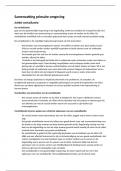
TABLE OF CONTENTS


Fluids and Electrolytes…………………………………………………………… 3

Acid-Base Balance……………………………………………………………….. 13

Burns………………………………………………………………….………….. 16

Oncology………………………………………………………………..………… 22

Endocrine…………………………………………………………………..…….. 38

Cardiac…………………………………………………………………..……….. 52

Psychiatric Nursing…………………………………………………………….. 71

Gastrointestinal………………………………………………………………….. 92

Neuro……………………………………………………………………………... 104

Maternity Nursing………………………………………………………………. 114

Respiratory………………………………………………………………..……… 139

Orthopedics………………………………………………………………………. 144

Renal……………………………………………………………………………… 150

Questions…………………………………………………………………………. 158

Final Thoughts…………………………………………………………………… 178

Evaluations………………………………………………………………………… 186

Table of Contents for CD…………………………………………………………..188

Pediatric……………………………………………………………………………..189


Hurst Review Services 1

,Hurst Review does not condone the discussion of the NCLEX-RN exam post-
test. Thank you.


NOTICE TO FACULTY

All materials used during any Hurst Review Services seminar are copyrighted
and are not for use without the sole permission of Marlene Hurst in any form or
fashion.

This material is not intended for lecture use by any School of Nursing without
permission.


NOTICE TO STUDENTS

If you are a student who has obtained this book from a past participant of my
workshops . . . . .SHAME, SHAME, SHAME!!!

Please understand that this book is written to accompany the live or video
lectures presented in the class itself or my Internet Tutorials.

This book is only an outline of what is needed to pass NCLEX.

I hope you will join me in a live or video class or on the Internet to reap the
full benefits of my materials.

General Class Information

- Please turn off ALL cell phones and pagers.

-This class MAY NOT be recorded in any manner.
(This included tape recording or videoing.)

-Class Time: 8AM-4PM
* Please note that each class is presented in a particular sequence if your
instructor completes the material for that day, you may get out prior to 4 PM.


Hurst Review Services 2

, FLUID VOLUME EXCESS: HYPERVOLEMIA

Define: too much volume in the __________________ _________________

l. Causes:


a. CHF: heart is__________, CO__________, decreased__________ perfusion, UO__________
*the volume stays in the _________________ _______________

b. RF: Kidneys aren't____________________

c. Alkaseltzer

Fleets enemas All 3 have a lot of_______________

IVF with Na

d. Aldosterone (steroid, mineralocorticoid)

Where does aldosterone live?

-Normal action: when blood volume gets low (vomiting, blood loss, etc.) →aldosterone
secretion increases→ retain Na/water→ blood volume ______

** Diseases with too much aldosterone:
-also seen with liver disease and heart disease
1._________________________
2._________________________

**Disease with too little aldosterone:
1._________________________


Hurst Review Services 3

, e. ADH (anti-diuretic hormone)

Normally makes you retain or diurese?

Retain? _________________________

2 ADH problems

Too Much Not enough


Retain Lose (diuese)


Fluid Volume _________ Fluid Volume __________


SIADH DI
Syndrome of Inappropriate ADH Secretion Diabetes Insipidus


Urine Urine


Blood Blood

*Concentrated makes #’s go up specific gravity, Na
*Dilute makes #’s go down

ADH lives in pituitary; key words to make you think potential ADH problem: craniotomy, head
injury, sinus surgery, transphenoidal hypophysectomy

*Another name for anti-diuretic hormone (ADH) is Vasopressin. The drug Vasopressin (Pitressin
or DDAVP (Desmopressin acetate) may be utilized as an ADH replacement in Diabetes Insipidus.


Hurst Review Services 4

$23.99
Get access to the full document:

100% satisfaction guarantee
Immediately available after payment
Both online and in PDF
No strings attached


Also available in package deal

Get to know the seller

Seller avatar
Reputation scores are based on the amount of documents a seller has sold for a fee and the reviews they have received for those documents. There are three levels: Bronze, Silver and Gold. The better the reputation, the more your can rely on the quality of the sellers work.
EvaTee Phoenix University
Follow You need to be logged in order to follow users or courses
Sold
4986
Member since
4 year
Number of followers
3555
Documents
51160
Last sold
1 hour ago
TIGHT DEADLINE? I CAN HELP

Many students don\'t have the time to work on their academic papers due to balancing with other responsibilities, for example, part-time work. I can relate. kindly don\'t hesitate to contact me, my study guides, notes and exams or test banks, are 100% graded

3.9

908 reviews

5
434
4
160
3
165
2
45
1
104

Recently viewed by you

Why students choose Stuvia

Created by fellow students, verified by reviews

Quality you can trust: written by students who passed their tests and reviewed by others who've used these notes.

Didn't get what you expected? Choose another document

No worries! You can instantly pick a different document that better fits what you're looking for.

Pay as you like, start learning right away

No subscription, no commitments. Pay the way you're used to via credit card and download your PDF document instantly.

Student with book image

“Bought, downloaded, and aced it. It really can be that simple.”

Alisha Student

Frequently asked questions