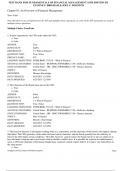
Chapter 27 Assessment and Management of Patients With
Hypertension
1. An older adult is newly diagnosed with primary hypertension and has just been
started on a beta-blocker. The nurse's health education should include which of the following?
A) Increasing fluids to avoid extracellular volume depletion from the diuretic effect of the
beta-blocker
B) Maintaining a diet high in dairy to increase protein necessary to prevent organ damage
C) Use of strategies to prevent falls stemming from postural hypotension
D) Limiting exercise to avoid injury that can be caused by increased intracranial pressure
Ans: C
Feedback:
Elderly people have impaired cardiovascular reflexes and are more sensitive to postural
hypotension. The nurse teaches patients to change positions slowly when moving from lying
or sitting positions to a standing position, and counsels elderly patients to use supportive
devices as necessary to prevent falls that could result from dizziness. Lifestyle changes, such
as regular physical activity/exercise, and a diet rich in fruits, vegetables, and low-fat dairy
products, is strongly recommended. Increasing fluids in elderly patients may be
contraindicated due to cardiovascular disease. Increased intracranial pressure is not a risk and
activity should not normally be limited.
2. A patient with primary hypertension comes to the clinic complaining of a gradual
onset of blurry vision and decreased visual acuity over the past several weeks. The nurse is
aware that these symptoms could be indicative of what?
A) Retinal blood vessel damage
B) Glaucoma
,C) Cranial nerve damage
D) Hypertensive emergency
Ans: A
Feedback:
Blurred vision, spots in front of the eyes, and diminished visual acuity can mean retinal blood
vessel damage indicative of damage elsewhere in the vascular system as a result of
hypertension. Glaucoma and cranial nerve damage do not normally cause these symptoms. A
hypertensive emergency would have a more rapid onset.
3. A nurse is performing blood pressure screenings at a local health fair. While obtaining
subjective assessment data from a patient with hypertension, the nurse learns that the
patient has a family history of hypertension and she herself has high cholesterol and lipid
levels. The patient says she smokes one pack of cigarettes daily and drinks ìabout a pack of
beerî every day. The nurse notes what nonmodifiable risk factor for hypertension?
A) Hyperlipidemia
B) Excessive alcohol intake
C) A family history of hypertension
D) Closer adherence to medical regimen
Ans: C
Feedback:
Unlike cholesterol levels, alcohol intake and adherence to treatment, family history is not
modifiable.
,4. The staff educator is teaching ED nurses about hypertensive crisis. The nurse
educator should explain that hypertensive urgency differs from hypertensive emergency in
what way?
A) The BP is always higher in a hypertensive emergency.
B) Vigilant hemodynamic monitoring is required during treatment of
hypertensive emergencies.
C) Hypertensive urgency is treated with rest and benzodiazepines to lower BP.
D) Hypertensive emergencies are associated with evidence of target organ damage.
Ans: D
Feedback:
Hypertensive emergencies are acute, life-threatening BP elevations that require prompt
treatment in an intensive care setting because of the serious target organ damage that may
occur. Blood pressures are extremely elevated in both urgency and emergencies, but there is
no evidence of target organ damage in hypertensive urgency. Extremely close hemodynamic
monitoring of the patient's BP is required in both situations. The medications of choice in
hypertensive emergencies are those with an immediate effect, such as IV vasodilators. Oral
doses of fast-acting agents, such as beta-adrenergic blocking agents, angiotensin-converting
enzyme inhibitors, or alpha-agonists, are recommended for the treatment of hypertensive
urgencies.
, 5. A group of student nurses are practicing taking blood pressure. A 56-year-old male
student has a blood pressure reading of 146/96 mm Hg. Upon hearing the reading, he
exclaims, "My pressure has never been this high. Do you think my doctor will prescribe
medication to reduce it?" Which of the following responses by the nursing instructor would be
best?
A) "Yes. Hypertension is prevalent among men; it is fortunate we caught this during
your routine examination."
B) "We will need to reevaluate your blood pressure because your age places you at
high risk for hypertension."
C) "A single elevated blood pressure does not confirm hypertension. You will need
to have your blood pressure reassessed several times before a diagnosis can be made."
D) "You have no need to worry. Your pressure is probably elevated because
you are being tested."
Ans: C
Feedback:
Hypertension is confirmed by two or more readings with systolic pressure of at least
140 mm Hg and diastolic pressure of at least 90 mm Hg. An age of 56 does not
constitute a risk factor in and of itself. The nurse should not tell the student that there is no
need to worry.
6. A 40-year-old male newly diagnosed with hypertension is discussing risk factors with
the nurse. The nurse talks about lifestyle changes with the patient and advises that the patient
should avoid tobacco use. What is the primary rationale behind that advice to the patient?
Hypertension
1. An older adult is newly diagnosed with primary hypertension and has just been
started on a beta-blocker. The nurse's health education should include which of the following?
A) Increasing fluids to avoid extracellular volume depletion from the diuretic effect of the
beta-blocker
B) Maintaining a diet high in dairy to increase protein necessary to prevent organ damage
C) Use of strategies to prevent falls stemming from postural hypotension
D) Limiting exercise to avoid injury that can be caused by increased intracranial pressure
Ans: C
Feedback:
Elderly people have impaired cardiovascular reflexes and are more sensitive to postural
hypotension. The nurse teaches patients to change positions slowly when moving from lying
or sitting positions to a standing position, and counsels elderly patients to use supportive
devices as necessary to prevent falls that could result from dizziness. Lifestyle changes, such
as regular physical activity/exercise, and a diet rich in fruits, vegetables, and low-fat dairy
products, is strongly recommended. Increasing fluids in elderly patients may be
contraindicated due to cardiovascular disease. Increased intracranial pressure is not a risk and
activity should not normally be limited.
2. A patient with primary hypertension comes to the clinic complaining of a gradual
onset of blurry vision and decreased visual acuity over the past several weeks. The nurse is
aware that these symptoms could be indicative of what?
A) Retinal blood vessel damage
B) Glaucoma
,C) Cranial nerve damage
D) Hypertensive emergency
Ans: A
Feedback:
Blurred vision, spots in front of the eyes, and diminished visual acuity can mean retinal blood
vessel damage indicative of damage elsewhere in the vascular system as a result of
hypertension. Glaucoma and cranial nerve damage do not normally cause these symptoms. A
hypertensive emergency would have a more rapid onset.
3. A nurse is performing blood pressure screenings at a local health fair. While obtaining
subjective assessment data from a patient with hypertension, the nurse learns that the
patient has a family history of hypertension and she herself has high cholesterol and lipid
levels. The patient says she smokes one pack of cigarettes daily and drinks ìabout a pack of
beerî every day. The nurse notes what nonmodifiable risk factor for hypertension?
A) Hyperlipidemia
B) Excessive alcohol intake
C) A family history of hypertension
D) Closer adherence to medical regimen
Ans: C
Feedback:
Unlike cholesterol levels, alcohol intake and adherence to treatment, family history is not
modifiable.
,4. The staff educator is teaching ED nurses about hypertensive crisis. The nurse
educator should explain that hypertensive urgency differs from hypertensive emergency in
what way?
A) The BP is always higher in a hypertensive emergency.
B) Vigilant hemodynamic monitoring is required during treatment of
hypertensive emergencies.
C) Hypertensive urgency is treated with rest and benzodiazepines to lower BP.
D) Hypertensive emergencies are associated with evidence of target organ damage.
Ans: D
Feedback:
Hypertensive emergencies are acute, life-threatening BP elevations that require prompt
treatment in an intensive care setting because of the serious target organ damage that may
occur. Blood pressures are extremely elevated in both urgency and emergencies, but there is
no evidence of target organ damage in hypertensive urgency. Extremely close hemodynamic
monitoring of the patient's BP is required in both situations. The medications of choice in
hypertensive emergencies are those with an immediate effect, such as IV vasodilators. Oral
doses of fast-acting agents, such as beta-adrenergic blocking agents, angiotensin-converting
enzyme inhibitors, or alpha-agonists, are recommended for the treatment of hypertensive
urgencies.
, 5. A group of student nurses are practicing taking blood pressure. A 56-year-old male
student has a blood pressure reading of 146/96 mm Hg. Upon hearing the reading, he
exclaims, "My pressure has never been this high. Do you think my doctor will prescribe
medication to reduce it?" Which of the following responses by the nursing instructor would be
best?
A) "Yes. Hypertension is prevalent among men; it is fortunate we caught this during
your routine examination."
B) "We will need to reevaluate your blood pressure because your age places you at
high risk for hypertension."
C) "A single elevated blood pressure does not confirm hypertension. You will need
to have your blood pressure reassessed several times before a diagnosis can be made."
D) "You have no need to worry. Your pressure is probably elevated because
you are being tested."
Ans: C
Feedback:
Hypertension is confirmed by two or more readings with systolic pressure of at least
140 mm Hg and diastolic pressure of at least 90 mm Hg. An age of 56 does not
constitute a risk factor in and of itself. The nurse should not tell the student that there is no
need to worry.
6. A 40-year-old male newly diagnosed with hypertension is discussing risk factors with
the nurse. The nurse talks about lifestyle changes with the patient and advises that the patient
should avoid tobacco use. What is the primary rationale behind that advice to the patient?