BLGY1232 Homing in on disease-related genes
Haplotypes
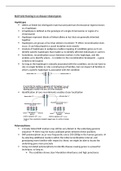
Alleles at linked loci distinguish maternal and paternal chromosomal regions known
as a haplotype
A haplotype is defined as the genotype of a single chromosome or region of a
chromosome
Haplotype represent blocks of linked alleles at loci that are generally inherited
together
Haplotypes are groups of loci that seldom recombine When recombination does
occur, it can help pinpoint a causal mutation more exactly
Analysis of haplotypes in pedigrees enables mapping of candidate genes as it can
identify specific haplotypes that enable us to identify affected individuals or carriers
Sometimes, recombination occurs between markers in the haplotype, and this
enables us to identify where – in relation to the recombination breakpoint – a gene
is likely to be located.
So long as the haplotype is robustly associated with the condition, we do not have to
rely on single families or only a small group of families, but can inspect all families in
which a specifiv haplotype is associated with the condition
Identification of rare recombinants enables closer localization
Polymorphisms
2 closely linked SNP markers may still be very distant in the underlying genome
sequence there may be many candidate genes between these positions
SNP polymorphism occur very frequently: every 100-200bp in the human genome
by selecting additional markers within the initial recombination interval, and
genotyping more families with respect to these, we might be able to locate the
underlying gene more precisely
Using correlated polymorphisms to identify disease causing genes is a powerful
technique, so long as:
The condition shows clear Mendelian inheritance and high penetrance
, We have sufficient large families with a genetic history of the condition
We can identify recombinants within these families that allow us to locate a
candidate gene
Many inherited conditions are either not caused by single genes, or can have their
severity modified by a number of additional genetic factors such as a number of
different susceptibility loci at different positions that make different contributions
If this is the case, it is difficult to identify clear patterns of inheritance so we must use
association studies
For single-gene traits we can easily identify which chromosome carries the
susceptibility locus and this makes linkage analysis easy
Genetic association studies
This type of analysis can be used to identify polymorphic markers that may be
associated with important genetic determinants of conditions that don’t show clear
inheritance We must analyse large numbers of individuals at as many genetic loci
as possible, and see if we can identify polymorphic loci whose allelic status is more
common among affected people than unaffected controls
To facilitate this, the HapMap project was initiated to develop a haplotype map of
the human genome the goeal of the international HapMap project is to develop a
haplotype map of the human genome, the HapMap which will describe the common
patterns of human DNA sequence variation
There are approximately 10 million polymorphic SNPs in the human genome where
the rarer allele has a frequency of at least 1%
Alleles of SNPs that are close together tend to be inherited together
A set of associated SNP alleles in a region of a chromosome is called a haplotype –
most chromosome regions have only a few common haplotypes (each with a
frequency of at least 5%) which account for most of the variation from person to
person in a population
A chromosome region may contain many SNPs but only a few tag SNPs can provide
most of the information on the pattern of genetic variation in the region
The haplotype map provides maps of chromosomes indicating where common
haplotypes are located along each chromosome and indicated which of the SNPs are
used as tags to identify the different haplotype alleles at each locus
Frequencies of haplotype alleles can be determined for the general population for
difference groups (geographical/ethnic) which each share a common ancestry,
certain haplotypes will be more frequent than others so haplotype analysis can be
used to determine ancestry of populations
We can compare a group of people with a disease to a group of people without a
disease; chromosome regions where the 2 groups differ in their haplotype
frequencies might contain genes affecting the disease
270 people were selected for genotyping: 90 West Africans (Yoruba from Nigeria), 90
Americans of central European descent, 45 Chinese, 45 Japanese Currently,
approximately 3.5 million SNPs have been genotyped in this population
Recombination tends to occur in “hot-spots” so there are often long blocks of
unrecombined markers, so that haplotypes can be identified without having to
genotype every SNP in the genome
We can select “tag” SNPs that are specific to particular haplotypes.
Haplotypes
Alleles at linked loci distinguish maternal and paternal chromosomal regions known
as a haplotype
A haplotype is defined as the genotype of a single chromosome or region of a
chromosome
Haplotype represent blocks of linked alleles at loci that are generally inherited
together
Haplotypes are groups of loci that seldom recombine When recombination does
occur, it can help pinpoint a causal mutation more exactly
Analysis of haplotypes in pedigrees enables mapping of candidate genes as it can
identify specific haplotypes that enable us to identify affected individuals or carriers
Sometimes, recombination occurs between markers in the haplotype, and this
enables us to identify where – in relation to the recombination breakpoint – a gene
is likely to be located.
So long as the haplotype is robustly associated with the condition, we do not have to
rely on single families or only a small group of families, but can inspect all families in
which a specifiv haplotype is associated with the condition
Identification of rare recombinants enables closer localization
Polymorphisms
2 closely linked SNP markers may still be very distant in the underlying genome
sequence there may be many candidate genes between these positions
SNP polymorphism occur very frequently: every 100-200bp in the human genome
by selecting additional markers within the initial recombination interval, and
genotyping more families with respect to these, we might be able to locate the
underlying gene more precisely
Using correlated polymorphisms to identify disease causing genes is a powerful
technique, so long as:
The condition shows clear Mendelian inheritance and high penetrance
, We have sufficient large families with a genetic history of the condition
We can identify recombinants within these families that allow us to locate a
candidate gene
Many inherited conditions are either not caused by single genes, or can have their
severity modified by a number of additional genetic factors such as a number of
different susceptibility loci at different positions that make different contributions
If this is the case, it is difficult to identify clear patterns of inheritance so we must use
association studies
For single-gene traits we can easily identify which chromosome carries the
susceptibility locus and this makes linkage analysis easy
Genetic association studies
This type of analysis can be used to identify polymorphic markers that may be
associated with important genetic determinants of conditions that don’t show clear
inheritance We must analyse large numbers of individuals at as many genetic loci
as possible, and see if we can identify polymorphic loci whose allelic status is more
common among affected people than unaffected controls
To facilitate this, the HapMap project was initiated to develop a haplotype map of
the human genome the goeal of the international HapMap project is to develop a
haplotype map of the human genome, the HapMap which will describe the common
patterns of human DNA sequence variation
There are approximately 10 million polymorphic SNPs in the human genome where
the rarer allele has a frequency of at least 1%
Alleles of SNPs that are close together tend to be inherited together
A set of associated SNP alleles in a region of a chromosome is called a haplotype –
most chromosome regions have only a few common haplotypes (each with a
frequency of at least 5%) which account for most of the variation from person to
person in a population
A chromosome region may contain many SNPs but only a few tag SNPs can provide
most of the information on the pattern of genetic variation in the region
The haplotype map provides maps of chromosomes indicating where common
haplotypes are located along each chromosome and indicated which of the SNPs are
used as tags to identify the different haplotype alleles at each locus
Frequencies of haplotype alleles can be determined for the general population for
difference groups (geographical/ethnic) which each share a common ancestry,
certain haplotypes will be more frequent than others so haplotype analysis can be
used to determine ancestry of populations
We can compare a group of people with a disease to a group of people without a
disease; chromosome regions where the 2 groups differ in their haplotype
frequencies might contain genes affecting the disease
270 people were selected for genotyping: 90 West Africans (Yoruba from Nigeria), 90
Americans of central European descent, 45 Chinese, 45 Japanese Currently,
approximately 3.5 million SNPs have been genotyped in this population
Recombination tends to occur in “hot-spots” so there are often long blocks of
unrecombined markers, so that haplotypes can be identified without having to
genotype every SNP in the genome
We can select “tag” SNPs that are specific to particular haplotypes.