

Haemostasis and Thrombosis
Thrombophilia
- The term thrombophilia is used to describe inherited or acquired disorders of haemostatic mechanisms which
predispose to thrombosis
Thrombosis
- Thrombosis is the pathological formation of a ‘haemostatic plug’ within the vasculature
- Clinically this can result in ischemia from local vascular occlusion of distal embolization
- Thrombi can form in both arteries and veins
- Arterial thrombosis can lead to myocardial infarction or stroke
- Venous thrombosis often presents as deep vein thrombosis (DVT) or pulmonary
embolism (PE)
Arterial Thrombosis
- Arterial thrombosis typically forms under high shear conditions and are “platelet rich” in a fibrin mesh (so-called
white thrombus)
- Often associated with atherosclerosis
- Can lead to MI or stroke
- Risk factors include:
- Positive family history
- Previous MI or stroke
- Hyperlipidaemia
- Hypertension
- Diabetes mellitus
- Smoking
- Polycythaemia
- Mechanism similar to that of primary haemostasis
- Damage to the blood vessel wall caused by rupture of atherosclerotic plaque
- Platelets are the main driving force and main component of arterial thrombosis
- Antiplatelet drugs (eg aspirin) are therefore the drug of choice in prevention of
myocardial infarction and stroke
Venous Thrombosis
- Venous thrombi are referred to as ‘red thrombus’ and consist of red blood cells
trapped in a fibrin mesh
- The major manifestation of venous thrombosis are deep vein thrombosis (DVT) and
pulmonary embolism (PE)
- Venous thrombosis occurs through inappropriate activation of the coagulation
cascade
- The drugs of choice for prevention and treatment of venous thromboembolism (VTE)
are therefore anticoagulants
Venous Thromboembolism (VTE)
- Can affect any branch of the venous circulation
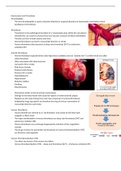
- Venous thromboembolism (VTE) —Deep-vein thrombosis (DVT) —Pulmonary embolism (PE)
, - DVT affects 0.1% of persons per year
- VTE presents as DVT in 2/3 cases
- UK death rate from VTE ~60,000 pa
VTE Risk Factors
- Surgery
- Immobility
- Cancer
- Prior VTE
- Age— Patients older than 40 years are at higher risk, and that risk doubles with each subsequent decade.
- Obesity--- 2x the risk of VTE as people with normal weight, and the higher the weight, the higher the risk.
- Oral Contraceptives or estrogen treatment for menopause symptoms
- Family history of VTE--- especially if this is in a first-degree relative (parent, sibling, child)
- Physical inactivity
- Pregnancy
- Genetic blood conditions that affect clotting
Causes of Thrombophilia
Naturally occurring inhibitors of coagulation
Thrombophilia
- The term thrombophilia is used to describe inherited or acquired disorders of haemostatic mechanisms which
predispose to thrombosis
Thrombosis
- Thrombosis is the pathological formation of a ‘haemostatic plug’ within the vasculature
- Clinically this can result in ischemia from local vascular occlusion of distal embolization
- Thrombi can form in both arteries and veins
- Arterial thrombosis can lead to myocardial infarction or stroke
- Venous thrombosis often presents as deep vein thrombosis (DVT) or pulmonary
embolism (PE)
Arterial Thrombosis
- Arterial thrombosis typically forms under high shear conditions and are “platelet rich” in a fibrin mesh (so-called
white thrombus)
- Often associated with atherosclerosis
- Can lead to MI or stroke
- Risk factors include:
- Positive family history
- Previous MI or stroke
- Hyperlipidaemia
- Hypertension
- Diabetes mellitus
- Smoking
- Polycythaemia
- Mechanism similar to that of primary haemostasis
- Damage to the blood vessel wall caused by rupture of atherosclerotic plaque
- Platelets are the main driving force and main component of arterial thrombosis
- Antiplatelet drugs (eg aspirin) are therefore the drug of choice in prevention of
myocardial infarction and stroke
Venous Thrombosis
- Venous thrombi are referred to as ‘red thrombus’ and consist of red blood cells
trapped in a fibrin mesh
- The major manifestation of venous thrombosis are deep vein thrombosis (DVT) and
pulmonary embolism (PE)
- Venous thrombosis occurs through inappropriate activation of the coagulation
cascade
- The drugs of choice for prevention and treatment of venous thromboembolism (VTE)
are therefore anticoagulants
Venous Thromboembolism (VTE)
- Can affect any branch of the venous circulation
- Venous thromboembolism (VTE) —Deep-vein thrombosis (DVT) —Pulmonary embolism (PE)
, - DVT affects 0.1% of persons per year
- VTE presents as DVT in 2/3 cases
- UK death rate from VTE ~60,000 pa
VTE Risk Factors
- Surgery
- Immobility
- Cancer
- Prior VTE
- Age— Patients older than 40 years are at higher risk, and that risk doubles with each subsequent decade.
- Obesity--- 2x the risk of VTE as people with normal weight, and the higher the weight, the higher the risk.
- Oral Contraceptives or estrogen treatment for menopause symptoms
- Family history of VTE--- especially if this is in a first-degree relative (parent, sibling, child)
- Physical inactivity
- Pregnancy
- Genetic blood conditions that affect clotting
Causes of Thrombophilia
Naturally occurring inhibitors of coagulation


