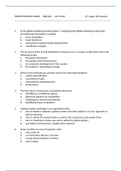
HESI MATERNAL NEWBORN PROCTORED EXAM
1. The nurse is caring for a patient who is immobile. The nurse wants to
decrease the formation of pressure ulcers. Which action will the nurse take
first?
a. Offer favorite fluids.
b. Turn the patient every 2 hours.
c. Determine the patient’s risk factors.
d. Encourage increased quantities of carbohydrates and fats.
ANS: C
The first step in prevention is to assess the patient’s risk factors for pressure
ulcer development. When a patient is immobile, the major risk to the skin is the
formation of pressure ulcers. Nursing interventions focus on prevention.
Offering favorite fluids, turning, and increasing carbohydrates and fats are not
the first steps.
Determining risk factors is first so interventions can be implemented to reduce
or eliminate those risk factors.
2. The medical-surgical acute care patient has received a nursing diagnosis
of Impaired skin integrity. Which health care team member will the nurse
consult?
a. Respiratory therapist
b. Registered dietitian
c. Case manager 191
, d. Chaplain
ANS: B
Refer patients with pressure ulcers to the dietitian for early intervention for
nutritional problems. Adequate calories, protein, vitamins, and minerals
promote wound healing for the impaired skin integrity. The nurse is the
coordinator of care, and collaborating with the dietitian would result in planning
the best meals for the patient. The respiratory therapist can be consulted when a
patient has issues with the respiratory system. Case management can be
consulted when the patient has a discharge need. A chaplain can be consulted
when the patient has a spiritual need.
3. The nurse is caring for a patient with a Stage II pressure ulcer and has
assigned a nursing diagnosis of Risk for infection. The patient is unconscious
and bedridden. The nurse is completing the plan of care and is writing goals for
the patient. Which is the best goal for this patient?
a. The patient will state what to look for with regard to an infection.
b. The patient’s family will demonstrate specific care of the wound site. The
patient’s family members will wash their hands when visiting the
c. patient.
The patient will remain free of odorous or purulent drainage from the
d. wound.
ANS: D
Because the patient has an open wound and the skin is no longer intact to
protect the tissue, the patient is at increased risk for infection. The nurse will be
assessing the patient for signs and symptoms of infection, including an increase
in temperature, an increase in white count, and odorous and purulent drainage
from the wound. The patient is unconscious and is unable to communicate the
signs and symptoms of infection. It is important for the patient’s family to be
able to demonstrate how to care for the wound and wash their hands, but these
statements are not goals or outcomes for this nursing diagnosis.
4. The nurse is caring for a group of patients. Which task can the nurse 191
delegate to the nursing assistive personnel?
1. The nurse is caring for a patient who is immobile. The nurse wants to
decrease the formation of pressure ulcers. Which action will the nurse take
first?
a. Offer favorite fluids.
b. Turn the patient every 2 hours.
c. Determine the patient’s risk factors.
d. Encourage increased quantities of carbohydrates and fats.
ANS: C
The first step in prevention is to assess the patient’s risk factors for pressure
ulcer development. When a patient is immobile, the major risk to the skin is the
formation of pressure ulcers. Nursing interventions focus on prevention.
Offering favorite fluids, turning, and increasing carbohydrates and fats are not
the first steps.
Determining risk factors is first so interventions can be implemented to reduce
or eliminate those risk factors.
2. The medical-surgical acute care patient has received a nursing diagnosis
of Impaired skin integrity. Which health care team member will the nurse
consult?
a. Respiratory therapist
b. Registered dietitian
c. Case manager 191
, d. Chaplain
ANS: B
Refer patients with pressure ulcers to the dietitian for early intervention for
nutritional problems. Adequate calories, protein, vitamins, and minerals
promote wound healing for the impaired skin integrity. The nurse is the
coordinator of care, and collaborating with the dietitian would result in planning
the best meals for the patient. The respiratory therapist can be consulted when a
patient has issues with the respiratory system. Case management can be
consulted when the patient has a discharge need. A chaplain can be consulted
when the patient has a spiritual need.
3. The nurse is caring for a patient with a Stage II pressure ulcer and has
assigned a nursing diagnosis of Risk for infection. The patient is unconscious
and bedridden. The nurse is completing the plan of care and is writing goals for
the patient. Which is the best goal for this patient?
a. The patient will state what to look for with regard to an infection.
b. The patient’s family will demonstrate specific care of the wound site. The
patient’s family members will wash their hands when visiting the
c. patient.
The patient will remain free of odorous or purulent drainage from the
d. wound.
ANS: D
Because the patient has an open wound and the skin is no longer intact to
protect the tissue, the patient is at increased risk for infection. The nurse will be
assessing the patient for signs and symptoms of infection, including an increase
in temperature, an increase in white count, and odorous and purulent drainage
from the wound. The patient is unconscious and is unable to communicate the
signs and symptoms of infection. It is important for the patient’s family to be
able to demonstrate how to care for the wound and wash their hands, but these
statements are not goals or outcomes for this nursing diagnosis.
4. The nurse is caring for a group of patients. Which task can the nurse 191
delegate to the nursing assistive personnel?