NURS 611MASTER study guide Patho Exam 3
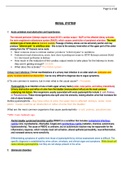
RENAL SYSTEM 1. Acute unilateral renal obstruction and hypertension. The reduced perfusion (kidneys require at least 20-25% cardiac output – MAP) of the affected kidney activates the renin-angiotensin-aldosterone system (RAAS), which causes constriction of peripheral arterioles. The most common type of renal stone is Calcium oxalate. Passage of kidney stones can be extremely painful and may produce “referred pain” to umbilicus area – this is due to the sensory innervation of the upper part of the ureter arising from the 10th thoracic nerve roots. Most common stone is calcium oxalate; produces “referred pain” to umbilicus Unilateral renal obstruction, acute, how does it predispose some to HTN? Kidneys activate RAAS b/c decreased perfusion to kidney How much in the reduction of the cardiac output needs to take place for the kidneys to know they aren’t getting enough? 20-25% What does this activate? The RAAS system Urinary tract infections: Clinical manifestations of a urinary tract infection in an older adult are confusion and poorly localized abdominal discomfort. Can be very difficult to diagnose due to vague symptoms. UTIs are common in women, but in men what is the usual cause? - Prostatitis Pyelonephritis is an infection of one or both upper urinary tracts (ureter, renal pelvis, and kidney interstitium). Urinary obstruction and reflux of urine from the bladder (vesicoureteral reflux) are the most common underlying risk factors. Microorganisms usually associated with acute pyelonephritis include E. coli, Proteus, or Pseudomonas. These microorganisms also split urea into ammonia, making alkaline urine that increases the risk of stone formation. Define pyelonephritis - May have reflux of urine, the upper tract is affected -kidneys, ureter, renal pelvis. Cause could be an obstruction or reflux of urine from the bladder What are the most common organisms that cause pyelonephritis - e-coli, proteou, pseudomonas *WBC Casts: hallmark sign Painful bladder syndrome/interstitial cystitis (PBS/IC) is a condition that includes nonbacterial infectious cystitis (viral, mycobacterial, chlamydial, fungal) and noninfectious cystitis (radiation, chemical, autoimmune, hypersensitivity). The cause of PBS/IC is unknown, but an autoimmune reaction may be responsible for the inflammatory response, which includes mast cell activation, altered epithelial permeability, neuroinflammation, and increased sensory nerve sensitivity. Differentiating symptoms of cystitis from those of pyelonephritis by clinical assessment alone is difficult. The specific diagnosis is established by urine culture, urinalysis, and clinical signs and symptoms. White blood cell casts indicate pyelonephritis, but they are not always present in the urine. 2. Glomerular disorders. Page 2 of 14 Reduced GFR during glomerular disease is evidenced by elevated plasma urea, creatinine concentration, or reduced renal creatinine clearance. What is a normal GFR? 60 or greater is normal RBC Casts: hallmark sign Acute glomerulonephritis includes renal diseases in which glomerular inflammation is caused by immune mechanisms that damage the glomerular capillary filtration membrane including the endothelium, basement membrane, and epithelium (podocytes). The classic symptoms include sudden onset of hematuria including red blood cell casts and proteinuria (milder than nephrotic syndrome), and in more severe cases, these symptoms are also accompanied by edema, hypertension, and impaired renal function. Acute glomerulonephritis is more mild than nephrotic syndrome. A patient has RBCs and blood casts in urine, edema, HTN, oliguria, what is your DX -Acute glomerular nephritis Nephrotic syndrome is the excretion of 3.0 g or more of protein (massive proteinuria) in the urine per day, hypoalbuminemia (less than 3.0 g/dl), and peripheral edema. PROTIEN DUMPING. Nephrotic syndrome is characteristic of glomerular injury. Primary causes of nephrotic syndrome include minimal change disease (lipoid nephrosis), membranous glomerulonephritis, and focal segmental glomerulosclerosis. Secondary forms of nephrotic syndrome occur in systemic diseases including diabetes mellitus, amyloidosis, and systemic lupus erythematosus. Nephrotic syndrome also is seen with certain drugs, infections, malignancies, and vascular disorders. 3. Acute Kidney injury may be acute and rapidly progressive (within hours), and the process may be reversible. Kidney failure also can be chronic, progressing to end-stage kidney failure over a period of months or years. Renal insufficiency refers to a decline in renal function to about 25% of normal or a GFR of 25 to 30 ml/minute. Levels of serum creatinine and urea are mildly elevated. However, changes in serum creatinine level occur only if more than 50% of glomerular filtration is lost and are often delayed by more than 24 hours. Such diagnostic delays make the implementation of early therapy very difficult, contributing to disease progression and mortality. Acute kidney injury after an MVA and the patient has lost a lot of blood. What kidney values should you be monitoring? -GFR Define acute kidney disease - Progressive, can happen in hours, may be reversible, can be acute on chronic Examples: Contrast dyes, surgery *Can be reversed with hydration, doesn’t always leave to chronic How much loss of GFR do we need, to be able to see changes in the serum creatinine level? - Serum creat level only change if more than 50% of GFR is lost and delayed by more than 24 hours Acute kidney injury secondary to MVA, loss of blood (1500ml) what lab: GFR They are prone to hyperkalemia and metabolic acidosis. Renal phosphate excretion is decreased, causing hyperphosphatemia. Fluid retention may cause edema. Symptoms of congestive heart failure develop in persons with cardiac disease. Nausea, vomiting, and fatigue accompany uremia and electrolyte imbalances. Wound healing is delayed, and the risk of infection, particularly pneumonia, is greater. What fluid and electrolyte abnormalities can you expect to see in these people? Hyperkalemia, metabolic acidosis, fluid retention Page 3 of 14 Reproductive System 1. Primary dysmenorrhea is attributed to excessive endometrial prostaglandin production. Women with painful periods produce 10 times as much prostaglandin F (PGF2α), a potent myometrial stimulant and vasoconstrictor, as asymptomatic women. Elevated levels of prostaglandins (especially PGF2α and PGE2α) cause uterine hypercontractility, decreased blood flow to the uterus, and increased nerve hypersensitivity, thus resulting in pain. Secondary dysmenorrhea results from disorders such as endometriosis (the most common cause), endometritis (infection), pelvic inflammatory disease, obstructive uterine or vaginal anomalies, uterine fibroids (leiomyomas), polyps, tumors, ovarian cysts, pelvic congestion syndrome, or nonhormonal intrauterine devices (IUDs). Remember that prostaglandins are the chemical mediators associated with dysmenorrhea Primary dysmenorrhea is painful menstruation associated with the release of prostaglandins in ovulatory cycles. How to treat pain? NSAIDs What is the chemical mediator associated with dysmenorrhea? Prostaglandin 2. Leiomyomas, commonly called myomas or uterine fibroids, are benign smooth muscle tumors in the myometrium. Leiomyomas are the most common benign tumors of the uterus, affecting as many as 70% to 80% of all women, and most remain small, asymptomatic, and clinically insignificant. Prevalence increases in women ages 30 to 50 but decreases with menopause. The incidence of leiomyomas in black and Asian women is two to five times higher than that in white women, and the age of onset for black women is, on average, 10 years earlier than that for white women. Complications related to leiomyomas are the primary reason for gynecologic hospitalizations and account for 30% of all hysterectomies in women less than 40 years of age. *Benign Smooth muscle tumor Abnormal bleeding, results in hysterectomies of lots of women under 40 3. Polycystic ovarian syndrome. Although the underlying cause of PCOS is unknown, a genetic basis is suspected. No single factor fully accounts for the abnormalities of PCOS. A hyperandrogenic state is a cardinal feature in the pathogenesis of PCOS. However, glucose intolerance/insulin resistance (IR) and hyperinsulinemia often run parallel and markedly aggravate the hyperandrogenic state, thus contributing to the severity of signs and symptoms of PCOS. Obesity adds to and worsens IR. Excessive androgens affect follicular growth, and insulin affects follicular decline by suppressing apoptosis and enabling follicles, which would normally disintegrate, to survive. Excessive androgens that affect follicular decline by suppressing apoptosis and enabling follicles, which normally disintegrate to survive is the pathogenesis of polycystic ovarian disease Polycystic ovarian disease. Know what is associated with this. Genetic basis, cause is unknown. Know it is a hyperandrogenic state!! Obesity worsens Page 4 of 14 *High secretion of androgens - Hyperandrogenic state Manifestations: women with beard/facial hair Often obese (issues with glucose control) Infertility 4. Benign ovarian cysts are quite common and are the fourth leading diagnosis for gynecologic hospital admissions. Benign cysts of the ovary are produced when a follicle or a number of follicles are stimulated but no dominant follicle develops and completes the maturity process. Normally, during the early follicular phase of the menstrual cycle, follicles of the ovary respond to hormonal signals from the pituitary gland. The pituitary produces FSH to mature follicles in the ovary. As the follicles enlarge, granulosa cells in the follicle multiply and secrete estradiol (a form of estrogen). As a dominant follicle develops, it secretes higher levels of estradiol, which stimulates the LH surge that comes from the pituitary. A small cyst on the ovary during the follicular phase is normal. The LH surge stimulates the follicle to rupture, releasing the ova and transforming the granulosa cells of the dominant follicle into the corpus luteum. If the dominant follicle develops properly before ovulation, the corpus luteum becomes vascularized and secretes progesterone. Progesterone arrests development of other follicles in both ovaries in that cycle. LH, proteolytic enzymes, and prostaglandins trigger follicular rupture and release of the ovum. Benign ovarian cyst, you make these every month, they are benign Follicles do not mature and release an egg Follicle turns into a cyst Lower abdominal pain 5. Human papillomavirus (HPV) is the most common sexually transmitted virus in the United States. HPVs are a group of more than 200 related viruses of which at least 13 are cancer causing. HPV is mainly transmitted through sexual contact and most people are infected with HPV shortly after the onset of sexual activity. HPV has been linked with cancers of the anus, vulva, vagina, and penis. Most high-risk HPV infections occur without any symptoms, may cause cytologic abnormalities or abnormal cell changes that disappear within 1 to 2 years, and do not cause cancer. HPV infections have been found to cause cancer of the oropharynx (most commonly base of the tongue, tonsils, and pharynx). Factors that may increase the risk of developing cancer following a high-risk HPV infection include smoking, decreased immunity, having many children (for increased risk of cervical cancer), long-term oral contraceptive use (for increased risk of cervical cancer), poor oral hygiene (for increased risk of oropharyngeal cancer), and chronic inflammation. Most HPV infections are cleared by the immune system; the vast majority of infections do not cause cervical cancer. For this reason, screening for cervical cancer prior to age 21 is not recommended. Previous efforts at early screening resulted in many young women receiving treatments on their cervix. These treatments destroyed or removed cervical cells and, in many cases, altered the structural integrity of the cervix, resulting in an increase in preterm births in women treated without substantially decreasing the later rates of cervical cancer HPV is the necessary precursor for developing cervical intraepithelial carcinoma (CIN) and cervical cancer
Written for
- Institution
- Nurs 611
- Course
- Nurs 611
Document information
- Uploaded on
- February 7, 2022
- Number of pages
- 14
- Written in
- 2022/2023
- Type
- Exam (elaborations)
- Contains
- Questions & answers
Subjects
-
page 1 of 14 renal system 1 acute unilateral renal obstruction and hypertension the reduced perfusion kidneys require at least 20 25 cardiac output – map of the affected kidney activates the ren

Also available in package deal