Review Notes for Advanced Patho Exam 3 Fall 2019
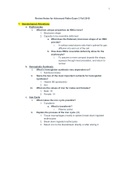
Review Notes for Advanced Patho Exam 3 Fall 2019 1. Hematological Alterations a. Erythrocytes i. What two unique properties do RBCs have? 1. Biconcave shape 2. Capacity to be reversibly deformed a. What does the flattened, biconcave shape of an RBC provide? i. A surface area/volume ratio that’s optimal for gas diffusion into and out of the cell b. How does RBCs reversible deformity allow for the erythrocyte? i. To assume a more compact torpedo-like shape, squeeze through microcirculation, and return to normal b. Hemoglobin Synthesis i. What is hemoglobin synthesis very dependent on? 1. Nutritional intake ii. Name the two of the most important nutrients for hemoglobin synthesis? 1. Vitamin B6 (pyridoxine) 2. Iron iii. What are the values of iron for males and females? 1. Male: 16 2. Female: 14 c. Iron Cycle i. What makes the iron cycle possible? 1. Transferrin a. What is transferrin? i. Plasma carrier ii. Explain the process of the iron cycle. (3) 1. Tissue macrophages (mostly in spleen) break down ingested erythrocytes 2. Break down ingested erythrocytes 3. Return iron to the bloodstream directly or after storing it 2 d. Leukocytes i. What are leukocytes? 1. White blood cells ii. What two things do leukocytes do? 1. Defends the body against microorganisms that cause infection 2. Remove debris (dead/injured cells) iii. What do Leukocytes primarily act in? Where are they transported? 1. The tissues but are transported in the circulation iv. How many leukocytes does the average adult have? 1. 5-10k leukocytes/mm3 of blood v. What is the most numerous and best understood of the granulocytes? 1. Neutrophils (polymorphonuclear neutrophils [PMN]) vi. What are immature neutrophils called? 1. Bands or stabs vii. What are mature neutrophils called? 1. Segmented neutrophils a. Why? i. The characteristic appearance of their nucleus viii. What happens when the demand for circulating mature neutrophils exceeds the supply? 1. Marrow begins to release immature neutrophils (and other leukocytes) into the blood ix. What are responsible for “shift-to-the-left” or leukemoid reaction? (2) 1. Premature release of immature white cells 2. Systemic signs of infection such as fever 3 e. Anemia i. What is anemia? 1. A reduction in the total number of erythrocytes in the circulating blood 2. A decrease in the quality or quantity of hemoglobin
Written for
- Institution
- Nurs 611
- Course
- Nurs 611
Document information
- Uploaded on
- February 7, 2022
- Number of pages
- 36
- Written in
- 2022/2023
- Type
- Exam (elaborations)
- Contains
- Questions & answers
Subjects
-
1 review notes for advanced patho exam 3 fall 2019 1 hematological alterations a erythrocytes i what two unique properties do rbcs have 1 biconcave shape 2 capacity to be reversibly deformed a

Also available in package deal