Week 1 readings: Politics of Artificial Intelligence
Table of contents
Lecture 1 1
Suskind: Introduction 1
Suskind: Chapter 1: increasingly capable systems 5
Suskind: Chapter 2: increasingly integrated technology 6
Suskind: Chapter 3: increasingly quantified society 8
Suskind: Chapter 4: Thinking like a theorist 9
Lecture 2 12
Crawford: Introduction 12
Crawford: Earth 14
,Lecture 1
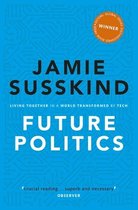
Suskind: Introduction
The premise of this book is that relentless advances in science and technology are set to
transform the way we live together, with consequences for politics that are profound and
frightening in equal measure. We are not yet ready—intellectually, philosophically, or
morally—for the world we are creating.
=> We will rethink how we have thought of politics previously; i.e. reimagining what it means
to be free / equal.
20th century: how much of our collective life should be determined by the state, and what
should be left to the market and civil society?
Now: to what extent should our lives be directed and controlled by powerful digital
systems—and on what terms?
Future; more data captured, distinction between online and offline will fade, technology will
be hidden in structures / objects.
=> there will be benefits + tech will hold great power over us (determining our decisions +
gathering information on us).
=> The ones controlling the technologies are the ones with power; getting us to do things we
wouldn’t otherwise do.
States (+ other political authorities) will have new and more instruments of control.
John Stuart Mill: ‘no great improvements in the lot of mankind are possible, until a great
change takes place in the fundamental constitution of their modes of thought.’
1. The next great change
The world isn’t in great shape—and that our public discourse has sunk to the occasion.
=> US 2016 election + Brexit; political elites are distrusted / despised.
It’s getting harder to separate fact from fraud.
While time passes linearly, many developments occur exponentially.
Predicting the future is most often faulty; but the biggest risk is to not anticipate the future at
all.
We are often too dismissive of the technologies we don’t yet understand. We must apply the
same skepticism and scrutiny to technologies as we do to political systems; in the 21st
century, the digital is political.
2. Philosophical engineers
, 1997 Apple ad: “people who are crazy enough to think they can change the world are the
ones who do”; a worldview, widely held among tech entrepreneurs, that their work is of
philosophical as well as commercial importance.
Far from being a spectral presence out of our control, the future is something we design and
build; not something we merely think about / study but something we make.
=> Most important revolutions do not come from a philosophical department, or parliament.
city squares, bit in labs, research facilities, tech firms, data centers.
It’s risky to delegate matters of political importance to a tiny group; i.e. people in Silicon
Valley largely have views outside the mainstream; also the liberal arts and sciences are
largely separated in academia / training.
This book hopes to contribute to a critical and clear framework of how to think about the
political consequences of digital innovation.
3. The promise of political theory
Political theory aims to understand politics through the concepts we use to speak about it; n
political thinkers have long tried to clarify and critique the world around them, asking why it is
the way it is.
Book is about four basic concepts:
- Power: How the strong dominate the weak
- Liberty: What is allowed and what is prohibited
- Democracy: How the people can rule
- Social Justice: What duties we owe to each other
Political theory is also useful because it allows us to think critically not just about politics but
also about how we think and speak about politics; ‘The limits of my language,’ says Ludwig
Wittgenstein, ‘mean the limits of my world.’
=> even if we could see the future clearly, we might not have the words to describe it.
=> Ford recognized that it can be hard to conceive of a system radically different from
our own. Failure to keep our language up-to-date only makes it harder.
4. Why I wrote this book
Authors problem with political theory; thinking deeply about the history of political ideas but
uninterested in the future.
We need to understand the future to better control it.
5. The politics of technology
What is the connection between digital technology and politics?
a. Technology in general
New technologies make it possible to do things that previously couldn’t be done; and they
make it easier to do some things we could already do. => social significance! Most new
Table of contents
Lecture 1 1
Suskind: Introduction 1
Suskind: Chapter 1: increasingly capable systems 5
Suskind: Chapter 2: increasingly integrated technology 6
Suskind: Chapter 3: increasingly quantified society 8
Suskind: Chapter 4: Thinking like a theorist 9
Lecture 2 12
Crawford: Introduction 12
Crawford: Earth 14
,Lecture 1
Suskind: Introduction
The premise of this book is that relentless advances in science and technology are set to
transform the way we live together, with consequences for politics that are profound and
frightening in equal measure. We are not yet ready—intellectually, philosophically, or
morally—for the world we are creating.
=> We will rethink how we have thought of politics previously; i.e. reimagining what it means
to be free / equal.
20th century: how much of our collective life should be determined by the state, and what
should be left to the market and civil society?
Now: to what extent should our lives be directed and controlled by powerful digital
systems—and on what terms?
Future; more data captured, distinction between online and offline will fade, technology will
be hidden in structures / objects.
=> there will be benefits + tech will hold great power over us (determining our decisions +
gathering information on us).
=> The ones controlling the technologies are the ones with power; getting us to do things we
wouldn’t otherwise do.
States (+ other political authorities) will have new and more instruments of control.
John Stuart Mill: ‘no great improvements in the lot of mankind are possible, until a great
change takes place in the fundamental constitution of their modes of thought.’
1. The next great change
The world isn’t in great shape—and that our public discourse has sunk to the occasion.
=> US 2016 election + Brexit; political elites are distrusted / despised.
It’s getting harder to separate fact from fraud.
While time passes linearly, many developments occur exponentially.
Predicting the future is most often faulty; but the biggest risk is to not anticipate the future at
all.
We are often too dismissive of the technologies we don’t yet understand. We must apply the
same skepticism and scrutiny to technologies as we do to political systems; in the 21st
century, the digital is political.
2. Philosophical engineers
, 1997 Apple ad: “people who are crazy enough to think they can change the world are the
ones who do”; a worldview, widely held among tech entrepreneurs, that their work is of
philosophical as well as commercial importance.
Far from being a spectral presence out of our control, the future is something we design and
build; not something we merely think about / study but something we make.
=> Most important revolutions do not come from a philosophical department, or parliament.
city squares, bit in labs, research facilities, tech firms, data centers.
It’s risky to delegate matters of political importance to a tiny group; i.e. people in Silicon
Valley largely have views outside the mainstream; also the liberal arts and sciences are
largely separated in academia / training.
This book hopes to contribute to a critical and clear framework of how to think about the
political consequences of digital innovation.
3. The promise of political theory
Political theory aims to understand politics through the concepts we use to speak about it; n
political thinkers have long tried to clarify and critique the world around them, asking why it is
the way it is.
Book is about four basic concepts:
- Power: How the strong dominate the weak
- Liberty: What is allowed and what is prohibited
- Democracy: How the people can rule
- Social Justice: What duties we owe to each other
Political theory is also useful because it allows us to think critically not just about politics but
also about how we think and speak about politics; ‘The limits of my language,’ says Ludwig
Wittgenstein, ‘mean the limits of my world.’
=> even if we could see the future clearly, we might not have the words to describe it.
=> Ford recognized that it can be hard to conceive of a system radically different from
our own. Failure to keep our language up-to-date only makes it harder.
4. Why I wrote this book
Authors problem with political theory; thinking deeply about the history of political ideas but
uninterested in the future.
We need to understand the future to better control it.
5. The politics of technology
What is the connection between digital technology and politics?
a. Technology in general
New technologies make it possible to do things that previously couldn’t be done; and they
make it easier to do some things we could already do. => social significance! Most new