TORT REVISION NOTES
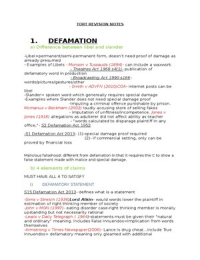
1. DEFAMATION
a) Difference between libel and slander
-Libel=permanent/semi-permanent form, doesn’t need proof of damage as
already presumed
- Examples of Libels - Monson v Tussauds (1894)- can include a waxwork
- Theatres Act 1968 s4(1)- publication of
defamatory word in production
- Broadcasting Act 1990 s166-
words/pictures/gestures/other
- Smith v ADVFN (2010)COA- internet posts can be
libel
-Slander= spoken word which genereally requires special damage
-Examples where Slander does not need special damage proof
-Imputing a criminal offence punishable by prison.
Mcmanus v Beckham (2002) loudly accusing store of selling fakes
- Imputation of unfitness/incompetence. Jones v
Jones (1916) allegations as adulterer did not affect ability as teacher
- “words calculated to disparage plaintiff in any
office,”- S2 Defamation Act 1952
-S1 Defamation Act 2013- (1)-special damage proof required
(2)- if commercial setting, only can be
proved by financial loss
Malicious falsehood: different from defamation in that it requires the C to show a
false statement made with malice and special damage.
b) 4 elements of claims
MUST HAVE ALL 4 TO SATISFY
I) DEFAMATORY STATEMENT
S15 Defamation Act 2013- defines what is a statement
-Sims v Stretch (1936)Lord Atkin- would words lower the plaintiff in
estimation of right thinking member of society
-John v MGN (1997)- eating disorder case-right thinking member is morally
upstanding but not necessarily rational
-Lewis v Daily Telegraph ( 1964)-statements must be given their “natural
and ordinary” meaning. Includes False Innuendos=implication from words
themselves
-Armstrong v Times Newspaper(2006)- Lance is drug cheat...include True
Innuendos= defamatory meaning only gleamed with additional
, factsCourts MUST establish a single meaning and whether on its context
it is true.
-Tollley v Fry (1931)- golfer and frys chocolate- true innuendo of gaining
money from them when he wasn’t
-Baturina v Times Newspaper Ltd (2011)-Neuberger affirms that
innuendo can be basis for defamatory statement and that existence of
Reynolds defence means its compatible with HRA
-Charleston v. News Group Newspapers Ltd [1995] not founded on a
headline or photograph in isolation from the related text. The question of
whether an article was defamatory had to be answered by reference to
the response of the ordinary, reasonable reader to the entire publication
-Cruise v Express Newspapers (1999) TC and Nicole Kidman with wedding
sham. This is defamatory
- Ibrahim v Swansea University (2012)wrongful letter saying he suffered
mental health difficulties is not defamatory. Shows changing social
attitudes towards what is defamatory
II) REFERS TO CLAIMANT
-Hough v London Express (1940)-Boxer and “wife”- need not be by name
but by reference
-Hulton & Co v. Jones(1910)- fact that there was no intention not a defence
-Knuppfer v. London Express Newspaper Ltd (1944) -whether the words
are such as would reasonably lead persons acquainted with the plaintiff to
believe that he was the person referred to.
-Islam expo v The spectator (2010)- unclear position as in this case the
hyperlink material did not determine outcome but suggests it may if
hyperlink not ambiguous
III) LIKELY TO CAUSE SERIOUS HARM
IV) IS IT PUBLISHED
-Sims v Stretch (1936)- one person enough
-Huth v Huth (1915)- test is foreseeability of remoteness of publication.
Isnt published if butler opens when told not to
-Dow Jones v Jamal (2005)- published to 5 people not allowed. As people
not independant of claimant
-Haji-Ioannou v Dixon (2009)- depends on context-who did you give it to?
1 person enough if that a journalist who will spread it
-Campbell v Dafra (2006)- Can be liable for 3rd party repetition if it is
natural consequence of you passing message on
Defamation Act S.8– “single publication rule” – changes longstanding rule
in Duke of Brunswick v Hamer that each new publication is a fresh cause
of action. States that the cause of action is from the first publication only,
provided they are ‘substantially the same’
Defamation Act. S.10 – Actions against secondary publishers. Courts don’t
have jurisprudence to hear a claim against someone who wasn’t the
author.
1. DEFAMATION
a) Difference between libel and slander
-Libel=permanent/semi-permanent form, doesn’t need proof of damage as
already presumed
- Examples of Libels - Monson v Tussauds (1894)- can include a waxwork
- Theatres Act 1968 s4(1)- publication of
defamatory word in production
- Broadcasting Act 1990 s166-
words/pictures/gestures/other
- Smith v ADVFN (2010)COA- internet posts can be
libel
-Slander= spoken word which genereally requires special damage
-Examples where Slander does not need special damage proof
-Imputing a criminal offence punishable by prison.
Mcmanus v Beckham (2002) loudly accusing store of selling fakes
- Imputation of unfitness/incompetence. Jones v
Jones (1916) allegations as adulterer did not affect ability as teacher
- “words calculated to disparage plaintiff in any
office,”- S2 Defamation Act 1952
-S1 Defamation Act 2013- (1)-special damage proof required
(2)- if commercial setting, only can be
proved by financial loss
Malicious falsehood: different from defamation in that it requires the C to show a
false statement made with malice and special damage.
b) 4 elements of claims
MUST HAVE ALL 4 TO SATISFY
I) DEFAMATORY STATEMENT
S15 Defamation Act 2013- defines what is a statement
-Sims v Stretch (1936)Lord Atkin- would words lower the plaintiff in
estimation of right thinking member of society
-John v MGN (1997)- eating disorder case-right thinking member is morally
upstanding but not necessarily rational
-Lewis v Daily Telegraph ( 1964)-statements must be given their “natural
and ordinary” meaning. Includes False Innuendos=implication from words
themselves
-Armstrong v Times Newspaper(2006)- Lance is drug cheat...include True
Innuendos= defamatory meaning only gleamed with additional
, factsCourts MUST establish a single meaning and whether on its context
it is true.
-Tollley v Fry (1931)- golfer and frys chocolate- true innuendo of gaining
money from them when he wasn’t
-Baturina v Times Newspaper Ltd (2011)-Neuberger affirms that
innuendo can be basis for defamatory statement and that existence of
Reynolds defence means its compatible with HRA
-Charleston v. News Group Newspapers Ltd [1995] not founded on a
headline or photograph in isolation from the related text. The question of
whether an article was defamatory had to be answered by reference to
the response of the ordinary, reasonable reader to the entire publication
-Cruise v Express Newspapers (1999) TC and Nicole Kidman with wedding
sham. This is defamatory
- Ibrahim v Swansea University (2012)wrongful letter saying he suffered
mental health difficulties is not defamatory. Shows changing social
attitudes towards what is defamatory
II) REFERS TO CLAIMANT
-Hough v London Express (1940)-Boxer and “wife”- need not be by name
but by reference
-Hulton & Co v. Jones(1910)- fact that there was no intention not a defence
-Knuppfer v. London Express Newspaper Ltd (1944) -whether the words
are such as would reasonably lead persons acquainted with the plaintiff to
believe that he was the person referred to.
-Islam expo v The spectator (2010)- unclear position as in this case the
hyperlink material did not determine outcome but suggests it may if
hyperlink not ambiguous
III) LIKELY TO CAUSE SERIOUS HARM
IV) IS IT PUBLISHED
-Sims v Stretch (1936)- one person enough
-Huth v Huth (1915)- test is foreseeability of remoteness of publication.
Isnt published if butler opens when told not to
-Dow Jones v Jamal (2005)- published to 5 people not allowed. As people
not independant of claimant
-Haji-Ioannou v Dixon (2009)- depends on context-who did you give it to?
1 person enough if that a journalist who will spread it
-Campbell v Dafra (2006)- Can be liable for 3rd party repetition if it is
natural consequence of you passing message on
Defamation Act S.8– “single publication rule” – changes longstanding rule
in Duke of Brunswick v Hamer that each new publication is a fresh cause
of action. States that the cause of action is from the first publication only,
provided they are ‘substantially the same’
Defamation Act. S.10 – Actions against secondary publishers. Courts don’t
have jurisprudence to hear a claim against someone who wasn’t the
author.