Unit 3.7 Mission, corporate objectives and
strategy
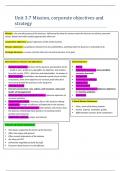
Mission – the overall purpose of the business. Influenced by what the owners want the business to achieve, personal
values, beliefs and what market opportunities there are
Corporative objectives- goals/ objectives of the whole business
Mission statement- a qualitative statement to key stakeholders, outlining what the business is intending to do
Strategic decisions- a course of action that aims to lead a business to its goal
Internal factors (mission and objectives): External factors:
§ Business ownership- the form of the business and whether its for § PESTLE
– profit or non –profit has a big effect on objective. Sole traders § State of the economy- boom (profits),
have full control, LTD’s – directors and shareholders to answer to recession (survival)
§ Short termism- shareholders can demand a quick return on their § Competition
investment, short term objectives to increase profit that don’t § Technological changes
necessarily benefit the business in the long term § Global prices
§ Attitude to profit § Ethical position
§ Internal environment- size, culture, and resources- views and § Environmental issues – influence objectives
leader of managaement to minimise pollution
§ Ethical position/ environmental issues – influence objectives to § Substitutes
minimise pollution
§ Organisational culture- structure, flat or tall, decision making A Good Mission Statement:
§ Leadership- strength of influence of leadership in the business
§ Clear, sense of business purpose
§ Strategic position and resources- what options and choices does
§ Excites, inspires, motivates, guides
the business realistically have based on its existing market
§ Differentiates business from competitors
position and resources
§ Stakeholder influence- power and interest
Criticisms of mission statements:
§ Not always supported by actions of the business
§ Often too vague and general
§ Often merely statements of the obvious
§ Are they just PR?
§ Sometimes regarded cynically by staff
§ Everyone needs to buy in to be effective
strategy
Mission – the overall purpose of the business. Influenced by what the owners want the business to achieve, personal
values, beliefs and what market opportunities there are
Corporative objectives- goals/ objectives of the whole business
Mission statement- a qualitative statement to key stakeholders, outlining what the business is intending to do
Strategic decisions- a course of action that aims to lead a business to its goal
Internal factors (mission and objectives): External factors:
§ Business ownership- the form of the business and whether its for § PESTLE
– profit or non –profit has a big effect on objective. Sole traders § State of the economy- boom (profits),
have full control, LTD’s – directors and shareholders to answer to recession (survival)
§ Short termism- shareholders can demand a quick return on their § Competition
investment, short term objectives to increase profit that don’t § Technological changes
necessarily benefit the business in the long term § Global prices
§ Attitude to profit § Ethical position
§ Internal environment- size, culture, and resources- views and § Environmental issues – influence objectives
leader of managaement to minimise pollution
§ Ethical position/ environmental issues – influence objectives to § Substitutes
minimise pollution
§ Organisational culture- structure, flat or tall, decision making A Good Mission Statement:
§ Leadership- strength of influence of leadership in the business
§ Clear, sense of business purpose
§ Strategic position and resources- what options and choices does
§ Excites, inspires, motivates, guides
the business realistically have based on its existing market
§ Differentiates business from competitors
position and resources
§ Stakeholder influence- power and interest
Criticisms of mission statements:
§ Not always supported by actions of the business
§ Often too vague and general
§ Often merely statements of the obvious
§ Are they just PR?
§ Sometimes regarded cynically by staff
§ Everyone needs to buy in to be effective