

Unit 11 Assignment 3
Why do mammals need transport systems?
A circulatory system (cardiovascular system) is the system that circulates blood and lymph
through the body, consisting of the heart, blood vessels, blood, lymph, and the lymphatic
vessels and glands. An example of the Human body’s transport system is the circulatory
system. The circulatory system is made up of groups of organs in which transport blood all
around the body. The body requires blood in order to survive and the blood has to be sent all
over the body in order to carry out multiple functions. Blood vessels are a major part of the
body’s transport system.
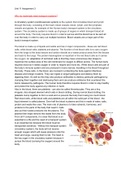
The blood is made up of liquids and solids and has 4 major components - these are red blood
cells; white blood cells; platelets and plasma. The function of red blood cells is to carry oxygen
from the lungs to the body tissues and carbon dioxide as a waste product away from the tissues
and back to the lungs. The protein haemoglobin is important in the red blood cells as it carries
the oxygen. An adaptation of red blood cells is that they have a biconcave disc shape to
maximise the surface area of the cell membrane for oxygen to diffuse across. The human body
requires blood as it needs oxygen in order to respire and move etc. White blood cells are part of
the body’s immune system and are produced in bone marrow, travelling in the blood throughout
the body. These cells, in the blood, are involved in protecting the body against infectious
disease and foreign invaders. They can ingest or engulf pathogens and destroy them by
digesting them. As well as this they also produce antibodies to destroy particular pathogens by
clumping them together and destroying them and can produce antitoxins that counteract the
toxins released by pathogens. The human body therefore requires blood in order to stay healthy
and protect the body against any infection or harm.
Also in the blood, there are platelets - can also be called thrombocytes. They are a tiny,
irregular, disc-shaped element which aids in blood clotting. During normal blood clotting, the
platelets clump together to form a scab and so prevent the body from losing too much blood.
Red blood cells, white blood cells and platelets are all within the solid part of the blood - the
liquid element is called plasma. Over half the blood is plasma and this is made of water, salts,
protein and waste like urea. The main role of plasma is to take nutrients, hormones, and
proteins to the parts of the body that need it. Cells
also put their waste products into the plasma. The
plasma then helps remove this waste from the body.
From all 4 components, it is clear that blood is an
essential to a life and the need of a transport system
is an essential too because the blood must be
transported somehow. Without the transport system
(circulatory system), the body will not receive
enough oxygen which will cause pressure onto the
heart and lungs, causing them to fail. The heart is
the key organ in the circulatory system because it
pumps the blood (carrying the oxygen) around the
body.
, Unit 11 Assignment 3
The blood vessels are part of the circulatory system and function to transport blood throughout
the body. They consist of arteries, capillaries, veins, venules and arterioles. Arteries carry blood
away from the heart to other parts of the body. Almost all arteries carry blood with a lot of
oxygen in it. The only arteries that do not carry a high concentration of oxygen blood are the
pulmonary artery. The role of the veins is to return deoxygenated blood back to the heart after
the arteries have carried the oxygenated blood out and away. The vena cava is the largest vein
in the body. Capillaries are the smallest of the body’s blood vessels. They are the sites of the
transfer of oxygen and other nutrients from the bloodstream to other tissues in the body. There
are 2 processes to this which are:
1. Passive diffusion = substance moving from a high concentration to areas with lower
concentrations.
2. Pinocytosis = body’s cells take in small molecules like proteins.
All three vessels dilate and constrict to help the body maintain homeostasis. Vessels constrict
when the core temperature drops, and this restricts blood flow and conserves heat.
Arteries are muscular tubes lined by smooth tissue and have three layers.
They are structured to have thick muscular walls in order to cope with high pressure as the
arteries transport large quantities of oxygenated blood around the body from the heart. The
outer layer is composed of collagen that provides structure and shape to the artery and helps it
withstand the pressure exerted by the blood flow. The middle layer is composed of elastic tissue
and thick smooth muscle fibres that expand and contract so that the rhythmic pulsation pushes
blood along. The inner layer is composed of endothelial cells that are smooth to offer minimum
resistance to blood flow. They are adapted to allow the wall to stretch as blood surges through
them so that they don't burst or rupture because the walls have elastic within.
Veins have different properties to arteries because they have different roles. Veins are under a
low amount of pressure and so therefore have thinner walls and a larger lumen. The walls
consist of three layers which are the tunica intima (innermost layer); the tunica media (muscular
middle layer ), and the tunica adventitia (outermost layer). Their lumen is larger than arteries.
Additionally, veins have valves which prevent the backflow of blood.
Capillaries are only one cell layer thick and they only have a tunica intima. These vessels are
under extremely low pressure; have a very narrow lumen; thin walls; no valves nor
elastic/muscle fibres. All vessels have different properties depending on their roles within the
transportation system in the body.
Why do mammals need transport systems?
A circulatory system (cardiovascular system) is the system that circulates blood and lymph
through the body, consisting of the heart, blood vessels, blood, lymph, and the lymphatic
vessels and glands. An example of the Human body’s transport system is the circulatory
system. The circulatory system is made up of groups of organs in which transport blood all
around the body. The body requires blood in order to survive and the blood has to be sent all
over the body in order to carry out multiple functions. Blood vessels are a major part of the
body’s transport system.
The blood is made up of liquids and solids and has 4 major components - these are red blood
cells; white blood cells; platelets and plasma. The function of red blood cells is to carry oxygen
from the lungs to the body tissues and carbon dioxide as a waste product away from the tissues
and back to the lungs. The protein haemoglobin is important in the red blood cells as it carries
the oxygen. An adaptation of red blood cells is that they have a biconcave disc shape to
maximise the surface area of the cell membrane for oxygen to diffuse across. The human body
requires blood as it needs oxygen in order to respire and move etc. White blood cells are part of
the body’s immune system and are produced in bone marrow, travelling in the blood throughout
the body. These cells, in the blood, are involved in protecting the body against infectious
disease and foreign invaders. They can ingest or engulf pathogens and destroy them by
digesting them. As well as this they also produce antibodies to destroy particular pathogens by
clumping them together and destroying them and can produce antitoxins that counteract the
toxins released by pathogens. The human body therefore requires blood in order to stay healthy
and protect the body against any infection or harm.
Also in the blood, there are platelets - can also be called thrombocytes. They are a tiny,
irregular, disc-shaped element which aids in blood clotting. During normal blood clotting, the
platelets clump together to form a scab and so prevent the body from losing too much blood.
Red blood cells, white blood cells and platelets are all within the solid part of the blood - the
liquid element is called plasma. Over half the blood is plasma and this is made of water, salts,
protein and waste like urea. The main role of plasma is to take nutrients, hormones, and
proteins to the parts of the body that need it. Cells
also put their waste products into the plasma. The
plasma then helps remove this waste from the body.
From all 4 components, it is clear that blood is an
essential to a life and the need of a transport system
is an essential too because the blood must be
transported somehow. Without the transport system
(circulatory system), the body will not receive
enough oxygen which will cause pressure onto the
heart and lungs, causing them to fail. The heart is
the key organ in the circulatory system because it
pumps the blood (carrying the oxygen) around the
body.
, Unit 11 Assignment 3
The blood vessels are part of the circulatory system and function to transport blood throughout
the body. They consist of arteries, capillaries, veins, venules and arterioles. Arteries carry blood
away from the heart to other parts of the body. Almost all arteries carry blood with a lot of
oxygen in it. The only arteries that do not carry a high concentration of oxygen blood are the
pulmonary artery. The role of the veins is to return deoxygenated blood back to the heart after
the arteries have carried the oxygenated blood out and away. The vena cava is the largest vein
in the body. Capillaries are the smallest of the body’s blood vessels. They are the sites of the
transfer of oxygen and other nutrients from the bloodstream to other tissues in the body. There
are 2 processes to this which are:
1. Passive diffusion = substance moving from a high concentration to areas with lower
concentrations.
2. Pinocytosis = body’s cells take in small molecules like proteins.
All three vessels dilate and constrict to help the body maintain homeostasis. Vessels constrict
when the core temperature drops, and this restricts blood flow and conserves heat.
Arteries are muscular tubes lined by smooth tissue and have three layers.
They are structured to have thick muscular walls in order to cope with high pressure as the
arteries transport large quantities of oxygenated blood around the body from the heart. The
outer layer is composed of collagen that provides structure and shape to the artery and helps it
withstand the pressure exerted by the blood flow. The middle layer is composed of elastic tissue
and thick smooth muscle fibres that expand and contract so that the rhythmic pulsation pushes
blood along. The inner layer is composed of endothelial cells that are smooth to offer minimum
resistance to blood flow. They are adapted to allow the wall to stretch as blood surges through
them so that they don't burst or rupture because the walls have elastic within.
Veins have different properties to arteries because they have different roles. Veins are under a
low amount of pressure and so therefore have thinner walls and a larger lumen. The walls
consist of three layers which are the tunica intima (innermost layer); the tunica media (muscular
middle layer ), and the tunica adventitia (outermost layer). Their lumen is larger than arteries.
Additionally, veins have valves which prevent the backflow of blood.
Capillaries are only one cell layer thick and they only have a tunica intima. These vessels are
under extremely low pressure; have a very narrow lumen; thin walls; no valves nor
elastic/muscle fibres. All vessels have different properties depending on their roles within the
transportation system in the body.


