The Tempest Essay Plans
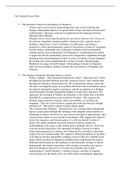
1. The humanity found in reconciliation of characters
- Alonso and co are forced to acknowledge their sins in the terrifying anti
masque which pushes them to recognize their wrongs and aspire toward peace
with Prospero. The peace achieved is manifested in the marriage between
Miranda and Ferdinand
- Prospero moves away from the power he can extract from his Art to focus on
his intrinsic imaginative human qualities which provide a superior power
leading to forgiveness. Ariel’s assistance as a third party, providing a
perspective of the ideal humanistic action of forgiveness in place of vengeance
toward Alonso, profoundly moves Prospero to practice this reconciliation
- Caliban and his self reconciliation. His humanity is exemplified in his ability
to appreciate the life around him, exercise his imaginative capabilities through
dreaming and acknowledging his faults in order to facilitate self development.
He realizes how he has made himself a victim of tyranny through being
blinded by his anger toward Prospero, which plunges him into a desperate
quest for his usurpation, failing to discern the true interests of Stephano and
Trinculo.
2. The shaping of humanity through nature or nurture
- Nature: Caliban – fully humanized despite the “beast” “abhorrent slave” label.
He fights for personal freedom from the “tyrant he serves” who controls him
through his unnatural, but powerful Art. He is infused into nature, values the
isle and even taught Prospero of it qualities. His final self reconciliation shows
the intrinsic humanistic quality of progress, and the recognition of a binding
shared humanity through imagination leading to forgiveness and peace. He
represents the returning of balance and harmony to the island, that is initially
disturbed by a tempestuous storm created by Prospero. This suggests the
ultimate superior power of nature, and its inevitability in rectifying the
unnatural. “The isle is full of noises, sounds and sweet airs that give delight
and hurt not” “that when I waked I cried to dream again”
- The civilized man: Prospero – learned in his Art, a strong leader and paternal
figure, accepts peace through the marriage of his daughter and reconciles in
friendship to Alonso. However, he only chooses the path of righteousness after
coercion from Ariel to move toward reconciliation. This suggests his intrinsic
desire for vengeance, and his perception of a self constructed version of
justice. His unfair treatment and enslavement of Caliban, despite his
understanding of the urges of this natural man to populate the isle, shows his
aversion toward forgiveness. His unnatural wielding of power to control
nature and manipulate his enemies into falling into his carefully crafted trap,
exposes his true cunning nature. His superior colonial perceptions of morality ,
as he fails to practice responsible wielding of power (also he’s initially to his
duties which resulted in usurpation) unfaithful and comprehend true justice.
- Sebastian and Antonio are the antithesis of true humanity. Despite civilized
backgrounds, the islands strips them of this façade of morality and exposes
their true intentions that prove evil to the core. Initially seen in their
condemning of “noble Gonzalo’s” notions of peace, and lack of empathy
toward Alonso for the death of his son reflect their contemptuous inhumane
1. The humanity found in reconciliation of characters
- Alonso and co are forced to acknowledge their sins in the terrifying anti
masque which pushes them to recognize their wrongs and aspire toward peace
with Prospero. The peace achieved is manifested in the marriage between
Miranda and Ferdinand
- Prospero moves away from the power he can extract from his Art to focus on
his intrinsic imaginative human qualities which provide a superior power
leading to forgiveness. Ariel’s assistance as a third party, providing a
perspective of the ideal humanistic action of forgiveness in place of vengeance
toward Alonso, profoundly moves Prospero to practice this reconciliation
- Caliban and his self reconciliation. His humanity is exemplified in his ability
to appreciate the life around him, exercise his imaginative capabilities through
dreaming and acknowledging his faults in order to facilitate self development.
He realizes how he has made himself a victim of tyranny through being
blinded by his anger toward Prospero, which plunges him into a desperate
quest for his usurpation, failing to discern the true interests of Stephano and
Trinculo.
2. The shaping of humanity through nature or nurture
- Nature: Caliban – fully humanized despite the “beast” “abhorrent slave” label.
He fights for personal freedom from the “tyrant he serves” who controls him
through his unnatural, but powerful Art. He is infused into nature, values the
isle and even taught Prospero of it qualities. His final self reconciliation shows
the intrinsic humanistic quality of progress, and the recognition of a binding
shared humanity through imagination leading to forgiveness and peace. He
represents the returning of balance and harmony to the island, that is initially
disturbed by a tempestuous storm created by Prospero. This suggests the
ultimate superior power of nature, and its inevitability in rectifying the
unnatural. “The isle is full of noises, sounds and sweet airs that give delight
and hurt not” “that when I waked I cried to dream again”
- The civilized man: Prospero – learned in his Art, a strong leader and paternal
figure, accepts peace through the marriage of his daughter and reconciles in
friendship to Alonso. However, he only chooses the path of righteousness after
coercion from Ariel to move toward reconciliation. This suggests his intrinsic
desire for vengeance, and his perception of a self constructed version of
justice. His unfair treatment and enslavement of Caliban, despite his
understanding of the urges of this natural man to populate the isle, shows his
aversion toward forgiveness. His unnatural wielding of power to control
nature and manipulate his enemies into falling into his carefully crafted trap,
exposes his true cunning nature. His superior colonial perceptions of morality ,
as he fails to practice responsible wielding of power (also he’s initially to his
duties which resulted in usurpation) unfaithful and comprehend true justice.
- Sebastian and Antonio are the antithesis of true humanity. Despite civilized
backgrounds, the islands strips them of this façade of morality and exposes
their true intentions that prove evil to the core. Initially seen in their
condemning of “noble Gonzalo’s” notions of peace, and lack of empathy
toward Alonso for the death of his son reflect their contemptuous inhumane