INNOVATION
MANAGEMENT
1
,Inhoudsopgave
Module 1: Introduction ..................................................................................................................................................... 3
What is Innovation ................................................................................................................................................................. 3
Creating Blue Oceans ........................................................................................................................................................ 3
Four types of innovation (Oslo Manual)............................................................................................................................ 4
Dynamics of Innovation..................................................................................................................................................... 4
The drivers of Innovation ....................................................................................................................................................... 4
Why the market for innovation fails and monopolists...................................................................................................... 4
Patterns underlying successful innovations ...................................................................................................................... 6
Innovator’s Dilemma ......................................................................................................................................................... 7
Solutions for the innovator’s Dilemma ............................................................................................................................. 9
The Triple Helix................................................................................................................................................................ 10
Module 2: Exploring Innovation ....................................................................................................................................... 11
Sources of Innovation ........................................................................................................................................................... 11
Prediction Markets ............................................................................................................................................................... 12
1. Why predict ......................................................................................................................................................... 12
2. The set-up of a prediction market ....................................................................................................................... 13
3. Pro’s and Cons ..................................................................................................................................................... 14
Lead User Innovation ........................................................................................................................................................... 15
Module 3: Executing Innovation ...................................................................................................................................... 16
Project Selection ................................................................................................................................................................... 16
The Innovation Tunnel .................................................................................................................................................... 16
Valuation of R&D projects throughout the funnel .......................................................................................................... 17
Beyond NPV: Real option Valuation ................................................................................................................................ 18
Managing teams and stars .................................................................................................................................................. 23
The scarcity of Star Performance .................................................................................................................................... 23
Why do Stars Matter? ..................................................................................................................................................... 23
The Challenge of Managing Stars .................................................................................................................................... 25
Innovation networks ............................................................................................................................................................ 27
The “Small world” phenomenon (= 6 degrees of separation) ......................................................................................... 27
Small World Networks è basics of Social Network Analysis .......................................................................................... 27
Small Networks foster creativity? ................................................................................................................................... 31
Networks as social capital for Innovation ....................................................................................................................... 32
System thinking .................................................................................................................................................................... 33
The wide-lens Framework ............................................................................................................................................... 33
Mapping Ecosystems............................................................................................................................................................ 36
Value Blueprints .............................................................................................................................................................. 36
Reconfiguring Ecosystems (about cars)................................................................................................................................ 38
Module 4: Exploiting Innovation ...................................................................................................................................... 40
Intellectual Property Rights .................................................................................................................................................. 40
Fixing The Failing Market ................................................................................................................................................ 40
Key IP Instruments .......................................................................................................................................................... 40
A detailed look at Patents ............................................................................................................................................... 41
Who uses patents............................................................................................................................................................ 45
Strategic Patenting by Firms ........................................................................................................................................... 46
The Big Picture ................................................................................................................................................................ 48
2
,Module 1: Introduction
What is Innovation
Creating Blue Oceans
Industry Analysis Framework? = 5 forces of competition (by: Michael Porter) (premium vs budget)
• Barriers to entry L H
• Substitutes L H
• Buyer power H H
• Supplier power / L
• Competitive rivalry H H
Advice in terms of competitive strategy: small vs. large firm
• Small: differentiation focused on niche in premium segment
• Large: cost leadership (focus on budget, more extensive segments = differentiated products)
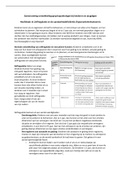
= Strategy Canvas
(every colour is a differenct kinf of company; purple =
yellow tail. Yellow = Exclusive. Red = Budget wines)
x-axis = what consumers think is important
y-axis = how much do they offer that what consumers
find important
Factors of competition for wine: (and how YellowTail handled things)
Raise Reduce Eliminate
• Price • Complexity • Wine age
• Range • Above the line
• Prestige marketing
• Terminology
People would think the wine-market is already overcrowded and that there is no room to compete.
But: YellowTail did succeed è make wine more approachable for non-wine drinkers.
= Blue ocean strategy Red Ocean strategy
• Reach beyond existing demand • Focus on existing market space
• Identify non-customers • STP
• Identify commonalities • Make value/cost trade-off
• Unlock mass of buyers
• Break cost/value trade-off
!Innovation based strategies change the base of competition in an industry!
3
, Four types of innovation (Oslo Manual)
1. Product
= Introduction of good/service with improvements in functional characteristics
• Goods (new medicine)
• Services (video-on-demand)
2. Process (new packaging system)
= implementation of new/improved production/delivery method
3. Marketing
= new marketing method è product design + packaging, product placement, promotion
4. Organizational (first introduction quality management system)
Innovation ≠ technology = implementation of new/improved product, process, marketing method or
new organizational method (Oslo Manual = the standard)
è what is new? = new/significantly improved to the firm!
Dynamics of Innovation
è industries evolve over time
- For a Product = fast in beginning, slow over
time
- For a Process = other way around
è dominant design = initial phase of product
innovation. Firms in the industry have agreed
on how a product should look like. E.g. A
bycicle has 2 same-sized wheels, …
= Experimentation/product innovation è
dominant design è process innovation!
The drivers of Innovation
Why the market for innovation fails and monopolists
Are free markets good at creating innovation?
è Karl Marx/Friedrich Engels: ‘capitalism cannot exist without constant innovation: they have
created more colossal productive forces than al preceding generations together”
(GDP in UK sky-rocketed by the steam engine in 1848)
Economic growth (GDP) driven by technological progress?
Economic growth = Labour + Capital + Solow Residual
(= the part of growth not explained by the increase in the
amount of L and C) = tech growth + innovation
Relation: Innovation ó Economic growth
= major role!
4
MANAGEMENT
1
,Inhoudsopgave
Module 1: Introduction ..................................................................................................................................................... 3
What is Innovation ................................................................................................................................................................. 3
Creating Blue Oceans ........................................................................................................................................................ 3
Four types of innovation (Oslo Manual)............................................................................................................................ 4
Dynamics of Innovation..................................................................................................................................................... 4
The drivers of Innovation ....................................................................................................................................................... 4
Why the market for innovation fails and monopolists...................................................................................................... 4
Patterns underlying successful innovations ...................................................................................................................... 6
Innovator’s Dilemma ......................................................................................................................................................... 7
Solutions for the innovator’s Dilemma ............................................................................................................................. 9
The Triple Helix................................................................................................................................................................ 10
Module 2: Exploring Innovation ....................................................................................................................................... 11
Sources of Innovation ........................................................................................................................................................... 11
Prediction Markets ............................................................................................................................................................... 12
1. Why predict ......................................................................................................................................................... 12
2. The set-up of a prediction market ....................................................................................................................... 13
3. Pro’s and Cons ..................................................................................................................................................... 14
Lead User Innovation ........................................................................................................................................................... 15
Module 3: Executing Innovation ...................................................................................................................................... 16
Project Selection ................................................................................................................................................................... 16
The Innovation Tunnel .................................................................................................................................................... 16
Valuation of R&D projects throughout the funnel .......................................................................................................... 17
Beyond NPV: Real option Valuation ................................................................................................................................ 18
Managing teams and stars .................................................................................................................................................. 23
The scarcity of Star Performance .................................................................................................................................... 23
Why do Stars Matter? ..................................................................................................................................................... 23
The Challenge of Managing Stars .................................................................................................................................... 25
Innovation networks ............................................................................................................................................................ 27
The “Small world” phenomenon (= 6 degrees of separation) ......................................................................................... 27
Small World Networks è basics of Social Network Analysis .......................................................................................... 27
Small Networks foster creativity? ................................................................................................................................... 31
Networks as social capital for Innovation ....................................................................................................................... 32
System thinking .................................................................................................................................................................... 33
The wide-lens Framework ............................................................................................................................................... 33
Mapping Ecosystems............................................................................................................................................................ 36
Value Blueprints .............................................................................................................................................................. 36
Reconfiguring Ecosystems (about cars)................................................................................................................................ 38
Module 4: Exploiting Innovation ...................................................................................................................................... 40
Intellectual Property Rights .................................................................................................................................................. 40
Fixing The Failing Market ................................................................................................................................................ 40
Key IP Instruments .......................................................................................................................................................... 40
A detailed look at Patents ............................................................................................................................................... 41
Who uses patents............................................................................................................................................................ 45
Strategic Patenting by Firms ........................................................................................................................................... 46
The Big Picture ................................................................................................................................................................ 48
2
,Module 1: Introduction
What is Innovation
Creating Blue Oceans
Industry Analysis Framework? = 5 forces of competition (by: Michael Porter) (premium vs budget)
• Barriers to entry L H
• Substitutes L H
• Buyer power H H
• Supplier power / L
• Competitive rivalry H H
Advice in terms of competitive strategy: small vs. large firm
• Small: differentiation focused on niche in premium segment
• Large: cost leadership (focus on budget, more extensive segments = differentiated products)
= Strategy Canvas
(every colour is a differenct kinf of company; purple =
yellow tail. Yellow = Exclusive. Red = Budget wines)
x-axis = what consumers think is important
y-axis = how much do they offer that what consumers
find important
Factors of competition for wine: (and how YellowTail handled things)
Raise Reduce Eliminate
• Price • Complexity • Wine age
• Range • Above the line
• Prestige marketing
• Terminology
People would think the wine-market is already overcrowded and that there is no room to compete.
But: YellowTail did succeed è make wine more approachable for non-wine drinkers.
= Blue ocean strategy Red Ocean strategy
• Reach beyond existing demand • Focus on existing market space
• Identify non-customers • STP
• Identify commonalities • Make value/cost trade-off
• Unlock mass of buyers
• Break cost/value trade-off
!Innovation based strategies change the base of competition in an industry!
3
, Four types of innovation (Oslo Manual)
1. Product
= Introduction of good/service with improvements in functional characteristics
• Goods (new medicine)
• Services (video-on-demand)
2. Process (new packaging system)
= implementation of new/improved production/delivery method
3. Marketing
= new marketing method è product design + packaging, product placement, promotion
4. Organizational (first introduction quality management system)
Innovation ≠ technology = implementation of new/improved product, process, marketing method or
new organizational method (Oslo Manual = the standard)
è what is new? = new/significantly improved to the firm!
Dynamics of Innovation
è industries evolve over time
- For a Product = fast in beginning, slow over
time
- For a Process = other way around
è dominant design = initial phase of product
innovation. Firms in the industry have agreed
on how a product should look like. E.g. A
bycicle has 2 same-sized wheels, …
= Experimentation/product innovation è
dominant design è process innovation!
The drivers of Innovation
Why the market for innovation fails and monopolists
Are free markets good at creating innovation?
è Karl Marx/Friedrich Engels: ‘capitalism cannot exist without constant innovation: they have
created more colossal productive forces than al preceding generations together”
(GDP in UK sky-rocketed by the steam engine in 1848)
Economic growth (GDP) driven by technological progress?
Economic growth = Labour + Capital + Solow Residual
(= the part of growth not explained by the increase in the
amount of L and C) = tech growth + innovation
Relation: Innovation ó Economic growth
= major role!
4