Msc Medical
Biology
Quarter 1
2021/2022
Molecular Therapy
SUMMARY OF THE COURSE MOLECULAR THERAPY 2021
ELISE REUVEKAMP
,Content
Week 1..................................................................................................................................................... 2
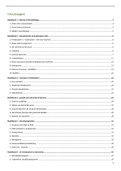
Lecture: Personalized health care ....................................................................................................... 2
Tutorial: Pharmacology and drug disposition ..................................................................................... 4
Lecture: Drug transporters and metabolism ....................................................................................... 8
Transporters .................................................................................................................................... 8
Biotransformation (metabolism) ................................................................................................... 11
Research highlight: Mitochondrial carrier proteins .......................................................................... 14
Week 2................................................................................................................................................... 19
Lecture: Drug delivery part I.............................................................................................................. 19
Lecture: Drug delivery part II............................................................................................................. 27
Research highlight: nanoparticle delivery in mice ............................................................................ 32
Lecture: drug development ............................................................................................................... 35
Workgroup: Drug development and delivery ................................................................................... 40
Week 3: Genetic therapy for retinal disease ......................................................................................... 45
Lecture: Introduction genetic therapy for retinal disease ................................................................ 45
Lecture: Gene augmentation therapy ............................................................................................... 47
Lecture: Splicing modulation ............................................................................................................. 49
Lecture: Genome editing ................................................................................................................... 51
Week 4: Therapy of renal tubulopathies............................................................................................... 52
Lecture: renal physiology .................................................................................................................. 52
Lecture: Current studies and therapy of renal tubulopathies........................................................... 54
Research highlight: Renal replacement therapies stem cells meet biomaterials ............................. 56
Week 5................................................................................................................................................... 59
Lecture: Kinase receptor signaling .................................................................................................... 59
Week 6................................................................................................................................................... 64
Tutorial: GPCR-mediated signaling .................................................................................................... 64
Lecture: Pain management: focus on GPCRs .................................................................................... 71
,Week 1
Lecture: Personalized health care
With the exponential developments in lab technology and data processing, we are able to consider
individual differences in life science research. Previously we could distinguish between gender, age
and health, but now we can easily differentiate all people, since we for example can sequence and
know all base pairs. This is the foundation of personalized medicine, because rather than having
uniform patient groups with the same diagnosis and a similar treatment, we can now personalize
healthcare by segregating the patients in
different groups. For example, we can know
whether a drug is not toxic and beneficial for a
certain group of patients, whereas for another
group it might be toxic and not beneficial etc.
(see figure). Thus, Personalized medicine is
the type of medical care in which treatment is
customized for an individual patient or groups
of patients. Molecular biomarkers are the key
drivers of patient selection.
Such a personalized medicine could be observed in melanoma. For a melanoma tumour to develop
multiple stages are needed. For example, a melanoma starts with a BRAF mutation, that leads to a
benign lesion with limited growth which could develop into a metastatic melanoma. However, to do
so it needs to overcome multiple stages/blocks. The next step is a CDKN2A loss or PTEN loss, etc.
BRAF is part of the MAPK/ERK pathway, which leads to the stimulation of cell growth. The pathway
consists of all kinase proteins, that put a phosphate group at a kinase domain group at its substrate.
BRAF has 2 phosphorylation sites, that need to be both phosphorylated (threonine and serine) to
activate MEK. The phosphorylation is strictly regulated, but also the dephosphorylation, so that cell
growth is not continuously activated.
RAF inhibitors will block this pathway and thereby cell growth and inhibit cancers that have a BRAF
V600E mutation. 60% of melanoma patients have this BRAF V600E mutation, which is the basis for a
personalized medicine.
This lead to a successful personalized medicine in melanoma: vemurafenib. Vemurafenib is a B-RAF
inhibitor, which results in the inhibition of cell growth. It is a life-extending medicine, but not curing
since resistance against this can occur. Therefore, combination therapy (vemurafenib +
chemotherapy) is usually used.
A biomarker is a characteristic that is objectively measured and evaluated as an indicator of normal
biological processes, pathogenic processes, or pharmacologic responses to a therapeutic
intervention. A molecular impression of a biological system.
When there is a human genetic linkage of the target to the disease indication present or a efficacy
biomarker is available, there is more success in projects working on medication.
, Personalized healthcare
The technology innovation is the driving impact in personalized healthcare. The diagnosis through
the new technology is very important to provide successful therapy. It is crucial to combine different
molecular views to understand human health and disease. In the clinical personalized healthcare, fast
translational of biomarker research to implementation is needed.
The role of molecular (omics) biomarker data is very important in personalized healthcare.
- DNA = genomics
- RNA = transcriptomics
- Proteins = proteomics
- Metabolites = metabolomics
Personalized diagnosis + personalized therapy + patient-doctor interaction = personalized healthcare
The patient doctor interaction is also very important in giving an advice on what to do based on the
personalized diagnosis that is made. It can be that it is advised to do nothing, since it will only
decrease the quality of life based on the molecular findings. It could also be that there is a drug that
can perfectly help to solve the problem, for example with the BRAF.
We are able to test the whole genome for a very cost-effective manner, also a single assay can test
10.000 to 50.000 proteins and metabolites. This shows the power of omics in molecular analyses
nowadays. What we can do with omics is that our diagnostic yield is much higher and we can put the
change into context. The integration of clinical omics data will give a better big picture of the
situation. In this way integration of clinical omics data will drive personalized healthcare.
Translational innovation gaps
However, there are three translational innovation gaps, namely:
1. Research to research → reproducibility crisis, time for quality and not quantity (improve
biomarkers that are found, rather than finding new biomarkers)
2. Research to diagnostics → about 5 biomarkers per working day are found, however it takes
1-3 years to clinically validate a biomarker and 2-10 years to innovate a diagnostic test
3. Research to society
Biology
Quarter 1
2021/2022
Molecular Therapy
SUMMARY OF THE COURSE MOLECULAR THERAPY 2021
ELISE REUVEKAMP
,Content
Week 1..................................................................................................................................................... 2
Lecture: Personalized health care ....................................................................................................... 2
Tutorial: Pharmacology and drug disposition ..................................................................................... 4
Lecture: Drug transporters and metabolism ....................................................................................... 8
Transporters .................................................................................................................................... 8
Biotransformation (metabolism) ................................................................................................... 11
Research highlight: Mitochondrial carrier proteins .......................................................................... 14
Week 2................................................................................................................................................... 19
Lecture: Drug delivery part I.............................................................................................................. 19
Lecture: Drug delivery part II............................................................................................................. 27
Research highlight: nanoparticle delivery in mice ............................................................................ 32
Lecture: drug development ............................................................................................................... 35
Workgroup: Drug development and delivery ................................................................................... 40
Week 3: Genetic therapy for retinal disease ......................................................................................... 45
Lecture: Introduction genetic therapy for retinal disease ................................................................ 45
Lecture: Gene augmentation therapy ............................................................................................... 47
Lecture: Splicing modulation ............................................................................................................. 49
Lecture: Genome editing ................................................................................................................... 51
Week 4: Therapy of renal tubulopathies............................................................................................... 52
Lecture: renal physiology .................................................................................................................. 52
Lecture: Current studies and therapy of renal tubulopathies........................................................... 54
Research highlight: Renal replacement therapies stem cells meet biomaterials ............................. 56
Week 5................................................................................................................................................... 59
Lecture: Kinase receptor signaling .................................................................................................... 59
Week 6................................................................................................................................................... 64
Tutorial: GPCR-mediated signaling .................................................................................................... 64
Lecture: Pain management: focus on GPCRs .................................................................................... 71
,Week 1
Lecture: Personalized health care
With the exponential developments in lab technology and data processing, we are able to consider
individual differences in life science research. Previously we could distinguish between gender, age
and health, but now we can easily differentiate all people, since we for example can sequence and
know all base pairs. This is the foundation of personalized medicine, because rather than having
uniform patient groups with the same diagnosis and a similar treatment, we can now personalize
healthcare by segregating the patients in
different groups. For example, we can know
whether a drug is not toxic and beneficial for a
certain group of patients, whereas for another
group it might be toxic and not beneficial etc.
(see figure). Thus, Personalized medicine is
the type of medical care in which treatment is
customized for an individual patient or groups
of patients. Molecular biomarkers are the key
drivers of patient selection.
Such a personalized medicine could be observed in melanoma. For a melanoma tumour to develop
multiple stages are needed. For example, a melanoma starts with a BRAF mutation, that leads to a
benign lesion with limited growth which could develop into a metastatic melanoma. However, to do
so it needs to overcome multiple stages/blocks. The next step is a CDKN2A loss or PTEN loss, etc.
BRAF is part of the MAPK/ERK pathway, which leads to the stimulation of cell growth. The pathway
consists of all kinase proteins, that put a phosphate group at a kinase domain group at its substrate.
BRAF has 2 phosphorylation sites, that need to be both phosphorylated (threonine and serine) to
activate MEK. The phosphorylation is strictly regulated, but also the dephosphorylation, so that cell
growth is not continuously activated.
RAF inhibitors will block this pathway and thereby cell growth and inhibit cancers that have a BRAF
V600E mutation. 60% of melanoma patients have this BRAF V600E mutation, which is the basis for a
personalized medicine.
This lead to a successful personalized medicine in melanoma: vemurafenib. Vemurafenib is a B-RAF
inhibitor, which results in the inhibition of cell growth. It is a life-extending medicine, but not curing
since resistance against this can occur. Therefore, combination therapy (vemurafenib +
chemotherapy) is usually used.
A biomarker is a characteristic that is objectively measured and evaluated as an indicator of normal
biological processes, pathogenic processes, or pharmacologic responses to a therapeutic
intervention. A molecular impression of a biological system.
When there is a human genetic linkage of the target to the disease indication present or a efficacy
biomarker is available, there is more success in projects working on medication.
, Personalized healthcare
The technology innovation is the driving impact in personalized healthcare. The diagnosis through
the new technology is very important to provide successful therapy. It is crucial to combine different
molecular views to understand human health and disease. In the clinical personalized healthcare, fast
translational of biomarker research to implementation is needed.
The role of molecular (omics) biomarker data is very important in personalized healthcare.
- DNA = genomics
- RNA = transcriptomics
- Proteins = proteomics
- Metabolites = metabolomics
Personalized diagnosis + personalized therapy + patient-doctor interaction = personalized healthcare
The patient doctor interaction is also very important in giving an advice on what to do based on the
personalized diagnosis that is made. It can be that it is advised to do nothing, since it will only
decrease the quality of life based on the molecular findings. It could also be that there is a drug that
can perfectly help to solve the problem, for example with the BRAF.
We are able to test the whole genome for a very cost-effective manner, also a single assay can test
10.000 to 50.000 proteins and metabolites. This shows the power of omics in molecular analyses
nowadays. What we can do with omics is that our diagnostic yield is much higher and we can put the
change into context. The integration of clinical omics data will give a better big picture of the
situation. In this way integration of clinical omics data will drive personalized healthcare.
Translational innovation gaps
However, there are three translational innovation gaps, namely:
1. Research to research → reproducibility crisis, time for quality and not quantity (improve
biomarkers that are found, rather than finding new biomarkers)
2. Research to diagnostics → about 5 biomarkers per working day are found, however it takes
1-3 years to clinically validate a biomarker and 2-10 years to innovate a diagnostic test
3. Research to society