Complex Care HESI Study Guide
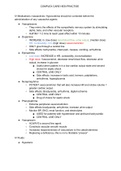
IV Medications /vasoactives: Hypovolemia should be corrected before the administration of any vasoactive agents ● Vasopressors ○ They mimic the effects of the sympathetic nervous system by stimulating alpha, beta, and other vascular receptors. ○ Half life= 1-2 mins & reach peak effect within 10 minutes ● Dopamine ○ INCREASE in: (low dose) renal blood flow, urine output, (median dose) HR, Contractility, CO, (high dose) vasoconstriction ○ ONLY give through a central line ○ Side effects: tachycardia, chest pain, nausea, vomiting, arrhythmia ● Epinephrine ○ Low dose: INCREASE in HR, contractility, bronchodilation ○ High dose: Vasoconstrict, decrease renal blood flow, decrease urine output, increase in glucose ■ Useful when patient in in a low cardiac output state and second choice for septic shock ■ CENTRAL LINE ONLY ■ Side effects: increase in lactic acid, tremors, palpitations, arrhythmia, hyperglycemia ● Norepinephrine ○ POTENT vasoconstrictor that will also increase HR and stroke volume = greater cardiac output. ○ Side effects: Bradycardia, arrhythmia, digital ischemia ■ CENTRAL LINE ONLY ■ Drug of choice for septic shock ● Phenylephrine ○ Extreme peripheral vasoconstriction ○ Side effects bradycardia, arrhythmia, increase urine output ○ Monitor BP, EKG, renal function, and electrolytes ■ USED for patients with hypotension and profound tachycardia ■ CENTRAL LINE ONLY ● Vasopressin ○ ALWAYS a second line agent ○ Constricts vascular smooth muscle ○ Increases responsiveness of vasculature to the catecholamines ○ Replacing a deficiency--this is not a titratable “pressor” IV Fluids: ● Hypotonic
Document information
- Uploaded on
- January 13, 2022
- Number of pages
- 10
- Written in
- 2021/2022
- Type
- Exam (elaborations)
- Contains
- Unknown