SECTION: Resistance to Social Influence
TOPIC: Social Influence
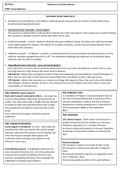
SUMMARY OF KEY IDEAS (K/U)
1. Resistance of social influence is the ability to withstand group/social pressure to conform or obey influenced by
situational and dispositional factors.
2. Situational Factor (external) = Social Support
The pressure to conform/obey is reduced when someone else resists the pressure, these people act as models showing
that resistance is possible, and their actions help others do the same.
3. Conformity Example – In Asch’s research a dissenter also gave a different answer (not always the right one) showing
social support against the majority. The majority is no longer unanimous, and the naïve participant became free to
follow their own conscience.
4. Obedience Example – In Milgram’s variations a confederate joined the naïve participant and refused orders from the
authority, obedience dropped from 65% to 10% The confederate challenged the legitimacy of the authority figure,
making it easier for others to disobey.
5. Dispositional Factor (internal) = Locus of Control (Rotter)
LOC is the levels of control a person perceives themselves to have over their own behaviour and life. LOC is a scale
from high internal to high external with lower levels in between.
LOC Internal – believe they are largely in control of their own happenings and responsible for events that happen to
them. They are more able to resist pressures as they follow their own beliefs of what is right and wrong.
LOC External – believe they have low to no control over things that happen to them, they can be less self-confident
and intelligent, relying on opinions of others. This causes them to be more likely to obey and conform as they put
responsibility on external forces.
PEEL STRENGTH (social support) PEEL STRENGTH (LOC)
Real world research and positive effects – one study was In a repetition of Milgram’s study participants levels of
set up to help pregnant adolescents resist pressures to LOC were measured beforehand. It was found 37% of
smoke. They were paired with a ‘buddy’ who also refused internals disobeyed to continue and 23% of external
to smoke and after the programme those with a buddy disobeyed to continue showing there is some effect of
were significantly less likely to smoke than the control LOC increasing the validity of the explanation.
group. BUT…
Proves idea of social support and shows practical
PEEL WEAKNESS
application.
LOC minimal impact – Rotter points out that even for
people with internal LOC the situation can still cause
PEEL STRENGTH/WEAKNESS
obedience especially if it is a situation they have
Social support is situational - An Asch – type study was
previously conformed/obeyed to in the past. Regardless
repeated when they were placed with a good eyesight
of external or internal LOC situation can overrule this
dissenter conformity fell similarly to Asch’s findings. But
idea.
when they has poor eyesight (thick glasses) the
conformity fell less showing social support is only
effective in some cases. Proof of resistance
24% refused to conform in any trials of Asch’s study
Contradicting research - A longitudinal study over 40 35% refused to continue up to 450 volts in Milgram’s
years measured Americans LOC, over time participants study
became more resistant to obedience but also more Most guards refused to conform to an aggressive social
external, contradicting the theory. This invalidates the role in Zimbardo’s study
explanation of resisting social influence. Shows many people are able to resist social influence.
TOPIC: Social Influence
SUMMARY OF KEY IDEAS (K/U)
1. Resistance of social influence is the ability to withstand group/social pressure to conform or obey influenced by
situational and dispositional factors.
2. Situational Factor (external) = Social Support
The pressure to conform/obey is reduced when someone else resists the pressure, these people act as models showing
that resistance is possible, and their actions help others do the same.
3. Conformity Example – In Asch’s research a dissenter also gave a different answer (not always the right one) showing
social support against the majority. The majority is no longer unanimous, and the naïve participant became free to
follow their own conscience.
4. Obedience Example – In Milgram’s variations a confederate joined the naïve participant and refused orders from the
authority, obedience dropped from 65% to 10% The confederate challenged the legitimacy of the authority figure,
making it easier for others to disobey.
5. Dispositional Factor (internal) = Locus of Control (Rotter)
LOC is the levels of control a person perceives themselves to have over their own behaviour and life. LOC is a scale
from high internal to high external with lower levels in between.
LOC Internal – believe they are largely in control of their own happenings and responsible for events that happen to
them. They are more able to resist pressures as they follow their own beliefs of what is right and wrong.
LOC External – believe they have low to no control over things that happen to them, they can be less self-confident
and intelligent, relying on opinions of others. This causes them to be more likely to obey and conform as they put
responsibility on external forces.
PEEL STRENGTH (social support) PEEL STRENGTH (LOC)
Real world research and positive effects – one study was In a repetition of Milgram’s study participants levels of
set up to help pregnant adolescents resist pressures to LOC were measured beforehand. It was found 37% of
smoke. They were paired with a ‘buddy’ who also refused internals disobeyed to continue and 23% of external
to smoke and after the programme those with a buddy disobeyed to continue showing there is some effect of
were significantly less likely to smoke than the control LOC increasing the validity of the explanation.
group. BUT…
Proves idea of social support and shows practical
PEEL WEAKNESS
application.
LOC minimal impact – Rotter points out that even for
people with internal LOC the situation can still cause
PEEL STRENGTH/WEAKNESS
obedience especially if it is a situation they have
Social support is situational - An Asch – type study was
previously conformed/obeyed to in the past. Regardless
repeated when they were placed with a good eyesight
of external or internal LOC situation can overrule this
dissenter conformity fell similarly to Asch’s findings. But
idea.
when they has poor eyesight (thick glasses) the
conformity fell less showing social support is only
effective in some cases. Proof of resistance
24% refused to conform in any trials of Asch’s study
Contradicting research - A longitudinal study over 40 35% refused to continue up to 450 volts in Milgram’s
years measured Americans LOC, over time participants study
became more resistant to obedience but also more Most guards refused to conform to an aggressive social
external, contradicting the theory. This invalidates the role in Zimbardo’s study
explanation of resisting social influence. Shows many people are able to resist social influence.