SECTION: OCD – Explanations and Treatments
TOPIC: Psychopathology
KEY IDEAS (K/U)
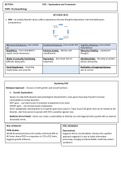
1. OCD = an anxiety disorder where suffers experiences intrusive thoughts (obsessions) and ritual behaviours
(compulsions.)
Behavioural Response: ways people Emotional Response: ways people feel Cognitive Response: ways people
act think/believe
Repetitions – feel compelled to Extreme Anxiety – distress and Obsessive Thinking – unpleasant
repeat certain behaviours unsettlement thoughts
Hinder to everyday functioning – Depression – low mood, lack of Attentional Bias – focusing on anxiety
difficulty doing tasks enjoyment stimuli, distracting
Social Impairment – impacting Realisation of inappropriateness –
relationships and social life lack of control
Explaining OCD
Biological Approach – focuses on both genetic and neural functions
1. Genetic Explanations
Genes can code both physical and psychological characteristics, some genes have been found to increase
vulnerability to mental disorders.
SERT gene – can lower levels of serotonin transported to the brain
COMPT gene – can increase levels of dopamine
OCD is polygenetic meaning there is no specific gene that causes it, Taylor found 230 genes that can be related to the
disorder, also from person to person with OCD causations (genes) vary.
Diathesis Stress Model = Genes can create a vulnerability to OCD but are only triggered when paried with an external
(traumatic) event.
PEEL STRENGTH PEEL WEAKNESS
TWIN Studies: Determinism:
(2010) Reviewed previous twin studies and found 68% of Suggests OCD is uncontrollable, whereas the cognitive
MZ twins shared OCD in comparison to 31% of DZ twins. approach suggests it is due to faulty information
Suggests genetic influence. processing, changing irrational beliefs could help reduce
symptoms.
TOPIC: Psychopathology
KEY IDEAS (K/U)
1. OCD = an anxiety disorder where suffers experiences intrusive thoughts (obsessions) and ritual behaviours
(compulsions.)
Behavioural Response: ways people Emotional Response: ways people feel Cognitive Response: ways people
act think/believe
Repetitions – feel compelled to Extreme Anxiety – distress and Obsessive Thinking – unpleasant
repeat certain behaviours unsettlement thoughts
Hinder to everyday functioning – Depression – low mood, lack of Attentional Bias – focusing on anxiety
difficulty doing tasks enjoyment stimuli, distracting
Social Impairment – impacting Realisation of inappropriateness –
relationships and social life lack of control
Explaining OCD
Biological Approach – focuses on both genetic and neural functions
1. Genetic Explanations
Genes can code both physical and psychological characteristics, some genes have been found to increase
vulnerability to mental disorders.
SERT gene – can lower levels of serotonin transported to the brain
COMPT gene – can increase levels of dopamine
OCD is polygenetic meaning there is no specific gene that causes it, Taylor found 230 genes that can be related to the
disorder, also from person to person with OCD causations (genes) vary.
Diathesis Stress Model = Genes can create a vulnerability to OCD but are only triggered when paried with an external
(traumatic) event.
PEEL STRENGTH PEEL WEAKNESS
TWIN Studies: Determinism:
(2010) Reviewed previous twin studies and found 68% of Suggests OCD is uncontrollable, whereas the cognitive
MZ twins shared OCD in comparison to 31% of DZ twins. approach suggests it is due to faulty information
Suggests genetic influence. processing, changing irrational beliefs could help reduce
symptoms.