Vocal Music
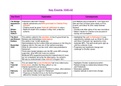
Piece and Composer Info Notable Features
Brandenburg Concerto grosso- Tonic pedals
Concerto No.5 (3) flute, violin and Modulation to predictable tonality in B section (D major to B minor)
JS Bach cembalo soloists Use of concertino and ripieno
Music for a While Aria from Oedipus Ornamented melody in section A1
Henry Purcell Use of 3 bar ground bass
Basso continuo
Use of both melismas and syllabic lines
‘Spring’ from the Violin concerto Ritornello form
Four Seasons Terraced dynamics
Vivaldi Example of early programme music- Vivaldi wrote 12 sonnets to go
with the Four Seasons
And the Glory of the Baroque sacred Soloists and SATB chorus
Lord work (an oratorio), Diatonic chords and mostly perfect cadences (with some plagal)
Handel Movement IV of the Instruments doubling the voices in different octaves
Messiah Imitative entries and homophonic textures
Mostly syllabic singing
All major
Thy Hand Belinda Area and recitative Word painting- tritone on the word ‘trouble’
and When I am laid Example of a secco recitative
in earth Melisma suggests disorientation
Purcell Faster rhythms used to express the Queen’s feelings of angst
Nous avons en tete Melismas adding interest
une affaire Ornaments and sequences, chromaticism creates expressive
Bizet melodic line
Dynamic contrast in both orchestra and vocals- between pp and
forte
Clarinet Concerto in Use of chromaticism- expressive
A major (2) Written for strings, 2 flutes bassoons and horns, solo Clarinet in A
Mozart Ternary form
Lacrimosa from Sotto voce- creates an eerie atmosphere
‘Requiem’
Mozart
Gloria Orchestration includes trumpet, oboe strings and continuo
Vivaldi Frequent melismas and suspensions
Instrumental Music
Piece and Composer Info Notable Features
Trio Sonata Op.3 Corelli proved the Trio Sonata form- 2 melodic instruments (violins) and basso
Corelli potential of the continuo (bass viol and organ)
concerto grosso Polyphony
Modulations to closely related keys
Terraced dynamics due to multiple manuals on the organ
Brandenburg Vivaldi inspired JS Concerto Grosso- concertino (flute, violin and harpsichord) and
Concerto No.5 (3) Bach ripieno (strings and harpsichord)
JS Bach Perfect cadences announce the end of sections
Begins in a fugal style
Figured bass realised by the keyboard player
Symphony No.6 in D, Composed in 1761 Diatonic
Movement 4 (early Classical Dominant and tonic pedals (inverted)
Haydn period) Greater dynamic contrast than Baroque pieces
Many characteristics of a Concerto Grosso- frequent solos for flute,
oboe and harpsichord
, Pathetique Sonata Romantic Composer Sonata form
Beethoven Berlioz was inspired Diminished 7th chord in first bar
by Beethoven 2 and a half octave chromatic scale, helps to build up excitement
before the exposition
Unexpected tonalities- 2nd subject in recapitulation is F minor (but
should be in the tonic key of C minor)
Interrupted cadences
Chromatic chords- augmented 6ths
Symphony No.40 (1) Classical period Conventional sonata form- contrast to Schumann
Mozart Small orchestra- 7 woodwind players
Mostly functional harmony with some chromaticism
Both themes are in the tonic in the recapitulation
Cello and double bass play in unison throughout
Symphony No.5 (1) Modulation to the tonic major in the second subject group of the
Beethoven recapitulation
Harold in Italy Describes travels Idee Fixe to represent Harold in the 1 st movement
Berlioz and reflections of an Large orchestra- piccolo, cor anglaise, harps, divided violas
aspiring knight Occasional diminished 7th chords- represents the changing mood of
Symphony with solo the traveller throughout his journey
viola
Hermine Cantata composed Contains the start of the Idee Fixe used in Berlioz’s Symphony
Berlioz in 1828 Fantastique
An Alpine Symphony Composed in 1915 Large orchestra (125 players)- included 8 French horns and 12
Strauss Depicts 11 hours of offstage horns
climbing a mountain Gave Strauss the ability portray different moods and large
landscapes
Piano Trio No.1 in D Inspired by C Large amount of contrapuntal melodic writing in first movement
minor Schumann’s piano
Robert Schumann trio
Hermine Written 2 years prior Uses the start of Symphonie Fantastique’s Idee Fixe
(Movement I) to Symphonie
Berlioz Fantastique
Siegfried 4th opera in the Ring Siegfried’s Horn Call motif- rising 5th, then ascending and descending
Wagner Cycle scalic movement
Developed using changes of metre and changes of orchestration
Finlandia Ends with a Plagal cadence (same as the Berlioz)
Sibelius
Romeo and Juliet Symphonic poem in sonata form
Tchaikovsky Themes used to represent contrasting moods e.g. love theme-
reappears at the end in a minor key, representing deaths of the
main characters
Music for Film
Piece and Composer Info Notable Features
Something’s Coming Tritone interval used to foreshadow bad news
from ‘West Side
Story’
Bernstein
Jaws Theme Minor second interval- leitmotif
John Williams
Music from ‘Emma’ 1996 Use of classical orchestra and period setting
Portman Simple melodies
Flute and harp for melodies- feminine sounding instruments
Music from ‘The Heavy use of strings
Danish Girl’ Simple melodies and themes
Piece and Composer Info Notable Features
Brandenburg Concerto grosso- Tonic pedals
Concerto No.5 (3) flute, violin and Modulation to predictable tonality in B section (D major to B minor)
JS Bach cembalo soloists Use of concertino and ripieno
Music for a While Aria from Oedipus Ornamented melody in section A1
Henry Purcell Use of 3 bar ground bass
Basso continuo
Use of both melismas and syllabic lines
‘Spring’ from the Violin concerto Ritornello form
Four Seasons Terraced dynamics
Vivaldi Example of early programme music- Vivaldi wrote 12 sonnets to go
with the Four Seasons
And the Glory of the Baroque sacred Soloists and SATB chorus
Lord work (an oratorio), Diatonic chords and mostly perfect cadences (with some plagal)
Handel Movement IV of the Instruments doubling the voices in different octaves
Messiah Imitative entries and homophonic textures
Mostly syllabic singing
All major
Thy Hand Belinda Area and recitative Word painting- tritone on the word ‘trouble’
and When I am laid Example of a secco recitative
in earth Melisma suggests disorientation
Purcell Faster rhythms used to express the Queen’s feelings of angst
Nous avons en tete Melismas adding interest
une affaire Ornaments and sequences, chromaticism creates expressive
Bizet melodic line
Dynamic contrast in both orchestra and vocals- between pp and
forte
Clarinet Concerto in Use of chromaticism- expressive
A major (2) Written for strings, 2 flutes bassoons and horns, solo Clarinet in A
Mozart Ternary form
Lacrimosa from Sotto voce- creates an eerie atmosphere
‘Requiem’
Mozart
Gloria Orchestration includes trumpet, oboe strings and continuo
Vivaldi Frequent melismas and suspensions
Instrumental Music
Piece and Composer Info Notable Features
Trio Sonata Op.3 Corelli proved the Trio Sonata form- 2 melodic instruments (violins) and basso
Corelli potential of the continuo (bass viol and organ)
concerto grosso Polyphony
Modulations to closely related keys
Terraced dynamics due to multiple manuals on the organ
Brandenburg Vivaldi inspired JS Concerto Grosso- concertino (flute, violin and harpsichord) and
Concerto No.5 (3) Bach ripieno (strings and harpsichord)
JS Bach Perfect cadences announce the end of sections
Begins in a fugal style
Figured bass realised by the keyboard player
Symphony No.6 in D, Composed in 1761 Diatonic
Movement 4 (early Classical Dominant and tonic pedals (inverted)
Haydn period) Greater dynamic contrast than Baroque pieces
Many characteristics of a Concerto Grosso- frequent solos for flute,
oboe and harpsichord
, Pathetique Sonata Romantic Composer Sonata form
Beethoven Berlioz was inspired Diminished 7th chord in first bar
by Beethoven 2 and a half octave chromatic scale, helps to build up excitement
before the exposition
Unexpected tonalities- 2nd subject in recapitulation is F minor (but
should be in the tonic key of C minor)
Interrupted cadences
Chromatic chords- augmented 6ths
Symphony No.40 (1) Classical period Conventional sonata form- contrast to Schumann
Mozart Small orchestra- 7 woodwind players
Mostly functional harmony with some chromaticism
Both themes are in the tonic in the recapitulation
Cello and double bass play in unison throughout
Symphony No.5 (1) Modulation to the tonic major in the second subject group of the
Beethoven recapitulation
Harold in Italy Describes travels Idee Fixe to represent Harold in the 1 st movement
Berlioz and reflections of an Large orchestra- piccolo, cor anglaise, harps, divided violas
aspiring knight Occasional diminished 7th chords- represents the changing mood of
Symphony with solo the traveller throughout his journey
viola
Hermine Cantata composed Contains the start of the Idee Fixe used in Berlioz’s Symphony
Berlioz in 1828 Fantastique
An Alpine Symphony Composed in 1915 Large orchestra (125 players)- included 8 French horns and 12
Strauss Depicts 11 hours of offstage horns
climbing a mountain Gave Strauss the ability portray different moods and large
landscapes
Piano Trio No.1 in D Inspired by C Large amount of contrapuntal melodic writing in first movement
minor Schumann’s piano
Robert Schumann trio
Hermine Written 2 years prior Uses the start of Symphonie Fantastique’s Idee Fixe
(Movement I) to Symphonie
Berlioz Fantastique
Siegfried 4th opera in the Ring Siegfried’s Horn Call motif- rising 5th, then ascending and descending
Wagner Cycle scalic movement
Developed using changes of metre and changes of orchestration
Finlandia Ends with a Plagal cadence (same as the Berlioz)
Sibelius
Romeo and Juliet Symphonic poem in sonata form
Tchaikovsky Themes used to represent contrasting moods e.g. love theme-
reappears at the end in a minor key, representing deaths of the
main characters
Music for Film
Piece and Composer Info Notable Features
Something’s Coming Tritone interval used to foreshadow bad news
from ‘West Side
Story’
Bernstein
Jaws Theme Minor second interval- leitmotif
John Williams
Music from ‘Emma’ 1996 Use of classical orchestra and period setting
Portman Simple melodies
Flute and harp for melodies- feminine sounding instruments
Music from ‘The Heavy use of strings
Danish Girl’ Simple melodies and themes