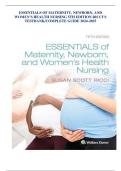
STUDY GUIDE FOR UNDERSTANDING MEDICAL SURGICAL NURSING, 6th Edition
CHAPTER 1 CRITICAL THINKING AND THE NURSING PROCESS AUDIO CASE STUDY Jane and the Nursing Process 1. Assessment/data collection, diagnosis, planning, imple- mentation, and evaluation. 2. Jane was exhausted, failed a test, and was pulled in too many directions. 3. Jane’s resources included a good friend, sick time from work, and wasted time between classes that she could better utilize. Your resources will be different, but they’re there! VOCABULARY Nursing Process Definition: An organizing framework that links thinking with nursing actions. Steps include assessment/data collection, nursing diagnosis, planning, implementation, and evaluation. Critical Thinking Definition: The use of those cognitive (knowledge) skills or strategies that increase the probability of a desirable outcome. Also involves reflection, problem-solving, and related think- ing skills. Assessment Definition: Gathering subjective and objective data to plan care. Objective Data Definition: Factual information obtained through physical as- sessment and diagnostic tests. Objective data are observable or knowable through the health care worker’s five senses. Referred to as signs. Subjective Data Definition: Information that is provided verbally by the patient and referred to as symptoms. Nursing Diagnosis Definition: Per NANDA International, a nursing diagnosis is a “clinical judgment concerning a human response to health conditions/life processes, or a vulnerability for that response, by an individual, family, group or community. A nursing diag- nosis provides the basis for selection of nursing interventions to achieve outcomes for which the nurse has accountability” (from Evaluation Definition: Examination of outcomes and interventions to de- termine progress toward desired outcomes and effectiveness of interventions. Vigilance Definition: The act of being attentive, alert, and watchful. SUBJECTIVE AND OBJECTIVE DATA 1. Subjective (symptom) 2. Subjective (symptom) 3. Objective (sign) 4. Objective (sign) 5. Subjective (symptom) 6. Objective (sign) 7. Subjective (symptom) 8. Objective (sign) 9. Subjective (symptom) 10. Subjective (symptom) 11. Objective (sign) 12. Objective (sign) 13. Subjective (symptom) 14. Objective (sign) 15. Objective (sign) CRITICAL THINKING This is just one possible way to complete a cognitive map. REVIEW QUESTIONS—CONTENT REVIEW The correct answers are in boldface. 1. (3) is a nursing diagnosis. (1, 2, 4) are medical diagnoses. 2. (1) is a medical diagnosis. (2, 3, 4) are nursing diagnoses. 3. (1) is correct. The nurse who keeps trying until the prob- lem is solved is exhibiting perseverance. (2, 3, 4) are incorrect. 4. (3, 4, 5, 1, 2) is the correct order. 5. (1) is the best definition. (2, 3, 4) do not define critical thinking but are examples of good thinking. REVIEW QUESTIONS—TEST PREPARATION The correct answers are in boldface. 6. (4) is correct. Evaluation determines whether goals are achieved and interventions effective. (2) is the role of the physician. (1, 3) encompass data collection and imple- mentation, which are earlier steps in the nursing process. 7. (1) is correct. The licensed practical nurse/licensed voca- tional nurse can collect data, which includes taking vital signs; assessment is the first step in the nursing process. (2, 3, 4) are all steps in the nursing process, for which the registered nurse is responsible; the licensed practical nurse/licensed vocational nurse may assist the regis- tered nurse with these. 8. (1, 4, 5) can be observed through use of the five senses. (2, 3) are subjective data that the patient must report. 9. (2) indicates that the patient is concerned about freedom from injury and harm. (1) relates to basic needs such as air, oxygen, and water. (3) relates to feeling loved. (4) is related to having positive self-esteem. 10. (4) is objective, realistic, and measurable with a time frame. (1, 2, 3) are all good outcomes, but they relate to airway clearance, nutrition, and strength, not directly to swallowing. 11. (2) is correct. The three parts of a diagnosis include the problem (from the NANDA International [NANDA-I] list), etiology (“related to”), and symptoms (“as evi- denced by”). (1) does not include symptoms. (3) is a medical diagnosis. (4) is not a NANDA-I diagnosis, and the evidence is not related to dyspnea. CHAPTER 2 EVIDENCE-BASED PRACTICE AUDIO CASE STUDY Marie and Evidence-Based Practice 1. Thirdhand smoke is the dangerous toxins of smoke that linger on hair, clothing, furniture, and other surfaces in an area after a cigarette is put out. Marie learned that exposure to these toxins can be neurotoxic to children and can trigger asthma attacks in sensitive people. 2. Evidence-based practice is considered the gold standard of health care. 3. Step 1: Ask the burning question. Step 2: Search and collect the most relevant and best evidence available. Step 3: Think critically. Appraise the evidence for validity, relevance to the situation, and applicability. Step 4: Measure the outcomes before and after instituting the change. Step 5: Make it happen. Step 6: Evaluate the practice decision or change. 4. Combination therapy with a nicotine patch and nicotine lozenges worked best, although bupropion (Zyban) and nicotine lozenges worked well, too. A Cochrane Review found that advice and support from nursing staff can increase patients’ success in quitting smoking, especially in a hospital setting. VOCABULARY 1. Evidence-based practice: A systematic process that uses current evidence in making decisions about patient care. 2. Evidence-informed practice: Consideration of patient fac- tors along with the use of evidence for shared decision- making between the health care provider and the patient. 3. Randomized controlled trials: True experimental studies in which as many factors as possible that could falsely change the results are controlled. 4. Research: Scientific study, investigation, or experimenta- tion to establish facts and analyze their significance. 5. Systematic review: A review of relevant research using guidelines. 6. Health literacy: Degree to which a person has the capac- ity to obtain, process, and understand basic health infor- mation and services to make the best-informed health decisions. EVIDENCE-BASED PRACTICE 1. proof 2. context 3. quality 4. care 5. randomized 6. outcomes 7. gold 8. nursing 9. patient’s 10. information CRITICAL THINKING 1. By questioning the existing way of doing things to en- sure that the patient receives the best care possible. 2. A thorough search of the literature in the area of music therapy. 3. Cumulative Index to Nursing and Allied Health Litera- ture (CINAHL) Database, Joanna Briggs Institute evidence-based resources, Cochrane Reviews, Medline/PubMed. 4. Measure patient outcomes before instituting the evi- dence-based change in practice so comparisons can be made after implementation to determine if the intervention worked. 5. Evaluate the results to determine whether the change made a significant difference and if it was worthwhile in terms of cost and time. REVIEW QUESTIONS—CONTENT REVIEW The correct answers are in boldface. 1. (2) is Level I evidence. (1, 3, 4) are not examples of the best evidence. 2. (1) is a nursing database. (2, 3, 4) are primarily medical databases. 3. (3) is the website for the Joint Commission, where you can find the National Patient Safety Goals. (1, 2, 4) are incorrect. 4. (2) is the definition of a randomized clinical trial. (1, 3, 4) are incorrect. 5. (1) is correct. Evidence-based practice begins with a burning question designed to solve a clinical problem. (2, 3, 4) are incorrect. REVIEW QUESTIONS—TEST PREPARATION The correct answers are in boldface. 6. (2, 3, 4, 5, 6) are all independent nursing interventions because no health care provider’s order is required. (1) is a dependent function because it requires a health care provider’s order. 7. (1, 5) are Level I research. (2, 3, 4) are not systematic reviews of randomized controlled trials. 8. (1, 3, 5, 6) because the evidence-based practice process involves “ASKMME!”: ask, search, think, measure, make it happen, and evaluate. (2, 4) are not steps in the process. 9. (2, 3, 5) are correct, as they have been found to be best practice for oral care. (1, 4) do not remove plaque and only freshen the mouth. 10. (4) is correct. The search should be narrowed to include the focus on the question. (1, 2, 3) do not focus on the question being asked. CHAPTER 3 ISSUES IN NURSING PRACTICE AUDIO CASE STUDY Jim and the Health Care System 1. The use of information technology in nursing practice. 2. Ambulation, teaching leg exercises to prevent blood clots, and using sterile technique to prevent surgical site infections. 3. To avoid violating the Health Insurance and Portability and Accountability Act (HIPAA). VOCABULARY 1. (3) 2. (1) 3. (4) 4. (2) 5. (8) 6. (5) 7. (6) 8. (7) 9. (10) 10. (9) NURSING PRACTICE AND ETHICAL AND LEGAL PRINCIPLES 1. high, poor 2. state, protect, quality 3. Veracity 4. beneficence, fidelity, justice 5. knowledgeable, role, humor, respect VALUES CLARIFICATION There are no correct answers to this section because this is an exercise requiring personal responses. CRITICAL THINKING There are no correct answers to this section because this is an ethical exercise that has many choices to be considered for the best outcome for the patient. REVIEW QUESTIONS—CONTENT REVIEW The correct answers are in boldface. 1. (3) is correct. (1, 2, 4) are incorrect. 2. (1) is correct. (2, 3, 4) are incorrect. 3. (4) is correct. (1, 2, 3) are incorrect. 4. (2) is the first step. (1, 3, 4) are incorrect. 5. (1) is correct. (2, 3, 4) are incorrect. 6. (3) is correct. (1, 2, 4) are incorrect. 7. (4) is correct. (1, 2, 3) are incorrect. 8. (1) is correct. (2, 3, 4) are incorrect. REVIEW QUESTIONS—TEST PREPARATION The correct answers are in boldface. 9. (4) is correct. The patient is chronically ill but able to meet most goals and so has moderate wellness. (1) is incorrect. The patient is not near death. (2) is incorrect. The patient cannot meet all goals, so high-level well- ness is not being achieved. (3) is incorrect. The patient is not in poor health because most goals are met through adaptation. 10. (2) is correct. The nurse–patient relationship is based on trust that the nurse will maintain all patients’ rights. (1) is a constitutional right, not an ethical issue. (3) is a legal issue. (4) is not an ethical principle. 11. (3) is correct. Paternalism occurs when a health care provider tries to prevent patients from making au- tonomous decisions or decides what is best for patients without regard for their preferences. (1) is incorrect. The nurse might be nonresponsive about the purpose of the medication due to lack of knowledge, but there are no indications that this is true. (2) is incorrect. Advo- cacy supports providing the medication information so that the patient is informed to make autonomous deci- sions. (4) is incorrect. Telling the patient not to worry is not therapeutic communication, as it does not address the patient’s concerns. 12. (1) is correct. Knowing the patient’s wishes helps the nurse advocate for and act in the best interest of the pa- tient. (2, 3, 4) are incorrect. They are not the wishes of the patient. 13. (1, 2, 4, 5) are correct. These are all part of the five steps of delegation. See (3) is incorrect. In delegation, it is the right person not the right patient that is considered. (6) is incorrect. The right route relates to medication administration. 14. (2, 3, 4, 6) is correct. The patient is a likely victim of human trafficking; after completing data collection (ideally but unlikely in private), suspicions should be
Written for
- Institution
- Hesc 105
- Course
- Hesc 105
Document information
- Uploaded on
- January 6, 2022
- Number of pages
- 158
- Written in
- 2021/2022
- Type
- Exam (elaborations)
- Contains
- Questions & answers
Subjects
-
understanding medical surgical nursing