Food Culture and Customs
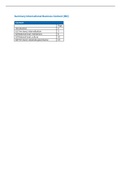
Inhoud
Lecture 1.1 Introduction.......................................................................................................................... 1
Lecture 1.2: Food Taboo: Evolution, Theory and Practice .................................................................. 3
Lecture 2: Introduction in ethics ............................................................................................................. 8
Lecture 3: Food and National Identity................................................................................................... 11
Lecture 4: Theorizing Food & Identity, with Bourdieu .......................................................................... 22
Lecture 5: Understanding Authenticity ................................................................................................. 32
Lecture 6: Understanding Authenticity ................................................................................................. 41
Lecture 7: Gender and Food .................................................................................................................. 53
Lecture 8: Food, Gender, Race and Inequality ...................................................................................... 66
Lecture 9: Food, Identity & Embodiment .............................................................................................. 78
Lecture (10) 5.2 Food Choice & Social Justice ...................................................................................... 87
Lecture 12 .............................................................................................................................................. 98
Lecture 1.1 Introduction
,• Cultures are selective in what they define as food→ edible / not edible.
→Not all food is edible to everybody.
→These ‘food rules’ are build on binary oppositions.
SOCIAL FUNCTIONS OF FOOD
- Expresses kinship and friendship
- Expresses status
- Smoothing transitional phases in life through rituals
- Expressing self identity
- Distinguishes friends from enemies
Four common patterns (Constant)
1. Recurrent exchange→ You will always be able to host somebody and feed them.
2. Mutual assistance and sharing in times of need→ People don’t share food that much.
Except emergency.
3. Narrowed and reluctant sharing→ We have enough for just us. (Dutch culture)
4. Non-sharing→ Only eat food alone, don’t share with outsiders.
CULTURE
Culture is that complex whole which includes knowledge, belief, art, morals, law, customs
and any other capabilities and habits acquired by man as a member of society.
➔ Humans create culture.
The combination of material objects as well as the ways of thinking, feeling, and behaving, that are
passed from generation to generation.
- Products
- Rituals and beliefs
- Attitudes
,Understanding culture:
- Culture is not a fixed thing. It’s always changing.
- It is changing through or own socialisation
Acculturation= Groups and individuals apt to the norms
and values from other culture. Food is often used as a
way to retain some of your own culture.
Happening though (mostly) migration.
Lecture 1.2: Food Taboo: Evolution, Theory and Practice
Coprophagia→ consumption of feces
Amic persepective→ Explanition from within the culture
Adic perspective→ looks at it from the outside
, QUESTIONS FOR THE LECTURE
Why do cultures develop taboos around foods?
What theories can be used to analyse food taboos?
Why is meat a good taboo?
What is a taboo?-->
Every culture has food taboos, even if they are not conscious.
‘Food’ is ‘culture’
By studying food we can study aspects of our culture → Food rules
The strongest food rules = Every culture has them
Applications of Taboo:
• Distinguishing specific members of a society
• Highlight special events
• Protect human health, animal health
• Regulate emotion
• Reproduction
• Protect resources
• Monopolize resources
• Empathy
• Group cohesion
• Group identity
What is disgust?
- Disgust evolves culturally
- Develops from a system to protect the body from harm to a system to protect the soul from
harm
- Revulsion response: function is to reject offensive tasting food from the mouth
- Characteristic facial expressions of disgust
-Gaping, nose wrinkling, raising the upper lip,
feeling of nausea and a general sense of revulsion
-Try it out
Distaste→ Things that you just don’t like.
More individual.
Inhoud
Lecture 1.1 Introduction.......................................................................................................................... 1
Lecture 1.2: Food Taboo: Evolution, Theory and Practice .................................................................. 3
Lecture 2: Introduction in ethics ............................................................................................................. 8
Lecture 3: Food and National Identity................................................................................................... 11
Lecture 4: Theorizing Food & Identity, with Bourdieu .......................................................................... 22
Lecture 5: Understanding Authenticity ................................................................................................. 32
Lecture 6: Understanding Authenticity ................................................................................................. 41
Lecture 7: Gender and Food .................................................................................................................. 53
Lecture 8: Food, Gender, Race and Inequality ...................................................................................... 66
Lecture 9: Food, Identity & Embodiment .............................................................................................. 78
Lecture (10) 5.2 Food Choice & Social Justice ...................................................................................... 87
Lecture 12 .............................................................................................................................................. 98
Lecture 1.1 Introduction
,• Cultures are selective in what they define as food→ edible / not edible.
→Not all food is edible to everybody.
→These ‘food rules’ are build on binary oppositions.
SOCIAL FUNCTIONS OF FOOD
- Expresses kinship and friendship
- Expresses status
- Smoothing transitional phases in life through rituals
- Expressing self identity
- Distinguishes friends from enemies
Four common patterns (Constant)
1. Recurrent exchange→ You will always be able to host somebody and feed them.
2. Mutual assistance and sharing in times of need→ People don’t share food that much.
Except emergency.
3. Narrowed and reluctant sharing→ We have enough for just us. (Dutch culture)
4. Non-sharing→ Only eat food alone, don’t share with outsiders.
CULTURE
Culture is that complex whole which includes knowledge, belief, art, morals, law, customs
and any other capabilities and habits acquired by man as a member of society.
➔ Humans create culture.
The combination of material objects as well as the ways of thinking, feeling, and behaving, that are
passed from generation to generation.
- Products
- Rituals and beliefs
- Attitudes
,Understanding culture:
- Culture is not a fixed thing. It’s always changing.
- It is changing through or own socialisation
Acculturation= Groups and individuals apt to the norms
and values from other culture. Food is often used as a
way to retain some of your own culture.
Happening though (mostly) migration.
Lecture 1.2: Food Taboo: Evolution, Theory and Practice
Coprophagia→ consumption of feces
Amic persepective→ Explanition from within the culture
Adic perspective→ looks at it from the outside
, QUESTIONS FOR THE LECTURE
Why do cultures develop taboos around foods?
What theories can be used to analyse food taboos?
Why is meat a good taboo?
What is a taboo?-->
Every culture has food taboos, even if they are not conscious.
‘Food’ is ‘culture’
By studying food we can study aspects of our culture → Food rules
The strongest food rules = Every culture has them
Applications of Taboo:
• Distinguishing specific members of a society
• Highlight special events
• Protect human health, animal health
• Regulate emotion
• Reproduction
• Protect resources
• Monopolize resources
• Empathy
• Group cohesion
• Group identity
What is disgust?
- Disgust evolves culturally
- Develops from a system to protect the body from harm to a system to protect the soul from
harm
- Revulsion response: function is to reject offensive tasting food from the mouth
- Characteristic facial expressions of disgust
-Gaping, nose wrinkling, raising the upper lip,
feeling of nausea and a general sense of revulsion
-Try it out
Distaste→ Things that you just don’t like.
More individual.