REVERSIBLE REACTIONS
REVERSIBLE REACTIONS EQUATIONS
• Produce products, like all reactions do reactants → products (forward reaction)
• Go backwards too reactants products (backward reaction)
• May have both forward and backward reactions going on at the reactants → products
same time, in the container and
reactants products
• So, they are shown by a special symbol Reactants ⇌ products
THE HABER PROCESS
The reactions 𝑁2 + 3𝐻2 ⇌ 2𝑁𝐻3
4 molecules 2 molecules
Increase the pressure Increasing the pressure will give more ammonia, since there are fewer
molecules on the right, equilibrium shifts to the right
Reduce the temperature Reducing the temperature will give more ammonia, since the forward
reaction is exothermic, equilibrium shifts to the right
Add a catalyst (iron) No change in amount of ammonia obtained
The catalyst does not shift equilibrium, but it allows the reaction to reach
equilibrium faster.
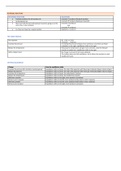
SHIFTING EQUILIBRIUM
Change How the equilibrium shifts
Increase the pressure (for reactions involving gases) Equilibrium shifts to favour the side of the equation with fewer gas molecules (lower volume of gas)
Reduce the pressure Equilibrium shifts to favour the side of the equation with more gas molecules (higher volume of gas)
Increase the temperature Equilibrium shifts to favour the endothermic reaction
Reduce the temperature Equilibrium shifts to favour the exothermic reaction
Add more reactant Equilibrium shifts to the right; more product is produced
Remove some reactant Equilibrium shifts to the left; more product breaks down to form reactants
Add more product Equilibrium shifts to the left; more products break down to form reactants
Remove some product Equilibrium shifts to the right; more product is produced
REVERSIBLE REACTIONS EQUATIONS
• Produce products, like all reactions do reactants → products (forward reaction)
• Go backwards too reactants products (backward reaction)
• May have both forward and backward reactions going on at the reactants → products
same time, in the container and
reactants products
• So, they are shown by a special symbol Reactants ⇌ products
THE HABER PROCESS
The reactions 𝑁2 + 3𝐻2 ⇌ 2𝑁𝐻3
4 molecules 2 molecules
Increase the pressure Increasing the pressure will give more ammonia, since there are fewer
molecules on the right, equilibrium shifts to the right
Reduce the temperature Reducing the temperature will give more ammonia, since the forward
reaction is exothermic, equilibrium shifts to the right
Add a catalyst (iron) No change in amount of ammonia obtained
The catalyst does not shift equilibrium, but it allows the reaction to reach
equilibrium faster.
SHIFTING EQUILIBRIUM
Change How the equilibrium shifts
Increase the pressure (for reactions involving gases) Equilibrium shifts to favour the side of the equation with fewer gas molecules (lower volume of gas)
Reduce the pressure Equilibrium shifts to favour the side of the equation with more gas molecules (higher volume of gas)
Increase the temperature Equilibrium shifts to favour the endothermic reaction
Reduce the temperature Equilibrium shifts to favour the exothermic reaction
Add more reactant Equilibrium shifts to the right; more product is produced
Remove some reactant Equilibrium shifts to the left; more product breaks down to form reactants
Add more product Equilibrium shifts to the left; more products break down to form reactants
Remove some product Equilibrium shifts to the right; more product is produced