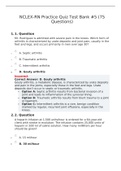
NCLEX-RN Practice Quiz Test Bank #5 (75 Questions) 2022 UPDATE WITH RATONALES 100%CORRECT
NCLEX-RN Practice Quiz Test Bank #5 (75 Questions) 1. 1. Question Mr. Rodriguez is admitted with severe pain in the knees. Which form of arthritis is characterized by urate deposits and joint pain, usually in the feet and legs, and occurs primarily in men over age 30? o A. Septic arthritis o B. Traumatic arthritis o C. Intermittent arthritis o D. Gouty arthritis Incorrect Correct Answer: D. Gouty arthritis Gouty arthritis, a metabolic disease, is characterized by urate deposits and pain in the joints, especially those in the feet and legs. Urate deposits don’t occur in septic or traumatic arthritis. • Option A: Septic arthritis results from bacterial invasion of a joint and leads to inflammation of the synovial lining. • Option B: Traumatic arthritis results from blunt trauma to a joint or ligament. • Option C: Intermittent arthritis is a rare, benign condition marked by regular, recurrent joint effusions, especially in the knees. 2. 2. Question A heparin infusion at 1,500 units/hour is ordered for a 64-year-old client with stroke in evolution. The infusion contains 25,000 units of heparin in 500 ml of saline solution. How many milliliters per hour should be given? • A. 15 ml/hour • B. 30 ml/hour • C. 45 ml/hour • D. 50 ml/hour Incorrect Correct Answer: B. 30 ml/hour An infusion prepared with 25,000 units of heparin in 500 ml of saline solution yields 50 units of heparin per milliliter of solution. The equation is set up as 50 units times X (the unknown quantity) equals 1,500 units/hour, X equals 30 ml/hour. • Option A: 15 ml/hr is incorrect based on the computation used. • Option C: 45 ml/hr is more than the correct milliliters to be infused based on the computation. • Option D: 50 ml/hr is incorrect because it is way more than the correct milliliter to be infused. 3. 3. Question A 76-year-old male client had a thromboembolic right stroke; his left arm is swollen. Which of the following conditions may cause swelling after a stroke? • A. Elbow contracture secondary to spasticity. • B. Loss of muscle contraction decreasing venous return. • C. Deep vein thrombosis (DVT) due to immobility of the ipsilateral side. • D. Hypoalbuminemia due to protein escaping from an inflamed glomerulus. Incorrect Correct Answer: B. Loss of muscle contraction decreasing venous return In clients with hemiplegia or hemiparesis, loss of muscle contraction decreases venous return and may cause swelling of the affected extremity. • Option A: Contractures or bony calcifications may occur with a stroke, but don’t appear with swelling. • Option C: DVT may develop in clients with a stroke but is more likely to occur in the lower extremities. • Option D: A stroke isn’t linked to protein loss. Higher levels of protein were associated with a lower risk of stroke. According to a study, for every 20 grams of protein people ate per day, there is a 26 percent lower risk of stroke. 4. 4. Question Heberden’s nodes are a common sign of osteoarthritis. Which of the following statements is correct about this deformity? • A. It appears only in men. • B. It appears on the distal interphalangeal joint. • C. It appears on the proximal interphalangeal joint. • D. It appears on the dorsolateral aspect of the interphalangeal joint. Incorrect Correct Answer: B. It appears on the distal interphalangeal joint. Heberden’s nodes appear on the distal interphalangeal joint on both men and women. • Option A: It appears on both men and women. They are hard bony lumps in the joints of the fingers. • Option C: It does not appear on the proximal, rather, on the distal interphalangeal joint. • Option D: Bouchard’s node appears on the dorsolateral aspect of the proximal interphalangeal joint. 5. 5. Question Which of the following statements explains the main difference between rheumatoid arthritis and osteoarthritis? • A. Osteoarthritis is gender-specific, rheumatoid arthritis isn’t. • B. Osteoarthritis is a localized disease rheumatoid arthritis is systemic. • C. Osteoarthritis is a systemic disease, rheumatoid arthritis is localized. • D. Osteoarthritis has dislocations and subluxations, rheumatoid arthritis doesn’t. Incorrect Correct Answer: B. Osteoarthritis is a localized disease; rheumatoid arthritis is systemic Osteoarthritis is a localized disease, rheumatoid arthritis is systemic. • Option A: Osteoarthritis isn’t gender-specific, but rheumatoid arthritis is. • Option C: Osteoarthritis is localized while rheumatoid arthritis is systemic. • Option D: Clients have dislocations and subluxations in both disorders. 6. 6. Question Mrs. Cruz uses a cane for assistance in walking. Which of the following statements is true about a cane or other assistive devices? • A. A walker is a better choice than a cane. • B. The cane should be used on the affected side. • C. The cane should be used on the unaffected side. • D. A client with osteoarthritis should be encouraged to ambulate without the cane. Incorrect Correct Answer: C. The cane should be used on the unaffected side A cane should be used on the unaffected side. A client with osteoarthritis should be encouraged to ambulate with a cane, walker, or other assistive device as needed; their use takes weight and stress off joints. • Option A: If a single assisting hand helps to walk, then logically a cane might be of potential benefit. • Option B: A cane should be used on the unaffected side of the client. • Option D: The use of a cane is important to prevent further injury or falls. 7. 7. Question A male client with type 1 diabetes is scheduled to receive 30 U of 70/30 insulin. There is no 70/30 insulin available. As a substitution, the nurse may give the client: • A. 9 U regular insulin and 21 U neutral protamine Hagedorn (NPH). • B. 21 U regular insulin and 9 U NPH. • C. 10 U regular insulin and 20 U NPH. • D. 20 U regular insulin and 10 U NPH. Incorrect Correct Answer: A. 9 U regular insulin and 21 U neutral protamine Hagedorn (NPH). A 70/30 insulin preparation is 70% NPH and 30% regular insulin. Therefore, a correct substitution requires mixing 21 U of NPH and 9 U of regular insulin. • Option B: Using this dosage would be incorrect and may produce no effect on the client’s blood sugar level. • Option C: This is an incorrect insulin dose. Incorrect administration can result in transient and serious hypoglycemia and hyperglycemia, wide glycemic excursions, and diabetic ketoacidosis. • Option D: This is an incorrect dosage for the prescribed insulin. Glycemic control is poorer in those who lacked confidence in their ability to choose correct doses. 8. 8. Question Nurse Len should expect to administer which medication to a client with gout? • A. Aspirin • B. Furosemide (Lasix) • C. Colchicines • D. Calcium gluconate (Kalcinate) Incorrect Correct Answer: C. Colchicines A disease characterized by joint inflammation (especially in the great toe), gout is caused by urate crystal deposits in the joints. The physician prescribes colchicine to reduce these deposits and thus ease joint inflammation. • Option A: Although aspirin is used to reduce joint inflammation and pain in clients with osteoarthritis and rheumatoid arthritis, it isn’t indicated for gout because it has no effect on urate crystal formation. • Option B: Furosemide, a diuretic, doesn’t relieve gout. It is a loop diuretic that prevents the body from absorbing too much salt. This allows the salt to be passed in the urine. • Option D: Calcium gluconate is used to reverse a negative calcium balance and relieve muscle cramps, not to treat gout. 9. 9. Question Mr. Domingo with a history of hypertension is diagnosed with primary hyperaldosteronism. This diagnosis indicates that the client’s hypertension is caused by excessive hormone secretion from which of the following glands? • A. Adrenal cortex • B. Pancreas • C. Adrenal medulla • D. Parathyroid Incorrect Correct Answer: A. Adrenal cortex Excessive secretion of aldosterone in the adrenal cortex is responsible for the client’s hypertension. This hormone acts on the renal tubule, where it promotes reabsorption of sodium and excretion of potassium and hydrogen ions. • Option B: The pancreas mainly secretes hormones involved in fuel metabolism. • Option C: The adrenal medulla secretes the catecholamines — epinephrine and norepinephrine. • Option D: The parathyroids secrete parathyroid hormone. 10. 10. Question For a diabetic male client with a foot ulcer, the doctor orders bed rest, a wet to- dry dressing change every shift, and blood glucose monitoring before meals and bedtime. Why are wet-to-dry dressings used for this client? • A. They contain exudate and provide a moist wound environment. • B. They protect the wound from mechanical trauma and promote healing. • C. They debride the wound and promote healing by secondary intention. • D. They prevent the entrance of microorganisms and minimize wound discomfort. Incorrect Correct Answer: C. They debride the wound and promote healing by secondary intention For this client, wet-to-dry dressings are most appropriate because they clean the foot ulcer by debriding exudate and necrotic tissue, thus promoting healing by secondary intention. • Option A: Moist, transparent dressings contain exudate and provide a moist wound environment. • Option D: Hydrocolloid dressings prevent the entrance of microorganisms and minimize wound discomfort. • Option B: Dry sterile dressings protect the wound from mechanical trauma and promote healing. 11. 11. Question Nurse Zeny is caring for a client in an acute Addisonian crisis. Which laboratory data would the nurse expect to find? • A. Hyperkalemia • B. Reduced blood urea nitrogen (BUN) • C. Hypernatremia • D. Hyperglycemia Incorrect Correct Answer: A. Hyperkalemia In adrenal insufficiency, the client has hyperkalemia due to reduced aldosterone secretion. • Option B: BUN increases as the glomerular filtration rate is reduced. BUN is handled primarily by glomerular filtration with little or no renal regulation or adaptation in the course of declining renal function, they essentially reflect GFR. • Option C: Hyponatremia is caused by reduced aldosterone secretion. Aldosterone deficiency causes hyponatremia through two mechanisms: the increased levels of ADH and subsequent upregulation of aquaporin-2 water channels in the renal tubules, and the extracellular volume depletion-induced reduction in glomerular filtration rate. • Option D: Reduced cortisol secretion leads to impaired gluconeogenesis and a reduction of glycogen in the liver and muscle, causing hypoglycemia. 12. 12. Question A client is admitted for treatment of the syndrome of inappropriate antidiuretic hormone (SIADH). Which nursing intervention is appropriate? • A. Infusing I.V. fluids rapidly as ordered. • B. Encouraging increased oral intake. • C. Restricting fluids. • D. Administering glucose-containing I.V. fluids as ordered. Incorrect Correct Answer: C. Restricting fluids. To reduce water retention in a client with SIADH, the nurse should restrict fluids. • Option A: Rapid infusion of IV fluids would further increase the client’s overload. • Option B: The client should be instructed to restrict his fluid intake. It is also important to restrict sodium intake because higher correction rates have been associated with osmotic demyelination. • Option D: Administering fluids by any route would further increase the client’s already heightened fluid load. 13. 13. Question A female client tells nurse Nikki that she has been working hard for the last 3 months to control her type 2 diabetes mellitus with diet and exercise. To determine the effectiveness of the client’s efforts, the nurse should check: • A. Urine glucose level. • B. Fasting blood glucose level. • C. Serum fructosamine level. • D. Glycosylated hemoglobin level. Incorrect Correct Answer: D. Glycosylated hemoglobin level. Because some of the glucose in the bloodstream attaches to some of the hemoglobin and stays attached during the 120-day lifespan of red blood cells, glycosylated hemoglobin levels provide information about blood glucose levels during the previous 3 months. • Option A: Urine glucose levels only show the glucose levels in the urine at that specific time. • Option B: Fasting blood glucose only gives information about glucose levels at the point in time when they were obtained. • Option C: Serum fructosamine levels provide information about blood glucose control over the past 2 to 3 weeks. 14. 14. Question Nurse Trinity administered neutral protamine Hagedorn (NPH) insulin to a diabetic client at 7 a.m. At what time would the nurse expect the client to be most at risk for a hypoglycemic reaction? • A. 10:00 am • B. Noon • C. 4:00 pm • D. 10:00 pm Incorrect Correct Answer: C. 4:00 pm NPH is an intermediate-acting insulin that peaks 8 to 12 hours after administration. Because the nurse administered NPH insulin at 7 a.m., the client is at greatest risk for hypoglycemia from 3 p.m. to 7 p.m. • Option A: At 10:00 am, the insulin given would not have reached its peak. • Option B: During noontime, risk for hypoglycemia would still be low. • Option D: 10:00 pm is already a late time for the peak action of insulin. 15. 15. Question The adrenal cortex is responsible for producing which substances? • A. Glucocorticoids and androgens • B. Catecholamines and epinephrine • C. Mineralocorticoids and catecholamines • D. Norepinephrine and epinephrine Incorrect Correct Answer: A. Glucocorticoids and androgens The adrenal glands have two divisions, the cortex, and medulla. The cortex produces three types of hormones: glucocorticoids, mineralocorticoids, and androgens. • Option B: Epinephrine, which is a catecholamines, is produced in the medulla. It causes smooth muscle relaxation in the airways or contraction of the smooth muscle in arterioles, which results in blood vessel constriction in kidneys, decreasing or inhibiting blood flow to the nephrons. • Option C: Catecholamines are produced in the medulla. They help the body respond to stress or fright and prepare the body for “fight-or-flight” reactions. • Option D: The medulla produces catecholamines — epinephrine and norepinephrine. 16. 16. Question On the third day after a partial thyroidectomy, Proserfina exhibits muscle twitching and hyperirritability of the nervous system. When questioned, the client reports numbness and tingling of the mouth and fingertips. Suspecting a life-threatening electrolyte disturbance, the nurse notifies the surgeon immediately. Which electrolyte disturbance most commonly follows thyroid surgery? • A. Hypocalcemia • B. Hyponatremia • C. Hyperkalemia • D. Hypermagnesemia Incorrect Correct Answer: A. Hypocalcemia Hypocalcemia may follow thyroid surgery if the parathyroid glands were removed accidentally. Signs and symptoms of hypocalcemia may be delayed for up to 7 days after surgery. Thyroid surgery doesn’t directly cause serum sodium, potassium, or magnesium abnormalities. • Option B: Hyponatremia may occur if the client inadvertently received too much fluid; however, this can happen to any surgical client receiving I.V. fluid therapy, not just one recovering from thyroid surgery. • Option C: Hyperkalemia is not associated with thyroid surgery. It is usually found in patients with reduced renal excretion of potassium and magnesium. • Option D: Hypermagnesemia usually is associated with reduced renal excretion of potassium and magnesium, not thyroid surgery. 17. 17. Question Which laboratory test value is elevated in clients who smoke and can’t be used as a general indicator of cancer? • A. Acid phosphatase level • B. Serum calcitonin level • C. Alkaline phosphatase level • D. Carcinoembryonic antigen level Incorrect Correct Answer: D. Carcinoembryonic antigen level In clients who smoke, the level of carcinoembryonic antigen is elevated. Therefore, it can’t be used as a general indicator of cancer. However, it is helpful in monitoring cancer treatment because the level usually falls to normal within 1 month if treatment is successful. • Option A: An elevated acid phosphatase level may indicate prostate cancer. Prostatic acid phosphatase is a non-specific phosphomonoesterase synthesized in prostate epithelial cells and its level proportionally increases with prostate cancer progression. • Option C: An elevated alkaline phosphatase level may reflect bone metastasis. When abnormal bone tissue is being formed by cancer cells, levels of alkaline phosphatase increase. Therefore, high levels of this enzyme could suggest that a patient has bone metastasis. • Option B: An elevated serum calcitonin level usually signals thyroid cancer. Calcitonin can be measured as a blood test to help diagnose medullary thyroid cancer and its level can indicate the amount of medullary thyroid cancer present before thyroid surgery. 18. 18. Question Francis with anemia has been admitted to the medical-surgical unit. Which assessment findings are characteristic of iron-deficiency anemia? • A. Nights sweats, weight loss, and diarrhea • B. Dyspnea, tachycardia, and pallor • C. Nausea, vomiting, and anorexia • D. Itching, rash, and jaundice Incorrect Correct Answer: B. Dyspnea, tachycardia, and pallor Signs of iron-deficiency anemia include dyspnea, tachycardia, and pallor as well as fatigue, listlessness, irritability, and headache. • Option A: Night sweats, weight loss, and diarrhea may signal acquired immunodeficiency syndrome (AIDS). • Option C: Nausea, vomiting, and anorexia may be signs of hepatitis B. • Option D: Itching, rash, and jaundice may result from an allergic or hemolytic reaction. 19. 19. Question In teaching a female client who is HIV-positive about pregnancy, the nurse would know more teaching is necessary when the client says: • A. The baby can get the virus from my placenta.” • B. “I’m planning on starting on birth control pills.” • C. “Not everyone who has the virus gives birth to a baby who has the virus.” • D. “I’ll need to have a C-section if I become pregnant and have a baby.” Incorrect Correct Answer: D. “I’ll need to have a C-section if I become pregnant and have a baby.” A Cesarean section delivery isn’t necessary when the mother is HIV-positive. • Option A: The human immunodeficiency virus (HIV) is transmitted from mother to child via the transplacental route. • Option B: The use of birth control will prevent the conception of a child who might have HIV. • Option C: It’s true that a mother whose HIV positive can give birth to a baby who’s HIV negative. 20. 20. Question When preparing Judy with acquired immunodeficiency syndrome (AIDS) for discharge to the home, the nurse should be sure to include which instruction? • A. “Put on disposable gloves before bathing.” • B. “Sterilize all plates and utensils in boiling water.” • C. “Avoid sharing such articles as toothbrushes and razors.” • D. “Avoid eating foods from serving dishes shared by other family members.” Incorrect Correct Answer: C. “Avoid sharing such articles as toothbrushes and razors.” The human immunodeficiency virus (HIV), which causes AIDS, is most concentrated in the blood. For this reason, the client shouldn’t share personal articles that may be blood-contaminated, such as toothbrushes and razors, with other family members. • Option A: There is no need to use gloves because HIV is not transmitted by bathing. • Option B: HIV cannot be transmitted through the utensils used by an infected person. • Option D: HIV isn’t transmitted by serving dishes used by a person with AIDS. 21. 21. Question Nurse Marie is caring for a 32-year-old client admitted with pernicious anemia. Which set of findings should the nurse expect when assessing the client? • A. Pallor, bradycardia, and reduced pulse pressure • B. Pallor, tachycardia, and a sore tongue • C. Sore tongue, dyspnea, and weight gain • D. Angina, double vision, and anorexia Incorrect Correct Answer: B. Pallor, tachycardia, and a sore tongue Pallor, tachycardia, and a sore tongue are all characteristic findings in pernicious anemia. Other clinical manifestations include anorexia; weight loss; a smooth, beefy red tongue; a wide pulse pressure; palpitations; angina; weakness; fatigue; and paresthesia of the hands and feet. • Option A: Tachycardia, instead of bradycardia, and reduced pulse pressure are present in a client with pernicious anemia. The heart may start to beat faster to make up for the reduced number of red blood cells in the body. • Option C: Weight loss, instead of weight gain, is a common symptom of pernicious anemia. A B12 deficiency can be counteracted with a dose of the vitamin, causing energy levels to regulate and the metabolism to work harder to burn up fuel. The result is weight loss when the deficiency is mitigated, but adding B12 to a body with sufficient levels doesn’t really increase natural effects. • Option D: Double vision isn’t a characteristic finding in pernicious anemia. However, vision loss associated with vitamin B12 deficiency can occur even in well-nourished individuals who can’t absorb enough B12 to support healthy vision. 22. 22. Question After receiving a dose of penicillin, a client develops dyspnea and hypotension. Nurse Celestina suspects the client is experiencing anaphylactic shock. What should the nurse do first? • A. Page an anesthesiologist immediately and prepare to intubate the client. • B. Administer epinephrine, as prescribed, and prepare to intubate the client if necessary. • C. Administer the antidote for penicillin, as prescribed, and continue to monitor the client’s vital signs. • D. Insert an indwelling urinary catheter and begin to infuse I.V. fluids as ordered. Incorrect Correct Answer: B. Administer epinephrine, as prescribed, and prepare to intubate the client if necessary. To reverse anaphylactic shock, the nurse first should administer epinephrine, a potent bronchodilator as prescribed. • Option A: The physician is likely to order additional medications, such as antihistamines and corticosteroids; if these medications don’t relieve the respiratory compromise associated with anaphylaxis, the nurse should prepare to intubate the client. • Option C: No antidote for penicillin exists; however, the nurse should continue to monitor the client’s vital signs. A client who remains hypotensive may need fluid resuscitation and fluid intake and output monitoring; however, administering epinephrine is the first priority. • Option D: An indwelling catheter is not needed in a client experiencing anaphylactic shock; however, IV fluids may be ordered by the physician after. 23. 23. Question Mr. Marquez with rheumatoid arthritis is about to begin aspirin therapy to reduce inflammation. When teaching the client about aspirin, the nurse discusses adverse reactions to prolonged aspirin therapy. These include: • A. Weight gain. • B. Fine motor tremors. • C. Respiratory acidosis. • D. Bilateral hearing loss. Incorrect Correct Answer: D. Bilateral hearing loss. Prolonged use of aspirin and other salicylates sometimes causes bilateral hearing loss of 30 to 40 decibels. Usually, this adverse effect resolves within 2 weeks after the therapy is discontinued. • Option A: Aspirin does not cause weight gain. Weight only influenced the relationship between aspirin and long-term risks of colorectal cancer, with benefits lost at higher body weights. • Option B: Aspirin doesn’t lead to fine motor tremors. In a study, the proportion of aspirin users did not differ in essential tremor cases or controls. • Option C: Large or toxic salicylate doses may cause respiratory alkalosis, not respiratory acidosis. Direct stimulation of the cerebral medulla causes hyperventilation and respiratory alkalosis. 24. 24. Question A 23-year-old client is diagnosed with human immunodeficiency virus (HIV). After recovering from the initial shock of the diagnosis, the client expresses a desire to learn as much as possible about HIV and acquired immunodeficiency syndrome (AIDS). When teaching the client about the immune system, the nurse states that adaptive immunity is provided by which type of white blood cell? • A. Neutrophil • B. Basophil • C. Monocyte • D. Lymphocyte Incorrect Correct Answer: D. Lymphocyte The lymphocyte provides adaptive immunity — recognition of a foreign antigen and formation of memory cells against the antigen. Adaptive immunity is mediated by B and T lymphocytes and can be acquired actively or passively. • Option A: The neutrophil is crucial to phagocytosis. Phagocytosis is a process by which certain living cells called phagocytes ingest or engulf other cells or particles. • Option B: The basophil plays an important role in the release of inflammatory mediators. Basophils play a role in preventing blood clotting because they contain heparin. This is a naturally occurring blood-thinning substance. • Option C: The monocyte functions in phagocytosis and monokine production. Monocytes are bone marrow-derived leukocytes that circulate in the blood and spleen. 25. 25. Question In an individual with Sjögren’s syndrome, nursing care should focus on: • A. Moisture replacement. • B. Electrolyte balance. • C. Nutritional supplementation. • D. Arrhythmia management. Incorrect Correct Answer: A. Moisture replacement. Sjogren’s syndrome is an autoimmune disorder leading to progressive loss of lubrication of the skin, GI tract, ears, nose, and vagina. Moisture replacement is the mainstay of therapy. • Option B: Electrolyte balance is not the priority problem in Sjögren’s syndrome. Electrolyte abnormalities, particularly hypokalemia, must be considered in patients presenting with generalized weakness. • Option C: Though malnutrition may occur as a result of Sjogren’s syndrome effect on the GI tract, it isn’t the predominant problem. An estimated 90% of people with Sjogren’s syndrome have problems related to eating, enough to cause malnutrition. • Option D: Arrhythmias aren’t a problem associated with Sjogren’s syndrome. However, there is a new study that showed a significantly increased risk of heart attack in patients with Sjogren’s syndrome, particularly in the first year following diagnosis. 26. 26. Question During chemotherapy for lymphocytic leukemia, Mathew develops abdominal pain, fever, and “horse barn” smelling diarrhea. It would be most important for the nurse to advise the physician to order: • A. Enzyme-linked immunosuppressant assay (ELISA) test. • B. Electrolyte panel and hemogram. • C. Stool for Clostridium difficile test. • D. Flat plate X-ray of the abdomen. Incorrect Correct Answer: C. Stool for Clostridium difficile test. Immunosuppressed clients — for example, clients receiving chemotherapy, — are at risk for infection with C. difficile, which causes “horse barn” smelling diarrhea. Successful treatment begins with an accurate diagnosis, which includes a stool test. • Option A: The ELISA test is diagnostic for human immunodeficiency virus (HIV) and isn’t indicated in this case. • Option B: An electrolyte panel and hemogram may be useful in the overall evaluation of a client but aren’t diagnostic for specific causes of diarrhea. • Option D: A flat plate of the abdomen may provide useful information about bowel function but isn’t indicated in the case of “horse barn” smelling diarrhea. 27. 27. Question A male client seeks medical evaluation for fatigue, night sweats, and a 20-lb weight loss in 6 weeks. To confirm that the client has been infected with the human immunodeficiency virus (HIV), the nurse expects the physician to order: • A. E-rosette immunofluorescence • B. Quantification of T-lymphocytes. • C. Enzyme-linked immunosorbent assay (ELISA). • D. Western blot test with ELISA. Incorrect Correct Answer: D. Western blot test with ELISA. HIV infection is detected by analyzing blood for antibodies to HIV, which form approximately 2 to 12 weeks after exposure to HIV and denote infection. The Western blot test — electrophoresis of antibody proteins — is more than 98% accurate in detecting HIV antibodies when used in conjunction with the ELISA. It isn’t specific when used alone. • Option A: E-rosette immunofluorescence is used to detect viruses in general; it doesn’t confirm HIV infection. • Option B: Quantification of T-lymphocytes is a useful monitoring test but isn’t diagnostic for HIV. • Option C: The ELISA test detects HIV antibody particles but may yield inaccurate results; a positive ELISA result must be confirmed by the Western blot test. 28. 28. Question A complete blood count is commonly performed before Joe goes into surgery. What does this test seek to identify? • A. Potential hepatic dysfunction indicated by decreased blood urea nitrogen (BUN) and creatinine levels. • B. Low levels of urine constituents normally excreted in the urine. • C. Abnormally low hematocrit (HCT) and hemoglobin (Hb) levels. • D. Electrolyte imbalance that could affect the blood’s ability to coagulate properly. Incorrect Correct Answer: C. Abnormally low hematocrit (HCT) and hemoglobin (Hb) levels. Low preoperative HCT and Hb levels indicate the client may require a blood transfusion before surgery. If the HCT and Hb levels decrease during surgery because of blood loss, the potential need for a transfusion increases. • Option A: Possible renal failure is indicated by elevated BUN or creatinine levels. • Option B: Urine constituents aren’t found in the blood. They are found in urine specimens. • Option D: Coagulation is determined by the presence of appropriate clotting factors, not electrolytes. 29. 29. Question While monitoring a client for the development of disseminated intravascular coagulation (DIC), the nurse should take note of what assessment parameters? • A. Platelet count, prothrombin time, and partial thromboplastin time • B. Platelet count, blood glucose levels, and white blood cell (WBC) count • C. Thrombin time, calcium levels, and potassium levels • D. Fibrinogen level, WBC, and platelet count Incorrect Correct Answer: A. Platelet count, prothrombin time, and partial thromboplastin time The diagnosis of DIC is based on the results of laboratory studies of prothrombin time, platelet count, thrombin time, partial thromboplastin time, and fibrinogen level as well as client history and other assessment factors. • Option B: Blood glucose levels are not used to diagnose DIC. Fasting plasma glucose tests or the A1C test help diagnose diabetes. • Option C: Calcium and potassium levels are not a part of assessment for DIC. A calcium blood test measures the amount of calcium in the blood. Potassium blood test is used to diagnose conditions including kidney disease, high blood pressure, and heart disease. • Option D: WBC count isn’t used to confirm a diagnosis of DIC. WBC count is used to diagnose autoimmune and inflammatory diseases. 30. 30. Question When taking a dietary history from a newly admitted female client, Nurse Len should remember which of the following foods is a common allergen? • A. Bread • B. Carrots • C. Orange • D. Strawberries Incorrect Correct Answer: D. Strawberries Common food allergens include berries, peanuts, Brazil nuts, cashews, shellfish, and eggs. • Option A: Bread is not a common allergen. Wheat, a common ingredient in some breads, may cause wheat allergy in some people. • Option B: Carrots rarely cause allergies. An allergic reaction to carrots can be one element of oral allergy syndrome, which is also known as pollen-food allergy syndrome. • Option C: Oranges rarely cause allergic reactions. If they do, the reaction is mild. 31. 31. Question Nurse John is caring for clients in the outpatient clinic. Which of the following phone calls should the nurse return first? • A. A client with hepatitis A who states, “My arms and legs are itching.” • B. A client with a cast on the right leg who states, “I have a funny feeling in my right leg.” • C. A client with osteomyelitis of the spine who states, “I am so nauseous that I can’t eat.” • D. A client with rheumatoid arthritis who states, “I am having trouble sleeping.” Incorrect Correct Answer: B. A client with a cast on the right leg who states, “I have a funny feeling in my right leg.” It may indicate neurovascular compromise, requiring immediate assessment. • Option A: Bilirubin levels in hepatitis A may increase, and itching is a common symptom. • Option C: A client feeling nauseous may require consultation but is not a priority. • Option D: Clients with rheumatoid arthritis may feel pain in the affected areas at night. They may need a prescription for painkillers but it is not urgent. 32. 32. Question Nurse Sarah is caring for clients on the surgical floor and has just received a report from the previous shift. Which of the following clients should the nurse see first? • A. A 35-year-old admitted three hours ago with a gunshot wound; 1.5 cm area of dark drainage noted on the dressing. • B. A 43-year-old who had a mastectomy two days ago; 23 ml of serosanguinous fluid noted in the Jackson-Pratt drain. • C. A 59-year-old with a collapsed lung due to an accident; no drainage noted in the previous eight hours. • D. A 62-year-old who had an abdominal-perineal resection three days ago; client complaints of chills. Incorrect Correct Answer: D. A 62-year-old who had an abdominal-perineal resection three days ago; client complains of chills. The client is at risk for peritonitis; should be assessed for further symptoms and infection. • Option A: The client may be hemorrhaging on his wound; this needs further assessment but does not require urgent attention. • Option B: Serosanguinous fluid on the drain is a normal finding. • Option C: Absence of drainage on a client with collapsed lung is normal; the chest tube is for the removal of air inside the lung. 33. 33. Question Nurse Eve is caring for a client who had a thyroidectomy 12 hours ago for treatment of Grave’s disease. The nurse would be most concerned if which of the following was observed? • A. Blood pressure 138/82, respirations 16, oral temperature 99 degrees Fahrenheit. • B. The client supports his head and neck when turning his head to the right. • C. The client spontaneously flexes his wrist when the blood pressure is obtained. • D. The client is drowsy and complains of sore throat. Incorrect Correct Answer: C. The client spontaneously flexes his wrist when the blood pressure is obtained. Carpal spasms indicate hypocalcemia. • Option A: The vital signs are all within the normal range. • Option B: Supporting the head and neck while turning protects the surgical site from dehiscence. • Option D: Drowsiness may be a side effect of the anesthesia used during surgery and will fade away eventually; a sore throat is a normal finding after thyroid surgery. 34. 34. Question Julius is admitted with complaints of severe pain in the lower right quadrant of the abdomen. To assist with pain relief, the nurse should take which of the following actions? • A. Encourage the client to change positions frequently in bed. • B. Administer Demerol 50 mg IM q 4 hours and PRN. • C. Apply warmth to the abdomen with a heating pad. • D. Use comfort measures and pillows to position the client. Incorrect Correct Answer: D. Use comfort measures and pillows to position the client. Using comfort measures and pillows to position the client is a non-pharmacological method of pain relief. • Option A: Changing positions often might aggravate the pain felt by the client. • Option B: Demerol may be given if prescribed by the physician. • Option C: The client may be experiencing acute appendicitis; warm compresses may cause rupture of the inflamed appendix. 35. 35. Question Nurse Tina prepares a client for peritoneal dialysis. Which of the following actions should the nurse take first? • A. Assess for a bruit and a thrill. • B. Warm the dialysate solution. • C. Position the client on the left side. • D. Insert a Foley catheter Incorrect Correct Answer: B. Warm the dialysate solution. Cold dialysate increases discomfort. The solution should be warmed to body temperature in a warmer or heating pad; don’t use a microwave oven. • Option A: Assessing for bruit and thrill can be done to check for the patency of the fistula. • Option C: The client may resume a position that will be comfortable for him. • Option D: A Foley catheter is unnecessary during peritoneal dialysis. 36. 36. Question Nurse Jannah teaches an elderly client with right-sided weakness on how to use a cane. Which of the following behaviors, if demonstrated by the client to the nurse, indicates that the teaching was effective? • A. The client holds the cane with his right hand, moves the cane forward followed by the right leg, and then moves the left leg. • B. The client holds the cane with his right hand, moves the cane forward followed by his left leg, and then moves the right leg. • C. The client holds the cane with his left hand, moves the cane forward followed by the right leg, and then moves the left leg. • D. The client holds the cane with his left hand, moves the cane forward followed by his left leg, and then moves the right leg. Incorrect Correct Answer: C. The client holds the cane with his left hand, moves the cane forward followed by the right leg, and then moves the left leg. The cane acts as a support and aids in weight-bearing for the weaker right leg. • Option A: The client should hold the cane with his left hand because this side provides more stable support than the injured side. • Option B: The right side should act as the weight-bearing side because the left side is weaker. • Option D: Always move the affected leg first; in this case, the right leg. 37. 37. Question An elderly client is admitted to the nursing home setting. The client is occasionally confused and her gait is often unsteady. Which of the following actions, if taken by the nurse, is most appropriate? • A. Ask the woman’s family to provide personal items such as photos or mementos. • B. Select a room with a bed by the door so the woman can look down the hall. • C. Suggest the woman eat her meals in the room with her roommate. • D. Encourage the woman to ambulate in the halls twice a day. Incorrect Correct Answer: A. Ask the woman’s family to provide personal items such as photos or mementos. Photos and mementos provide visual stimulation to reduce sensory deprivation. • Option B: The client is often confused and may wander outside her room and easily get lost. • Option C: The client may take her meals with a roommate or in the dining hall. • Option D: This may lead to incidence of falls or injury because the client’s gait is unsteady. Assistance during ambulation is most appropriate. 38. 38. Question Nurse Evangeline teaches an elderly client how to use a standard aluminum walker. Which of the following behaviors, if demonstrated by the client, indicates that the nurse’s teaching was effective? • A. The client slowly pushes the walker forward 12 inches, then takes small steps forward while leaning on the walker. • B. The client lifts the walker, moves it forward 10 inches, and then takes several small steps forward. • C. The client supports his weight on the walker while advancing it forward, then takes small steps while balancing on the walker. • D. The client slides the walker 18 inches forward, then takes small steps while holding onto the walker for balance. Incorrect Correct Answer: B. The client lifts the walker, moves it forward 10 inches, and then takes several small steps forward. A walker needs to be picked up, placed down on all legs. • Option A: Teach the client to lift, not push, the walker forward, and not to lean on it to avoid falls. • Option C: The client should not put his weight on the walker as it may lead to incidents of falls. • Option D: A walker should be lifted, not slide. 39. 39. Question Nurse Derek is supervising a group of elderly clients in a residential home setting. The nurse knows that the elderly are at greater risk of developing sensory deprivation for what reason? • A. Increased sensitivity to the side effects of medications. • B. Decreased visual, auditory, and gustatory abilities. • C. Isolation from their families and familiar surroundings. • D. Decrease musculoskeletal function and mobility. Incorrect Correct Answer: B. Decreased visual, auditory, and gustatory abilities. Gradual loss of sight, hearing, and taste interferes with normal functioning. • Option A: The side effects of medications do not usually affect the senses in the elderly. • Option C: Isolation is not the reason for developing sensory deprivation. • Option D: Decrease in mobility and functioning does not cause sensory deprivation. 40. 40. Question A male client with emphysema becomes restless and confused. What step should nurse Jasmine take next? • A. Encourage the client to perform pursed-lip breathing. • B. Check the client’s temperature. • C. Assess the client’s potassium level. • D. Increase the client’s oxygen flow rate. Incorrect Correct Answer: A. Encourage the client to perform pursed-lip breathing. Pursed lip breathing prevents the collapse of the lung unit and helps client control the rate and depth of breathing. • Option B: Checking the temperature is unnecessary especially if the client is restless. • Option C: Emphysema does not significantly affect potassium levels. • Option D: Do not increase the oxygen levels in a client with emphysema. 41. 41. Question Randy has undergone a kidney transplant, what assessment would prompt Nurse Katrina to suspect organ rejection? • A. Sudden weight loss • B. Polyuria • C. Hypertension • D. Shock Incorrect Correct Answer: C. Hypertension Hypertension, along with fever, and tenderness over the grafted kidney, reflects acute rejection. • Option A: A BMI greater than 30kg/m2 indicates obesity, which has been linked to an increased risk for infection, poor wound healing, and rejection of the donated organ. • Option B: Polyuria is defined as the frequent passage of large volumes of urine. Polyuria does not indicate organ rejection. • Option D: The underlying illnesses causing organ failure combined with the surgical procedures and complications in the postoperative period predispose the client to an increased incidence and spectrum of infections. In some patients, the infection can lead to a dysregulated systemic inflammatory response with acute organ dysfunction (severe sepsis) and hypotension that is refractory to fluid resuscitation or septic shock. 42. 42. Question The immediate objective of nursing care for an overweight, mildly hypertensive male client with ureteral colic and hematuria is to decrease: • A. Pain. • B. Weight. • C. Hematuria. • D. Hypertension. Incorrect Correct Answer: A. Pain. Sharp, severe pain (renal colic) radiating toward the genitalia and thigh is caused by urethral distention and smooth muscle spasm; relief from pain is the priority. • Option B: Weight management reduces the strain on the heart. Being overweight puts extra strain on the heart, increasing the risk for developing hypertension and damage to the blood vessels. • Option C: Approximately 85% of all patients with renal colic demonstrate at least microscopic hematuria, which means that 15% of all patients with kidney stones do not have hematuria, but the lack of it does not exclude the diagnosis of acute renal colic. • Option D: Hypertension can be managed with lifestyle changes, such as increasing activities and smarter food choices. 43. 43. Question Matilda, with hyperthyroidism, is to receive Lugol’s iodine solution before a subtotal thyroidectomy is performed. The nurse is aware that this medication is given to: • A. Decrease the total basal metabolic rate. • B. Maintain the function of the parathyroid glands. • C. Block the formation of thyroxine by the thyroid gland. • D. Decrease the size and vascularity of the thyroid gland. Incorrect Correct Answer: D. Decrease the size and vascularity of the thyroid gland. Lugol’s solution provides iodine, which aids in decreasing the vascularity of the thyroid gland, which limits the risk of hemorrhage when surgery is performed. • Option A: Inorganic iodine used preoperatively substantially reduced the mortality rate to 1%. It causes lowering of the basal metabolic rate and heart rate and an increase in body weight. • Option B: This solution does not maintain the function of parathyroid gland and it does not affect them; it prepares the thyroid gland for surgical removal. • Option C: Iodine is needed to make the thyroid hormones, of which thyroxine is the main hormone, but it does not affect small changes in free thyroxine. 44. 44. Question Ricardo was diagnosed with type I diabetes. The nurse is aware that acute hypoglycemia also can develop in the client who is diagnosed with: • A. Liver disease • B. Hypertension • C. Type 2 diabetes • D. Hyperthyroidism Incorrect Correct Answer: A. Liver Disease The client with liver disease has a decreased ability to metabolize carbohydrates because of a decreased ability to form glycogen (glycogenesis) and to form glucose from glycogen. • Option B: The hemodynamic changes associated with hypoglycemia include an increase in heart rate and peripheral systolic blood pressure, a fall in the central blood pressure, reduced peripheral arterial resistance, and increased myocardial contractility, stroke volume, and cardiac output. • Option C: Type 2 diabetes is an islet paracrinopathy in which the reciprocal relationship between the glucagon-secreting alpha cell and the insulin-secreting beta-cell is lost, leading to hyperglucagonemia and hence the consequent hyperglycemia. • Option D: Hyperthyroidism is usually associated with poor blood glucose control and a need for additional insulin. An increased metabolism “clears” insulin from the system at a faster rate, and increased production and absorption of glucose can raise blood sugars. 45. 45. Question Tracy is receiving combination chemotherapy for treatment of metastatic carcinoma. Nurse Ruby should monitor the client for the systemic side effect of: • A. Ascites • B. Nystagmus • C. Leukopenia • D. Polycythemia Incorrect Correct Answer: C. Leukopenia Leukopenia, a reduction in WBCs, is a systemic effect of chemotherapy as a result of myelosuppression. • Option A: Ascites is common in some cancers that have reached the advanced stages and spread in the abdominal area. Sometimes chemotherapy might help manage ascites; it is not a side effect of chemotherapy. • Option B: Platinum-based chemotherapy is an effective antineoplastic intervention that is used for a variety of human malignancies. There were reports of spontaneous nystagmus in 7 out of 10 patients (70%) and positional nystagmus (60%). • Option D: While polycythemia vera is not a side effect of chemotherapy, it can become drug-induced with the excess use of rHuEPO or anabolic steroids. 46. 46. Question Norma, with recent colostomy, expresses concern about the inability to control the passage of gas. Nurse Oliver should suggest that the client plan to: • A. Eliminate foods high in cellulose. • B. Decrease fluid intake at mealtimes. • C. Avoid foods that in the past caused flatus. • D. Adhere to a bland diet prior to social events. Incorrect Correct Answer: C. Avoid foods that in the past caused flatus. Foods that bothered a person preoperatively will continue to do so after a colostomy. • Option A: Cellulose is just one of the several types of dietary fiber that naturally occur in food sources. Examples are green, leafy vegetables, Brussels sprouts, and green peas. • Option B: Increased fluid intake aids in the easy passage of stools and improves the consistency of colostomy stools. • Option D: Bland foods such as broccoli, cabbage, cauliflower, cucumber, green peppers, and corn increase passage of gas. 47. 47. Question Nurse Ron begins to teach a male client how to perform colostomy irrigations. The nurse would evaluate that the instructions were understood when the client states, “I should: • A. Lie on my left side while instilling the irrigating solution.” • B. Keep the irrigating container less than 18 inches above the stoma.” • C. Instill a minimum of 1200 ml of irrigating solution to stimulate evacuation of the bowel.” • D. Insert the irrigating catheter deeper into the stoma if cramping occurs during the procedure.” Incorrect Correct Answer: B. Keep the irrigating container less than 18 inches above the stoma.” This height permits the solution to flow slowly with little force so that excessive peristalsis is not immediately precipitated. • Option A: The client must turn on the appropriate side to allow the nurse to do the procedure without difficulty. • Option C: Ask the physician how much water is needed to irrigate. • Option D: Cramping during an irrigation may mean that the water is too cold, the irrigation bag is too high, or the water is going too fast. Clamp off the tubing if this occurs. 48. 48. Question Patrick is in the oliguric phase of acute tubular necrosis and is experiencing fluid and electrolyte imbalances. The client is somewhat confused and complains of nausea and muscle weakness. As part of the prescribed therapy to correct this electrolyte imbalance, the nurse would expect to: • A. Administer Kayexalate • B. Restrict foods high in protein • C. Increase oral intake of cheese and milk. • D. Administer large amounts of normal saline via I.V. Incorrect Correct Answer: A. Administer Kayexalate Kayexalate, a potassium exchange resin, permits sodium to be exchanged for potassium in the intestine, reducing the serum potassium level. • Option B: Higher protein intake can increase intraglomerular pressure, which is useful in the short term when the client eats a large protein meal with high-protein content so that one can ensure effective clearance of nitrogenous end products that are produced from eating too much protein. • Option C: Phosphorus, which is abundant in dairy products, draws calcium out of the bones when it builds up in the blood. Clients with renal diseases may eat some of these foods in very small amounts. • Option D: Although 0.9% saline and balanced fluids can both lead to renal volume expansion, interstitial fluid retention, and adverse intra-renal microvascular effects are more pronounced with 0.9% saline infusion. 49. 49. Question Mario has a burn injury. After 48 hours, the physician orders for Mario 2 liters of IV fluid to be administered q12 h. The drop factor of the tubing is 10 gtt/ml. The nurse should set the flow to provide: • A. 18 gtt/min • B. 28 gtt/min • C. 32 gtt/min • D. 36 gtt/min Incorrect Correct Answer: B. 28 gtt/min This is the correct flow rate; multiply the amount to be infused (2000 ml) by the drop factor (10) and divide the result by the amount of time in minutes (12 hours x 60 minutes) • Option A: This amount is inadequate according to the formula used. • Option C: 32 gtts/min is more than the prescribed gtts/min given. • Option D: This amount is incorrect according to the formula used to get the correct flow rate. 50. 50. Question Terence suffered from burn injury. Using the rule of nines, which has the largest percent of burns? • A. Face and neck • B. Right upper arm and penis • C. Right thigh and penis • D. Upper trunk Incorrect Correct Answer: D. Upper trunk The percentage designated for each burned part of the body using the rule of nines: Head and neck 9%; Right upper extremity 9%; Left upper extremity 9%; Anterior trunk 18%; Posterior trunk 18%; Right lower extremity 18%; Left lower extremity 18%; Perineum 1%. • Option A: The face and neck is 9%. • Option B: The right upper arm is 9% and the penis is only 1%. • Option C: The right thigh is 9% and the penis is 1%. 51. 51. Question Herbert, a 45-year-old construction engineer is brought to the hospital unconscious after falling from a 2-story building. When assessing the client, the nurse would be most concerned if the assessment revealed: • A. Reactive pupils • B. A depressed fontanel • C. Bleeding from ears • D. An elevated temperature Incorrect Correct Answer: C. Bleeding from ears The nurse needs to perform a thorough assessment that could indicate alterations in cerebral function, increased intracranial pressures, fractures, and bleeding. Bleeding from the ears occurs only with basal skull fractures that can easily contribute to increased intracranial pressure and brain herniation. • Option A: The normal pupil size varies from 2 to 4 mm in diameter in bright light to 4 to 8 mm in the dark. The pupils are generally equal in size. They constrict to direct illumination and to illumination of the opposite eye. The pupil dilates in the dark. Both pupils constrict when the eye is focused on a near object. • Option B: The anterior fontanelle remains soft until about 18 months to 2 years of age. The posterior fontanelle usually closes first, during the first several months of an infant’s life. • Option D: Hypothermic trauma patients are less likely to survive their injuries when compared to similar patients who are normothermic. Hypothermia in conjunction with metabolic acidosis and impair coagulation creates a “lethal triad”, which significantly worsens the chances of recovery from a critical injury. 52. 52. Question Nurse Sherry is teaching male client regarding his permanent artificial pacemaker. Which information given by the nurse shows her knowledge deficit about the artificial cardiac pacemaker? • A. Take the pulse rate once a day, in the morning upon awakening. • B. May be allowed to use electrical appliances. • C. Have regular follow up care. • D. May engage in contact sports. Incorrect Correct Answer: D. may engage in contact sports The client should be advised by the nurse to avoid contact sports. This will prevent trauma to the area of the pacemaker generator. • Option A: The physician may advise to take and record the pulse rate often to gauge the heart rate. This allows comparison of the heart rate to the acceptable range to determine if the pacemaker is working effectively. • Option B: Use of electrical appliances is allowed, but the client must maintain a distance from the appliances. Devices such as anti-theft systems, metal detectors, cell phones, mp3 players/headphones, radios, power-generating equipment, magnets, etc may interfere with a pacemaker. • Option C: Modern pacemakers are built to last. Still, it needs to be checked periodically to assess the battery and find out how the wires are working, so it is a must to keep pacemaker checkup appointments. 53. 53. Question The nurse is aware that the most relevant knowledge about oxygen administration to a male client with COPD is: • A. Oxygen at 1-2L/min is given to maintain the hypoxic stimulus for breathing. • B. Hypoxia stimulates the central chemoreceptors in the medulla that makes the client breathe. • C. Oxygen is administered best using a non-rebreathing mask. • D. Blood gases are monitored using a pulse oximeter. Incorrect Correct Answer: A. Oxygen at 1-2L/min is given to maintain the hypoxic stimulus for breathing. COPD causes a chronic CO2 retention that renders the medulla insensitive to the CO2 stimulation for breathing. The hypoxic state of the client then becomes the stimulus for breathing. Giving the client oxygen in low concentrations will maintain the client’s hypoxic drive. • Option B: The hypoxic state of the client is the stimulus for breathing. • Option C: The client may use the Venturi mask as a high flow device that delivers a fixed oxygen concentration and is best for clients with COPD. • Option D: Blood gas analysis or arterial blood gas (ABG) test measures the amount of oxygen and carbon dioxide in the blood. It may also be used to determine the pH of the blood, or how acidic it is. 54. 54. Question Tonny has undergone a left thoracotomy and a partial pneumonectomy. Chest tubes are inserted, and one-bottle water-seal drainage is instituted in the operating room. In the postanesthesia care unit, Tonny is placed in Fowler’s position on either his right side or on his back. The nurse is aware that this position: • A. Reduce incisional pain. • B. Facilitate ventilation of the left lung. • C. Equalize pressure in the pleural space. • D. Increase venous return. Incorrect Correct Answer: B. Facilitate ventilation of the left lung. Since only a partial pneumonectomy is done, there is a need to promote expansion of this remaining left lung by positioning the client on the opposite unoperated side. • Option A: This position may reduce the pressure on the surgical incision site, but it is not its priority. • Option C: Fowler’s position is associated with improvement of functional residual capacity, oxygenation, and reduction of work of breathing. • Option D: On the transition from sitting to standing, blood is pooled in the lower extremities as a result of gravitational forces. Venous return is reduced, which leads to a decrease in cardiac stroke volume, a decline in arterial blood pressure, and an immediate decrease in blood flow to the brain. 55. 55. Question Kristine is scheduled for a bronchoscopy. When teaching Kristine what to expect afterward, the nurse’s highest priority of information would be: • A. Food and fluids will be withheld for at least 2 hours. • B. Warm saline gargles will be done q 2h. • C. Coughing and deep-breathing exercises will be done q2h. • D. Only ice chips and cold liquids will be allowed initially. Incorrect Correct Answer: A. Food and fluids will be withheld for at least 2 hours. Prior to bronchoscopy, the doctors spray the back of the throat with anesthetic to minimize the gag reflex and thus facilitate the insertion of the bronchoscope. Giving the client food and drink after the procedure without checking on the return of the gag reflex can cause the client to aspirate. The gag reflex usually returns after two hours. • Option B: Warm saline gargles may help soothe the throat after bronchoscopy. • Option C: Coughing should not be done after bronchoscopy to avoid initiating bleeding. • Option D: The client should be on NPO status after bronchoscopy until gag reflex has returned. 56. 56. Question Nurse Tristan is caring for a male client with acute renal failure. The nurse should expect hypertonic glucose, insulin infusions, and sodium bicarbonate to be used to treat: • A. Hypernatremia. • B. Hypokalemia. • C. Hyperkalemia. • D. Hypercalcemia. Incorrect Correct Answer: C. Hyperkalemia. Hyperkalemia is a common complication of acute renal failure. It’s life-threatening if immediate action isn’t taken to reverse it. The administration of glucose and regular insulin, with sodium bicarbonate, if necessary, can temporarily prevent cardiac arrest by moving potassium into the cells and temporarily reducing serum potassium levels. • Option A: Hypernatremia is believed to be due to post-acute kidney injury diuresis in the face of inability to maximally concentrate the urine because of renal failure. The diuresis caused a disproportionate loss of water in excess of that of sodium in the absence of replenishment of the water loss. • Option B: Hypokalemia is related to increased use of diuretics, decreased use of RAS blockade, and malnutrition, all of which may impose additive deleterious effects on renal outcomes. • Option D: Hypocalcemia is a frequent accompaniment of acute renal failure, but paradoxically hypercalcemia also has been described in association with acute renal failure. This may be caused by dissolution of dystrophic calcifications in traumatized muscle and may lead to severe metastatic calcifications. 57. 57. Question Ms. X has just been diagnosed with condylomata acuminata (genital warts). What information is appropriate to tell this client? • A. This condition puts her at a higher risk for cervical cancer; therefore, she should have a Papanicolaou (Pap) smear annually. • B. The most common treatment is metronidazole (Flagyl), which should eradicate the problem within 7 to 10 days. • C. The potential for transmission to her sexual partner will be eliminated if condoms are used every time they have sexual intercourse. • D. The human papillomavirus (HPV), which causes condylomata acuminata, can’t be transmitted during oral sex. Incorrect Correct Answer: A. This condition puts her at a higher risk for cervical cancer; therefore, she should have a Papanicolaou (Pap) smear annually. Women with condylomata acuminata are at risk for cancer of the cervix and vulva. Yearly Pap smears are very important for early detection. Because condylomata acuminata is a virus, there is no permanent cure. • Option B: Genital warts may be treated with imiquimod, podophyllin and podofilox, trichloroacetic acid, and sinecatechins. These are all topical treatments that the physician or even the client may apply. • Option C: Because condylomata acuminata can occur on the vulva, a condom won’t protect sexual partners. • Option D: HPV can be transmitted to other parts of the body, such as the mouth, oropharynx, and larynx. 58. 58. Question Maritess was recently diagnosed with a genitourinary problem and is being examined in the emergency department. When palpating her kidneys, the nurse should keep which anatomical fact in mind? • A. The left kidney usually is slightly higher than the right one. • B. The kidneys are situated just above the adrenal glands. • C. The average kidney is approximately 5 cm (2 inches) long and 2 to 3 cm 3/4 inch to 1 1/8 inch) wide. • D. The kidneys lie between the 10th and 12th thoracic vertebrae. Incorrect Correct Answer: A. The left kidney usually is slightly higher than the right one. The left kidney usually is slightly higher than the right one. An adrenal gland lies atop each kidney. • Option C: The average kidney measures approximately 11 cm (4-3/8″) long, 5 to 5.8 cm (2″ to 2 1/4”) wide, and 2.5 cm (1″) thick. • Option B: The kidneys are located retroperitoneally, in the posterior aspect of the abdomen, on either side of the vertebral column. • Option D: They lie between the 12th thoracic and 3rd lumbar vertebrae. 59. 59. Question Jestoni with chronic renal failure (CRF) is admitted to the urology unit. The nurse is aware that the diagnostic test is consistent with CRF if the result is: • A. Increased pH with decreased hydrogen ions. • B. Increased serum levels of potassium, magnesium, and calcium. • C. Blood urea nitrogen (BUN) 100 mg/dl and serum creatinine 6.5 mg/ dl. • D. Uric acid analysis 3.5 mg/dl and phenolsulfonphthalein (PSP) excretion 75%. Incorrect Correct Answer: C. Blood urea nitrogen (BUN) 100 mg/dl and serum creatinine 6.5 mg/dl. The normal BUN level ranges 8 to 23 mg/dl; the normal serum creatinine level ranges from 0.7 to 1.5 mg/dl. The test results in option C are abnormally elevated, reflecting CRF and the kidneys’ decreased ability to remove nonprotein nitrogen waste from the blood. • Option A: CRF causes decreased pH and increased hydrogen ions — not vice versa. • Option B: CRF also increases serum levels of potassium, magnesium, and phosphorus, and decreases serum levels of calcium. • Option D: A uric acid analysis of 3.5 mg/dl falls within the normal range of 2.7 to 7.7 mg/dl; PSP excretion of 75% also falls with the normal range of 60% to 75%. 60. 60. Question Katrina has an abnormal result on a Papanicolaou test. After admitting that she read her chart while the nurse was out of the room, Katrina asks what dysplasia means. Which definit
Written for
Document information
- Uploaded on
- December 19, 2021
- Number of pages
- 53
- Written in
- 2021/2022
- Type
- Exam (elaborations)
- Contains
- Questions & answers
Subjects
- us
-
nclex rn practice quiz test bank 5 75 questions 1 1 question mr rodriguez is admitted with severe pain in the knees which form of arthritis is characterized by urate deposits and joint pain

Also available in package deal