Boek + artikelen + college
samenvatting MMP (NIEUWSTE
VERSIE)
geschreven door
nienkewolfers
www.stuvia.com
Gedownload door: joliesekeris |
Dit document is auteursrechtelijk beschermd, het verspreiden van dit document is strafbaar.
, Stuvia - Koop en Verkoop de Beste Samenvattingen
Media, Maatschappij & Politiek P2
HC1: Introduction power of the media: watchdogs or lapdogs?
Introduction, H1, Chompsky’s Propaganda model
3 perspectives of the book
1+2: political actors
3+4: media
5: public
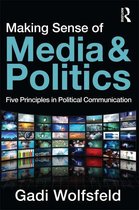
Five Principles in Political Communication:
1. Political power can usually be translated into power over the news media.
2. When authorities lose control over the political environment they also lose control
over the news.
3. There is no such thing as objective journalism (nor can there be).
4. The media is dedicated more than anything else to telling a good story. This can
often have a major impact on the political process.
5. The most important effects of the news media on citizens tend to be unintentional
and unnoticed.
Chapter 1: political power and power over the media
Those who have political power not only find it much easier to get coverage, but also are in a
much better position to get their messages across.
Ø The news media are more interested in elites, and this preference has far reaching
consequences for the role the media play in politics
Ø Media attention, the rich get richer and the poor remain poor.
The nature of what we call the ‘media’ may have changed considerably after the creation of
the Internet, but the need to be heard remains a central part of the political game.
If you don’t exist in the media, you don’t exist politically
- Become known
- Mobilize supporters
- Influence public opinion
- Influence policy
Media and politics: competitive symbioses
This relationship between political antagonists/actors and the news media can be described
as a ‘competitive symbiosis’. In which each side of the relationship attempts to exploit the
other, while expending a minimum amount of cost. Each side has assets needed by the other
to succeed in its respective role.
Mutual dependence:
- Politicians need good media coverage
- Journalists need information and justification
- 2 theories: Mediatisation and Indexing (HC2)
How much structural do power-holders have? -> Kritiek op boek.
Gedownload door: joliesekeris |
Dit document is auteursrechtelijk beschermd, het verspreiden van dit document is strafbaar.
, Stuvia - Koop en Verkoop de Beste Samenvattingen
Obsession with elites limit the range of political discourse
Ø Elites also get more positive coverage: media bias in favour of the powerful
Political power = media power
- Front door: the powerful get more/ automatic media access
- Back door: powerless has to work hard to get into the media
Does the fact that powerful elites get covered more mean that they get covered more
positively? The answer, for the most part, is yes. There are basically two doors for getting
into the news.
1. Front door: VIP’s: people with political power (usually treated with respect). They are
covered because of who they are as much as for what they are doing or sayin
2. Sidedoor: civil disobedience
- Getting your issue discussed in the media
There is one strategy that weaker groups can sometime use to provide news people with
drama without completely sacrificing legitimacy: civil disobedience
3. The other way to get into the news is through the back door.
Ø Reserved for weaker political actors who only become newsworthy if they do
something especially weird or deviant.
Ø The powerful can be pretty boring and still get into the news. But if you are not
important you better be interesting.
Inequality is not accidental: but structural (also in media)
Noam Chomsky: The political economy of mass media
Model Chomsky & Herman argued:
Developed the propaganda model of media criticism, “arguing that market forces,
internalized assumptions of self-censorship”, motivate newspapers and tv network to stifle
dissent.
è They describe US media as business that sell a product (audiences = consumers) to
other business.
è Liberal model of democracy: naïve: not a watchdog, but a lapdog
Media as “democratic watchdog” (Bennet & Serrin, 2005)
- Liberal idea
- Media take initiative
- Investigative reporting
- Independent scrutiny
- Documenting, questioning, and investigating
- Provide public and official with timely information
A well-functioning media is a paramount importance for democratic societies:
- Repost events objectively as they occur, to allow citizens to make informed political
choices.
- Control power-holders and unearth abuses of power through investigative
journalism.
Gedownload door: joliesekeris |
Dit document is auteursrechtelijk beschermd, het verspreiden van dit document is strafbaar.
, Stuvia - Koop en Verkoop de Beste Samenvattingen
Herman and Chomsky: US media fails to perform
democratic task and are basically akin to
propaganda system in totalitarian states.
They consider that the media is often involved in
misinformation, and argue that the media has
‘extended’ the Cold War.
Chomsky even contends that the media is in
essence against democracy
Micheal Foucault: “Power is everywhere”: diffused and embodied in discourse, knowledge
and ‘regimes of truth’.
Ø Norms are embedded beyond our perception – causing us to discipline ourselves
without any wilful coercion from others.
Ø Panopticism= the systematic ordering and controlling of human populations through
subtle and often unseen forces (surveillance techniques).
Power = the intentional production of causal effects.
- Power is the ability to achieve one’s goals or objectives.
- Power is (also) the ability to overcome opposition, to exercise control over people
- Power is hierarchical: A gets B to do something that B would not otherwise have
done
Principle & Subaltern
- Power relations are hierarchical/ asymmetric relations between a superior (principle)
and a subordinate (subaltern).
- In power relations there is intentional action of a superior. The subordinate always
has some room to manoeuvre, some freedom and choice to resist.
4 forms of power:
Corrective forms (affecting the OPTIONS for actions)
1. (Physical) force or coercion on decisions or compliance (zero-sum): literally limiting
options.
2. The ability or disposition to change social relationships or to leave them intact, through
manipulation, agenda-setting and non-decisions: changing the basis of choices so it
becomes ‘rational’ to comply.
- Persuasive forms (Affecting the REASONS for actions)
3. Preference-shaping via institutions: ‘signification’ or cognitive symbolism: shaping the
‘meaning’ and significance of things.
Gedownload door: joliesekeris |
Dit document is auteursrechtelijk beschermd, het verspreiden van dit document is strafbaar.
samenvatting MMP (NIEUWSTE
VERSIE)
geschreven door
nienkewolfers
www.stuvia.com
Gedownload door: joliesekeris |
Dit document is auteursrechtelijk beschermd, het verspreiden van dit document is strafbaar.
, Stuvia - Koop en Verkoop de Beste Samenvattingen
Media, Maatschappij & Politiek P2
HC1: Introduction power of the media: watchdogs or lapdogs?
Introduction, H1, Chompsky’s Propaganda model
3 perspectives of the book
1+2: political actors
3+4: media
5: public
Five Principles in Political Communication:
1. Political power can usually be translated into power over the news media.
2. When authorities lose control over the political environment they also lose control
over the news.
3. There is no such thing as objective journalism (nor can there be).
4. The media is dedicated more than anything else to telling a good story. This can
often have a major impact on the political process.
5. The most important effects of the news media on citizens tend to be unintentional
and unnoticed.
Chapter 1: political power and power over the media
Those who have political power not only find it much easier to get coverage, but also are in a
much better position to get their messages across.
Ø The news media are more interested in elites, and this preference has far reaching
consequences for the role the media play in politics
Ø Media attention, the rich get richer and the poor remain poor.
The nature of what we call the ‘media’ may have changed considerably after the creation of
the Internet, but the need to be heard remains a central part of the political game.
If you don’t exist in the media, you don’t exist politically
- Become known
- Mobilize supporters
- Influence public opinion
- Influence policy
Media and politics: competitive symbioses
This relationship between political antagonists/actors and the news media can be described
as a ‘competitive symbiosis’. In which each side of the relationship attempts to exploit the
other, while expending a minimum amount of cost. Each side has assets needed by the other
to succeed in its respective role.
Mutual dependence:
- Politicians need good media coverage
- Journalists need information and justification
- 2 theories: Mediatisation and Indexing (HC2)
How much structural do power-holders have? -> Kritiek op boek.
Gedownload door: joliesekeris |
Dit document is auteursrechtelijk beschermd, het verspreiden van dit document is strafbaar.
, Stuvia - Koop en Verkoop de Beste Samenvattingen
Obsession with elites limit the range of political discourse
Ø Elites also get more positive coverage: media bias in favour of the powerful
Political power = media power
- Front door: the powerful get more/ automatic media access
- Back door: powerless has to work hard to get into the media
Does the fact that powerful elites get covered more mean that they get covered more
positively? The answer, for the most part, is yes. There are basically two doors for getting
into the news.
1. Front door: VIP’s: people with political power (usually treated with respect). They are
covered because of who they are as much as for what they are doing or sayin
2. Sidedoor: civil disobedience
- Getting your issue discussed in the media
There is one strategy that weaker groups can sometime use to provide news people with
drama without completely sacrificing legitimacy: civil disobedience
3. The other way to get into the news is through the back door.
Ø Reserved for weaker political actors who only become newsworthy if they do
something especially weird or deviant.
Ø The powerful can be pretty boring and still get into the news. But if you are not
important you better be interesting.
Inequality is not accidental: but structural (also in media)
Noam Chomsky: The political economy of mass media
Model Chomsky & Herman argued:
Developed the propaganda model of media criticism, “arguing that market forces,
internalized assumptions of self-censorship”, motivate newspapers and tv network to stifle
dissent.
è They describe US media as business that sell a product (audiences = consumers) to
other business.
è Liberal model of democracy: naïve: not a watchdog, but a lapdog
Media as “democratic watchdog” (Bennet & Serrin, 2005)
- Liberal idea
- Media take initiative
- Investigative reporting
- Independent scrutiny
- Documenting, questioning, and investigating
- Provide public and official with timely information
A well-functioning media is a paramount importance for democratic societies:
- Repost events objectively as they occur, to allow citizens to make informed political
choices.
- Control power-holders and unearth abuses of power through investigative
journalism.
Gedownload door: joliesekeris |
Dit document is auteursrechtelijk beschermd, het verspreiden van dit document is strafbaar.
, Stuvia - Koop en Verkoop de Beste Samenvattingen
Herman and Chomsky: US media fails to perform
democratic task and are basically akin to
propaganda system in totalitarian states.
They consider that the media is often involved in
misinformation, and argue that the media has
‘extended’ the Cold War.
Chomsky even contends that the media is in
essence against democracy
Micheal Foucault: “Power is everywhere”: diffused and embodied in discourse, knowledge
and ‘regimes of truth’.
Ø Norms are embedded beyond our perception – causing us to discipline ourselves
without any wilful coercion from others.
Ø Panopticism= the systematic ordering and controlling of human populations through
subtle and often unseen forces (surveillance techniques).
Power = the intentional production of causal effects.
- Power is the ability to achieve one’s goals or objectives.
- Power is (also) the ability to overcome opposition, to exercise control over people
- Power is hierarchical: A gets B to do something that B would not otherwise have
done
Principle & Subaltern
- Power relations are hierarchical/ asymmetric relations between a superior (principle)
and a subordinate (subaltern).
- In power relations there is intentional action of a superior. The subordinate always
has some room to manoeuvre, some freedom and choice to resist.
4 forms of power:
Corrective forms (affecting the OPTIONS for actions)
1. (Physical) force or coercion on decisions or compliance (zero-sum): literally limiting
options.
2. The ability or disposition to change social relationships or to leave them intact, through
manipulation, agenda-setting and non-decisions: changing the basis of choices so it
becomes ‘rational’ to comply.
- Persuasive forms (Affecting the REASONS for actions)
3. Preference-shaping via institutions: ‘signification’ or cognitive symbolism: shaping the
‘meaning’ and significance of things.
Gedownload door: joliesekeris |
Dit document is auteursrechtelijk beschermd, het verspreiden van dit document is strafbaar.