Lecture 1 Decentralization and Privatization
Determinants for researching Care:
- Life expectancy
- Illness in all ages
- Norm differences (for example what people think of taking care of their grandparents)
Implications:
- Per capita expenditure
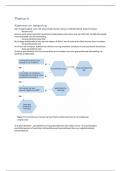
Policy in Care is understood by social learning: policy at time 1 is driven by policy at time 0. When
something is going wrong in the Care sector, we try to learn from that and make policy on it.
Key agents pushing forward the learning process are the experts in a given field of policy.
Article Atun (2006). (link) & Lecture
Decentralization: the wide range of acts of transfer of power and authority from higher to lower
levels of government for a number of functions, such as planning, human resource management,
budgeting and performance management. Decentralization can be from national to sub-national
levels, such as to regions, districts, municipalities, or to organizational levels, such as hospitals or
primary care units.
Weber is a proponent of decentralization, he said: “the only alternative to bureaucracy is a return to
small-scale organization”
There are different forms of decentralization:
- De-concentration: some things get delegated to certain people, they a lot of the times get a
certain budget (like a municipality).
- Delegation: a set of functions is given from the government to lower parts with autonomy
over how to execute it.
- Devolution: same as delegation but with lower responsibilities.
- Privatization.
In Europe, there has actually been a sense of centralization because the decentralization was too
expensive.
The main goals of decentralization:
- Allocation efficiency: it is easier for the smaller parts of the government (like a municipality)
to execute policies because they know the people in their environment better. If a
government has to form policy they often do not know the actual people that need the
policy.
- Technical efficiency: the paperwork et cetera is easier to organize when the work is
decentralized
- Empower local governments
- Increase innovation in service delivery
- Increase accountability: when smaller parts of a government are responsible for a task,
people can hold them accountable easier instead of it being the government as a whole (they
for example can file a complaint to a municipality worker instead of the government). This
goal is quite controversial in practice because there a lot of the times still is no accountability
- Increase quality of healthcare service
- Reduce inequality
The above mentioned goals depend on the nature of the decentralization. There are three types of
powers that can be transferred through decentralization:
, - Administrative: whether they are in charge of the execution and management of a policy
- Fiscal: whether they have autonomy over budgeting and taxation
- Political: whether they get to decide how things will be done, this often stays in a centralized
level where the government does it.
National interest in decentralization (power reproduction mechanism):
Administrative > Fiscal > Political
Subnational interest in decentralization (ratchet effect):
Political > Fiscal > Administrative
Through decentralization, privatization in the healthcare sector has formed.
Privatization: involves the transfer of assets, responsibilities or functions from the
government/public sector to a non-governmental organization which may be either a voluntary
agency or a private company. Privatization is considered by some as the point for decentralization
but by others as being a distinctly different process.
Proponents of privatization argue that the process helps a government to fulfil a number of
objectives, for example, reduce administrative and financial burdens with respect to providing public
services, increase efficiency and effectiveness of services, encourage innovation, and develop more
user-sensitive services appropriate for a particular community or context. This is because
privatization aligns the interests of the principal (the government) and the agent (the manager)
thereby improving performance. However, it is not clear to what extent these benefits, which are
based on experience and economic analyses of non-health sectors, can be extrapolated to the health
sector
Several drivers have caused the privatization in Western European countries since the 1980s,
substantially affecting the health sector:
- Globalization: Globalization has created increased competition between countries and
increased consumerism. This is compelling governments to work better and cost less. There
is now more emphasis on enhancing effectiveness and efficiency of the public services,
increased quality, becoming more client-oriented and adopting more market-like
mechanisms with increased competition and a public–private mix in traditionally public
sectors, such as education and health. Restructuring of the public sector, with increased
privatization in health and other traditional public sector organizations, is a response to
globalization as governments try to enhance efficiency and effectiveness to remain
competitive
- New public management: New Public Management marks a fundamental shift from
“administering” towards “managing”, with the roles of the “centre” and the “periphery”
being redefined. In particular, NPM encourages replacement of hierarchical bureaucracies
with managed networks and emphasizes performance management. A “command and
control” mode of management gives way to managing through empowerment and
motivation. With NPM, there is more “market-like” orientation and increased convergence
with private sector models of organization. In countries which have moved to NPM mode,
one can observe the emergence of quasi-markets or the introduction of market mechanisms
within regulated environments. There is increased use of contracting, outsourcing,
competitive tendering, and privatization in place of long-term salaried employment.
- Better documentation through information technology (IT): Through IT, employers are now
able to assess the performance of their employees better, which eventually led to higher
expectations. In the health sector, IT has enhanced accounting, performance management
and benchmarking. This has encouraged more strict accounting practices and increased audit
in health care organizations and has enabled comparison and benchmarking with public and
, private organizations, which in turn helped identify poor performers. When faced with such
poor performers, the managers now had options to change practices in these organizations,
outsourcing these activities, or privatizing the enterprise.
- Pressure to lower taxes: One key driver of change in the 1980s was the unwillingness of the
electorate to pay higher taxes, yet without a reduction in demand for health services. This
forced many European governments to explore ways to achieve “better value for money” by
downsizing, outsourcing or privatizing certain activities in their health systems and the public
sector
Free market competition:
Assumptions:
- Various healthcare providers with minimal restrictions are set off to compete with each other
- Competition should result in high value for lower costs
How do we measure this?: evaluation criteria
Variability between populations in:
- Availability: do different parts of society have the same access to the policy?
- Quality
- Costs
- Information: do different parts of society have the same access to information?
Pitfalls of free (unregulated) market competition:
Problematic assumptions on micro behavior:
- Healthcare providers only take on profitable cases
- Healthcare providers provide incentives for low number of referrals
Results:
- Heath inequality
- SES inequality: individuals work longer, pay higher prices
Problematic assumptions about the rules of the game of free market competition:
- The issue of monopoly: some organizations with monopoly positions will act like they don’t
have that position et cetera. For example Achmea has a really big percentage of insurance
companies, but because all of these companies have their own names like FBTO and Zilveren
Kruis people don’t know that it is all owned and managed by Achmea.
- (Fraud in) marketing of products: people make it seem like there is differentiation of
products while there is not (like saying that a certain insurance is better than another so they
charge a higher price than others, even though the insurance is the same as the cheaper
ones)
- Price fixing among companies
- Price differentiation in healthcare services: governmental protection
Next to free market competition, there is managed market competition.
Managed market competition means that everyone should have access to healthcare and that
organizations have fair competition so that organizations for example can’t take on a monopoly
position.
Conditions of managed competition:
1. Consumer choice: consumers for example can choose which provider they want
2. Transparency and information
3. Risk bearing buyers and sellers
4. Contestable markets: zero entry and exit costs, meaning that smaller organizations are able
to enter the market without being overflowed by big organizations, they should also be able
to exit easily. This is one of the most problematic conditions in the managed competition
because it is really hard for smaller organizations in reality to enter the market.
Determinants for researching Care:
- Life expectancy
- Illness in all ages
- Norm differences (for example what people think of taking care of their grandparents)
Implications:
- Per capita expenditure
Policy in Care is understood by social learning: policy at time 1 is driven by policy at time 0. When
something is going wrong in the Care sector, we try to learn from that and make policy on it.
Key agents pushing forward the learning process are the experts in a given field of policy.
Article Atun (2006). (link) & Lecture
Decentralization: the wide range of acts of transfer of power and authority from higher to lower
levels of government for a number of functions, such as planning, human resource management,
budgeting and performance management. Decentralization can be from national to sub-national
levels, such as to regions, districts, municipalities, or to organizational levels, such as hospitals or
primary care units.
Weber is a proponent of decentralization, he said: “the only alternative to bureaucracy is a return to
small-scale organization”
There are different forms of decentralization:
- De-concentration: some things get delegated to certain people, they a lot of the times get a
certain budget (like a municipality).
- Delegation: a set of functions is given from the government to lower parts with autonomy
over how to execute it.
- Devolution: same as delegation but with lower responsibilities.
- Privatization.
In Europe, there has actually been a sense of centralization because the decentralization was too
expensive.
The main goals of decentralization:
- Allocation efficiency: it is easier for the smaller parts of the government (like a municipality)
to execute policies because they know the people in their environment better. If a
government has to form policy they often do not know the actual people that need the
policy.
- Technical efficiency: the paperwork et cetera is easier to organize when the work is
decentralized
- Empower local governments
- Increase innovation in service delivery
- Increase accountability: when smaller parts of a government are responsible for a task,
people can hold them accountable easier instead of it being the government as a whole (they
for example can file a complaint to a municipality worker instead of the government). This
goal is quite controversial in practice because there a lot of the times still is no accountability
- Increase quality of healthcare service
- Reduce inequality
The above mentioned goals depend on the nature of the decentralization. There are three types of
powers that can be transferred through decentralization:
, - Administrative: whether they are in charge of the execution and management of a policy
- Fiscal: whether they have autonomy over budgeting and taxation
- Political: whether they get to decide how things will be done, this often stays in a centralized
level where the government does it.
National interest in decentralization (power reproduction mechanism):
Administrative > Fiscal > Political
Subnational interest in decentralization (ratchet effect):
Political > Fiscal > Administrative
Through decentralization, privatization in the healthcare sector has formed.
Privatization: involves the transfer of assets, responsibilities or functions from the
government/public sector to a non-governmental organization which may be either a voluntary
agency or a private company. Privatization is considered by some as the point for decentralization
but by others as being a distinctly different process.
Proponents of privatization argue that the process helps a government to fulfil a number of
objectives, for example, reduce administrative and financial burdens with respect to providing public
services, increase efficiency and effectiveness of services, encourage innovation, and develop more
user-sensitive services appropriate for a particular community or context. This is because
privatization aligns the interests of the principal (the government) and the agent (the manager)
thereby improving performance. However, it is not clear to what extent these benefits, which are
based on experience and economic analyses of non-health sectors, can be extrapolated to the health
sector
Several drivers have caused the privatization in Western European countries since the 1980s,
substantially affecting the health sector:
- Globalization: Globalization has created increased competition between countries and
increased consumerism. This is compelling governments to work better and cost less. There
is now more emphasis on enhancing effectiveness and efficiency of the public services,
increased quality, becoming more client-oriented and adopting more market-like
mechanisms with increased competition and a public–private mix in traditionally public
sectors, such as education and health. Restructuring of the public sector, with increased
privatization in health and other traditional public sector organizations, is a response to
globalization as governments try to enhance efficiency and effectiveness to remain
competitive
- New public management: New Public Management marks a fundamental shift from
“administering” towards “managing”, with the roles of the “centre” and the “periphery”
being redefined. In particular, NPM encourages replacement of hierarchical bureaucracies
with managed networks and emphasizes performance management. A “command and
control” mode of management gives way to managing through empowerment and
motivation. With NPM, there is more “market-like” orientation and increased convergence
with private sector models of organization. In countries which have moved to NPM mode,
one can observe the emergence of quasi-markets or the introduction of market mechanisms
within regulated environments. There is increased use of contracting, outsourcing,
competitive tendering, and privatization in place of long-term salaried employment.
- Better documentation through information technology (IT): Through IT, employers are now
able to assess the performance of their employees better, which eventually led to higher
expectations. In the health sector, IT has enhanced accounting, performance management
and benchmarking. This has encouraged more strict accounting practices and increased audit
in health care organizations and has enabled comparison and benchmarking with public and
, private organizations, which in turn helped identify poor performers. When faced with such
poor performers, the managers now had options to change practices in these organizations,
outsourcing these activities, or privatizing the enterprise.
- Pressure to lower taxes: One key driver of change in the 1980s was the unwillingness of the
electorate to pay higher taxes, yet without a reduction in demand for health services. This
forced many European governments to explore ways to achieve “better value for money” by
downsizing, outsourcing or privatizing certain activities in their health systems and the public
sector
Free market competition:
Assumptions:
- Various healthcare providers with minimal restrictions are set off to compete with each other
- Competition should result in high value for lower costs
How do we measure this?: evaluation criteria
Variability between populations in:
- Availability: do different parts of society have the same access to the policy?
- Quality
- Costs
- Information: do different parts of society have the same access to information?
Pitfalls of free (unregulated) market competition:
Problematic assumptions on micro behavior:
- Healthcare providers only take on profitable cases
- Healthcare providers provide incentives for low number of referrals
Results:
- Heath inequality
- SES inequality: individuals work longer, pay higher prices
Problematic assumptions about the rules of the game of free market competition:
- The issue of monopoly: some organizations with monopoly positions will act like they don’t
have that position et cetera. For example Achmea has a really big percentage of insurance
companies, but because all of these companies have their own names like FBTO and Zilveren
Kruis people don’t know that it is all owned and managed by Achmea.
- (Fraud in) marketing of products: people make it seem like there is differentiation of
products while there is not (like saying that a certain insurance is better than another so they
charge a higher price than others, even though the insurance is the same as the cheaper
ones)
- Price fixing among companies
- Price differentiation in healthcare services: governmental protection
Next to free market competition, there is managed market competition.
Managed market competition means that everyone should have access to healthcare and that
organizations have fair competition so that organizations for example can’t take on a monopoly
position.
Conditions of managed competition:
1. Consumer choice: consumers for example can choose which provider they want
2. Transparency and information
3. Risk bearing buyers and sellers
4. Contestable markets: zero entry and exit costs, meaning that smaller organizations are able
to enter the market without being overflowed by big organizations, they should also be able
to exit easily. This is one of the most problematic conditions in the managed competition
because it is really hard for smaller organizations in reality to enter the market.