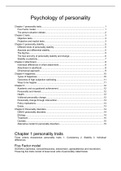
Psychology of personality
Chapter 1 personality traits.....................................................................................................1
Five Factor model.............................................................................................................. 1
The person-situation debate..............................................................................................2
Chapter 2 tests....................................................................................................................... 3
Objective tests................................................................................................................... 3
Projective and implicit tests................................................................................................3
Chapter 3 personality stability.................................................................................................5
Different kinds of personality stability.................................................................................5
Absolute and differential stability........................................................................................5
The big five........................................................................................................................ 5
The how and why of personality stability and change........................................................6
Stability vs plasticity...........................................................................................................7
Chapter 4 attachment............................................................................................................. 8
Individual differences in infant attachment.........................................................................8
Attachment in adulthood....................................................................................................8
Dimensional approach.......................................................................................................9
Chapter 4 happiness............................................................................................................ 10
Types of happiness.......................................................................................................... 10
Outcomes of high subjective well-being...........................................................................11
Ways to be happier.......................................................................................................... 11
Chapter 5.............................................................................................................................. 12
Academic and occupational achievement........................................................................12
Personality and interest...................................................................................................12
Health.............................................................................................................................. 12
Volitional personality change...........................................................................................12
Personality change through intervention..........................................................................13
Policy implications............................................................................................................ 13
Essay............................................................................................................................... 13
Chapter 6 Personality disorders...........................................................................................14
DSM-5 personality disorders............................................................................................14
Etiology............................................................................................................................ 14
Treatment........................................................................................................................ 15
Caveats............................................................................................................................ 15
Alternative model for personality disorders......................................................................15
Chapter 1 personality traits
Three criteria characterize personality traits: 1. Consistency 2. Stability 3. Individual
differences.
Five Factor model
OCEAN is openness, conscientiousness, extraversion, agreeableness and neuroticism.
These big five traits consist of lower-level units of personality called facets.
, Openness: fantasy prone, open to feelings, open to different ideas, and diverse behavior.
Conscientiousness: competent, orderly, dutiful, self-disciplined, achievement oriented.
Extraversion: warm, assertive, active, excitement-seeking, positive emotionality.
Agreeableness: trusting, straightforward, altruistic, compliant, modest, tender-minded.
Neuroticism: anxious, angry, depressed, self-conscious, impulsive, vulnerable.
The HEXACO adds Honesty-Humility as a sixth dimension, which is for being sincere, fair
and modest or manipulative, narcissistic and self-centered.
The person-situation debate
If one looks closely at people’s behavior across many different situations, the consistency is
not that good. Mischel said that psychologists should focus on people’s distinctive reactions
to specific situations instead of a person’s personality traits in itself. Specific behaviors are
driven by the interaction between specific psychologically meaningful features of the
situation and someone’s ability for dealing with it. This is because a person evaluates the
risks and rewards present at that moment and evaluate their abilities and values to make a
decision.
Chapter 1 personality traits.....................................................................................................1
Five Factor model.............................................................................................................. 1
The person-situation debate..............................................................................................2
Chapter 2 tests....................................................................................................................... 3
Objective tests................................................................................................................... 3
Projective and implicit tests................................................................................................3
Chapter 3 personality stability.................................................................................................5
Different kinds of personality stability.................................................................................5
Absolute and differential stability........................................................................................5
The big five........................................................................................................................ 5
The how and why of personality stability and change........................................................6
Stability vs plasticity...........................................................................................................7
Chapter 4 attachment............................................................................................................. 8
Individual differences in infant attachment.........................................................................8
Attachment in adulthood....................................................................................................8
Dimensional approach.......................................................................................................9
Chapter 4 happiness............................................................................................................ 10
Types of happiness.......................................................................................................... 10
Outcomes of high subjective well-being...........................................................................11
Ways to be happier.......................................................................................................... 11
Chapter 5.............................................................................................................................. 12
Academic and occupational achievement........................................................................12
Personality and interest...................................................................................................12
Health.............................................................................................................................. 12
Volitional personality change...........................................................................................12
Personality change through intervention..........................................................................13
Policy implications............................................................................................................ 13
Essay............................................................................................................................... 13
Chapter 6 Personality disorders...........................................................................................14
DSM-5 personality disorders............................................................................................14
Etiology............................................................................................................................ 14
Treatment........................................................................................................................ 15
Caveats............................................................................................................................ 15
Alternative model for personality disorders......................................................................15
Chapter 1 personality traits
Three criteria characterize personality traits: 1. Consistency 2. Stability 3. Individual
differences.
Five Factor model
OCEAN is openness, conscientiousness, extraversion, agreeableness and neuroticism.
These big five traits consist of lower-level units of personality called facets.
, Openness: fantasy prone, open to feelings, open to different ideas, and diverse behavior.
Conscientiousness: competent, orderly, dutiful, self-disciplined, achievement oriented.
Extraversion: warm, assertive, active, excitement-seeking, positive emotionality.
Agreeableness: trusting, straightforward, altruistic, compliant, modest, tender-minded.
Neuroticism: anxious, angry, depressed, self-conscious, impulsive, vulnerable.
The HEXACO adds Honesty-Humility as a sixth dimension, which is for being sincere, fair
and modest or manipulative, narcissistic and self-centered.
The person-situation debate
If one looks closely at people’s behavior across many different situations, the consistency is
not that good. Mischel said that psychologists should focus on people’s distinctive reactions
to specific situations instead of a person’s personality traits in itself. Specific behaviors are
driven by the interaction between specific psychologically meaningful features of the
situation and someone’s ability for dealing with it. This is because a person evaluates the
risks and rewards present at that moment and evaluate their abilities and values to make a
decision.