NSG 6420 WEEK 3 QUIZ
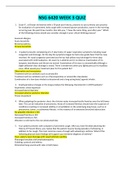
NSG 6420 WEEK 3 QUIZ 1. Susan P., a 60-year-old woman with a 30 pack year history, presents to your primary care practice for evaluation of a persistent, daily cough with increased sputum production, worse in the morning, occurring over the past three months. She tells you, “I have the same thing, year after year.” Which of the following choices would you consider strongly in your critical thinking process? Seasonal allergies Acute bronchitis Bronchial asthma Chronic bronchitis 2. A patient presents complaining of a 5 day history of upper respiratory symptoms including nasal congestion and drainage. On the day the symptoms began he had a low-grade fever that has now resolved. His nasal congestion persisted and he has had yellow nasal drainage for three days associated with mild headaches. On exam he is afebrile and in no distress. Examination of his tympanic membranes and throat are normal. Examination of his nose is unremarkable although a slight yellowish-clear drainage is noted. There is tenderness when you lightly percuss his maxillary sinus. What would your treatment plan for this patient be? Observation and reassurance Treatment with an antibiotic such as amoxicillin Treatment with an antibiotic such as a fluoroquinoline or amoxicillin-clavulanate Combination of a low dose inhaled corticosteroid and a long acting beta2 agonist inhaler. 3. Emphysematous changes in the lungs produce the following characteristic in COPD patients? Asymmetric chest expansion Increased lateral diameter Increased anterior-posterior diameter Pectus excavatum 4. When palpating the posterior chest, the clinician notes increased tactile fremitus over the left lower lobe. This can be indicative of pneumonia. Areas of increased fremitus should raise the suspicion of conditions resulting in increased solidity or consolidation in the underlying lung tissue, such as in pneumonia, tumor, or pulmonary fibrosis. In the instance of an extensive bronchial obstruction: No palpable vibration is felt Decreased fremitus is felt Increased fremitus is felt Vibration is referred to the non-obstructed lobe 5. Your patient presents with complaint of persistent cough. After you have finished obtaining the History of Present Illness, you realize that the patient may be having episodes of wheezing, in addition to his cough. The most common cause of cough with wheezing is asthma. What of the following physical exam findings will support your tentative diagnosis of asthma? Clear, watery nasal drainage with nasal turbinate swelling Pharyngeal exudate and lymphadenopathy Clubbing, cyanosis and edema. Diminished lung sounds with rales in both bases
Written for
- Institution
-
South University
- Course
-
NSG 6420 WEEK 3 QUIZ
Document information
- Uploaded on
- December 14, 2021
- Number of pages
- 4
- Written in
- 2021/2022
- Type
- Exam (elaborations)
- Contains
- Questions & answers
Subjects
-
nsg 6420 week 3 quiz 1 susan p
-
a 60 year old woman with a 30 pack year history
-
presents to your primary care practice for evaluation of a persistent
-
daily cough with increased sputum production

Also available in package deal