HC14 Clinical aspects of AIDS
AIDS: Acquired Immuno Deficiency Syndrome
- A syndrome: a set of signs and symptoms which together form a distinct clinical
picture
Pathogenesis of AIDS:
1. Virus enters body
2. Virus has a specific target (activated CD4+ lymphocytes)
o Cells with the CD4 molecule: T-helper lymphocytes, monocytes, macrophages
and certain B-lymphocytes
3. Virus replication leads to cell death
o Death rate exceeds maximal regeneration capacity
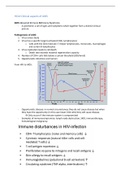
4. Number of CD4+ cells falls below a certain threshold (200/mm3)
5. Opportunistic infections and tumors
From HIV to AIDS:
- Opportunistic disease: in normal circumstances they do not cause disease but when
they have the opportunity (in this case lower CD4 cells) they will cause disease.
→ Only occurs if the immune system is compromised
- Examples of immunocompromise: lymph node destruction, SKID, immunotherapy,
hematological malignancy.
AIDS: Acquired Immuno Deficiency Syndrome
- A syndrome: a set of signs and symptoms which together form a distinct clinical
picture
Pathogenesis of AIDS:
1. Virus enters body
2. Virus has a specific target (activated CD4+ lymphocytes)
o Cells with the CD4 molecule: T-helper lymphocytes, monocytes, macrophages
and certain B-lymphocytes
3. Virus replication leads to cell death
o Death rate exceeds maximal regeneration capacity
4. Number of CD4+ cells falls below a certain threshold (200/mm3)
5. Opportunistic infections and tumors
From HIV to AIDS:
- Opportunistic disease: in normal circumstances they do not cause disease but when
they have the opportunity (in this case lower CD4 cells) they will cause disease.
→ Only occurs if the immune system is compromised
- Examples of immunocompromise: lymph node destruction, SKID, immunotherapy,
hematological malignancy.