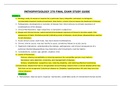
PATHOPHYSIOLOGY 370 FINAL EXAM STUDY GUIDE Chapter 1: 1.Etiology: study of causes or reasons for a particular injury. Idiopathic (unknown) vs Iatrogenic (unintended/unwanted medical treatment). Risk Factor: a factor that increases the likelihood of disease. 2.Pathogenesis: development or evolution of disease from initial stimulus to ultimate expression of manifestations of the disease. 3.Clinical Manifestations: Signs (objective) vs Symptoms (subjective). 4.Stages and Clinical Course: Latent period (time between exposure of tissue to injurious agent, first appearance of S&S), Prodromal period (indicating onset of disease), Acute phase (disease/illness reaches its full intensity).
5.Acute clinical course: short-lived, may have severe manifestations.
6.Chronic clinical course: may last months to years, sometimes follows an acute course. 7.Treatment implications: understanding the etiology, pathogenesis, and clinical consequences of a particular disorder/disease/illness may determine which treatments could be helpful. 8.Considerations: culture, age, gender, situation, time. 9.Levels of Prevention: Primary: altering susceptibility or reducing exposure for susceptible persons (vaccination). Secondary: early detection, screening, and management of disease. T ertiary: rehabilitation, supportive care, reducing disability, and restoring effective functioning.
10.Subclinical: disease that has no recognizable clinical findings. Distinct from a clinical disease which has S&S that can be recognized. Subclinical disease ex. Diabetes, hypothyroidism, RA until they turn into clinical diseases. Chapter 2: 1.Homeostasis: ideal set point; response: mechanistic, predictable series of orchestrated internal events. 2.Types of parameters to control: osmolarity, temperature, pH, nutrients, water, Na+, Ca2+, oxygen, hormones. 3.Allostasis: ability to adapt to challenges; maintains or reestablishes homeostasis in light of environmental
and lifestyle changes. 4.Stressors: agents or conditions that endanger homeostasis (physical, chemical, emotional, biological, social, or cultural; vary in scope, intensity, and duration. 5.Feedback control systems adapt to changes to restore homeostasis. 6.Stress can be beneficial: increase energy and alertness, keeps us focused on the problem at hand. 7.Risk factors: NOT stressors, but conditions or situations that increase the likelihood of encountering a stressor. 8.Han Selye’s GAS: Alarm Reaction: arousal of CNS begins, fight-or-flight response sympathetic NS involved. Epinephrine, NE, and other hormones are released, causing an increase in HR, contractility, oxygen intake (respiratory rate), and mental activity. Resistance: activity of the nervous and endocrine systems in an attempt to return to homeostasis. Allostatic state: refers to the activity of various systems in attempting to restore homeostasis.
Exhaustion: point where body can no longer return to homeostasis. Allostatic overload: “cost” of body’s organs and tissues for an excessive or ineffectively regulated allostatic response. Organ damage
begins (onset of disease). 9.Other responses: corticotropin-releasing hormone (CRH) production, antidiuretic hormone release (vasopressin), Sympathetic nervous system (SNS) activation and catecholamines (E and NE), renin-
angiotensin-aldosterone pathway activation (increase BP, increased blood volume). 10.Stressful stimuli excite receptors which relay to the hypothalamus the stress response is then mediate by E/NE and glucocorticoids (cortisol). 11.SNS stimulation causes vasoconstriction of most blood vessels because of activation of alpha 1 Adrenergic receptor’s by NE. 12.Cortisol: stress hormone. Diverts metabolism from building tissues to supply energy to deal with the stress. Primary glucocorticoid. Promotes appetite. Causes S&S of chronic stress. Increased blood glucose, stronger sympathetic system effect on heart rate. *Hypothalamus (CRH) Anterior Pituitary (ACTH) Adrenal Cortex (cortisol) alters glucose, fat, protein metabolism, suppresses inflammatory and immune responses. 13.Antidiuretic Hormone (ADH): vasopressin, causes vasoconstriction, makes kidneys reabsorb water from urine to blood. 14.Fight or Flight Response: rapid response to trauma, emergency. Epinephrine and norepinephrine released. Both attach to adrenergic receptors. Norepinephrine: causes vasoconstriction and raises BP, reduces gastric secretions, increases night and far vision.
Epinephrine: enhances myocardial contractility, increases HR and CO, causes bronchodilation, increases glucose release from the liver (glycogenolysis). Pain, fear, low BP (hypothalamus) SNS activated (SNS neurons) Norepinephrine (adrenal medulla)
epinephrine released into blood heart (increase HR and contractility)/ Blood Vessels (vasoconstrict skin, gut, and kidney) increased BP
15.Renin-Angiotensin-Aldosterone Pathway: activated by sympathetic system, decreased blood flow to kidneys. ANG1: weak vasoconstriction. Angiotensin-converting enzyme (ACE). ANG II: stronger vasoconstriction, also stimulates the adrenal cortex to release aldosterone. Aldosterone released. Na+/K+ ATPase in nephrons activated (kidneys reabsorb Na+ and H2O, kidneys secrete K+. Kidneys release Renin Converts angiotensin to ANG I (ACE)ANG IIAdrenal CortexAldosteroneKidneysReabsorb Na+ and water (increases blood volume and BP) and secrete K+
16.Endorphins: endogenous opioids- raises pain threshold and produces sedation and euphoria. 17.Oxytocin: produced during childbirth and lactation, associated with bonding and social attachment, thought to moderate stress response and produce a calming effect. 18.Stress Affects the Immune System: by decreasing immune cell production, decreasing thymus activity, overall stress and cortisol suppresses the immune system. 19.Types of Stress
(1)Physiologic Stress: stress-induced changes in body functions, detected by body’s normal regulatory sensors, the body alters function to restore normal balance. When balance is restored, negative feedback stops the reaction. (2)Psychosocial Stress: refers to events of psychosocial or social origin which challenge homeostasis. Adverse environments or life experiences (natural disasters, war, loss of job). Position in a social hierarchy, isolation, discrimination. Directly affects the CNS. Turns on the stress responses, even when the body’s internal sensors have not detected imbalance. (3)Acute Stress: pounding headache, cold, moist skin, stiff neck. Activates neural pathways that mediate arousal, alertness, focused attention, aggression. Can be detrimental. (4)Chronic Stress: long term. sympathetic activity and cortisol are elevated, complications result
from reduced immune response. Long-term exposure can lead to serious health problems because it disrupts most body systems.
5.Acute clinical course: short-lived, may have severe manifestations.
6.Chronic clinical course: may last months to years, sometimes follows an acute course. 7.Treatment implications: understanding the etiology, pathogenesis, and clinical consequences of a particular disorder/disease/illness may determine which treatments could be helpful. 8.Considerations: culture, age, gender, situation, time. 9.Levels of Prevention: Primary: altering susceptibility or reducing exposure for susceptible persons (vaccination). Secondary: early detection, screening, and management of disease. T ertiary: rehabilitation, supportive care, reducing disability, and restoring effective functioning.
10.Subclinical: disease that has no recognizable clinical findings. Distinct from a clinical disease which has S&S that can be recognized. Subclinical disease ex. Diabetes, hypothyroidism, RA until they turn into clinical diseases. Chapter 2: 1.Homeostasis: ideal set point; response: mechanistic, predictable series of orchestrated internal events. 2.Types of parameters to control: osmolarity, temperature, pH, nutrients, water, Na+, Ca2+, oxygen, hormones. 3.Allostasis: ability to adapt to challenges; maintains or reestablishes homeostasis in light of environmental
and lifestyle changes. 4.Stressors: agents or conditions that endanger homeostasis (physical, chemical, emotional, biological, social, or cultural; vary in scope, intensity, and duration. 5.Feedback control systems adapt to changes to restore homeostasis. 6.Stress can be beneficial: increase energy and alertness, keeps us focused on the problem at hand. 7.Risk factors: NOT stressors, but conditions or situations that increase the likelihood of encountering a stressor. 8.Han Selye’s GAS: Alarm Reaction: arousal of CNS begins, fight-or-flight response sympathetic NS involved. Epinephrine, NE, and other hormones are released, causing an increase in HR, contractility, oxygen intake (respiratory rate), and mental activity. Resistance: activity of the nervous and endocrine systems in an attempt to return to homeostasis. Allostatic state: refers to the activity of various systems in attempting to restore homeostasis.
Exhaustion: point where body can no longer return to homeostasis. Allostatic overload: “cost” of body’s organs and tissues for an excessive or ineffectively regulated allostatic response. Organ damage
begins (onset of disease). 9.Other responses: corticotropin-releasing hormone (CRH) production, antidiuretic hormone release (vasopressin), Sympathetic nervous system (SNS) activation and catecholamines (E and NE), renin-
angiotensin-aldosterone pathway activation (increase BP, increased blood volume). 10.Stressful stimuli excite receptors which relay to the hypothalamus the stress response is then mediate by E/NE and glucocorticoids (cortisol). 11.SNS stimulation causes vasoconstriction of most blood vessels because of activation of alpha 1 Adrenergic receptor’s by NE. 12.Cortisol: stress hormone. Diverts metabolism from building tissues to supply energy to deal with the stress. Primary glucocorticoid. Promotes appetite. Causes S&S of chronic stress. Increased blood glucose, stronger sympathetic system effect on heart rate. *Hypothalamus (CRH) Anterior Pituitary (ACTH) Adrenal Cortex (cortisol) alters glucose, fat, protein metabolism, suppresses inflammatory and immune responses. 13.Antidiuretic Hormone (ADH): vasopressin, causes vasoconstriction, makes kidneys reabsorb water from urine to blood. 14.Fight or Flight Response: rapid response to trauma, emergency. Epinephrine and norepinephrine released. Both attach to adrenergic receptors. Norepinephrine: causes vasoconstriction and raises BP, reduces gastric secretions, increases night and far vision.
Epinephrine: enhances myocardial contractility, increases HR and CO, causes bronchodilation, increases glucose release from the liver (glycogenolysis). Pain, fear, low BP (hypothalamus) SNS activated (SNS neurons) Norepinephrine (adrenal medulla)
epinephrine released into blood heart (increase HR and contractility)/ Blood Vessels (vasoconstrict skin, gut, and kidney) increased BP
15.Renin-Angiotensin-Aldosterone Pathway: activated by sympathetic system, decreased blood flow to kidneys. ANG1: weak vasoconstriction. Angiotensin-converting enzyme (ACE). ANG II: stronger vasoconstriction, also stimulates the adrenal cortex to release aldosterone. Aldosterone released. Na+/K+ ATPase in nephrons activated (kidneys reabsorb Na+ and H2O, kidneys secrete K+. Kidneys release Renin Converts angiotensin to ANG I (ACE)ANG IIAdrenal CortexAldosteroneKidneysReabsorb Na+ and water (increases blood volume and BP) and secrete K+
16.Endorphins: endogenous opioids- raises pain threshold and produces sedation and euphoria. 17.Oxytocin: produced during childbirth and lactation, associated with bonding and social attachment, thought to moderate stress response and produce a calming effect. 18.Stress Affects the Immune System: by decreasing immune cell production, decreasing thymus activity, overall stress and cortisol suppresses the immune system. 19.Types of Stress
(1)Physiologic Stress: stress-induced changes in body functions, detected by body’s normal regulatory sensors, the body alters function to restore normal balance. When balance is restored, negative feedback stops the reaction. (2)Psychosocial Stress: refers to events of psychosocial or social origin which challenge homeostasis. Adverse environments or life experiences (natural disasters, war, loss of job). Position in a social hierarchy, isolation, discrimination. Directly affects the CNS. Turns on the stress responses, even when the body’s internal sensors have not detected imbalance. (3)Acute Stress: pounding headache, cold, moist skin, stiff neck. Activates neural pathways that mediate arousal, alertness, focused attention, aggression. Can be detrimental. (4)Chronic Stress: long term. sympathetic activity and cortisol are elevated, complications result
from reduced immune response. Long-term exposure can lead to serious health problems because it disrupts most body systems.