BUS 401 WEEK 2 ADAPTIVE WITH ALL THE CORRECT ANSWERS UPDATED WITH LATEST REVIEWS LATEST 2021
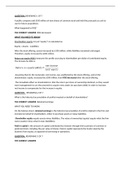
QUESTION: REVIEWING 1 OF 7 A public company sold $100 million of new shares of common stock and held the proceeds as cash to use for future acquisitions. What happened to ROE? THE CORRECT ANSWER: ROE decreased. WHAT YOU NEED TO KNOW Stockholders equity (or just “equity”) is calculated as: Equity = Assets – Liabilities After the stock offering, assets increased by $100 million, while liabilities remained unchanged. Therefore, equity increased by $100 million. Return on equity (ROE) measures the profits accruing to shareholders per dollar of contributed equity. The formula for ROE is: Assuming that (1) the numerator, net income, was unaffected by the stock offering, and (2) the denominator, equity, increased by $100 million, then ROE decreased after the stock offering. The immediate effect on shareholders is that the return per share of ownership declined, so they would want management to use the proceeds to acquire new assets (or pay down debt) in order to increase net income to compensate for the increase in equity. QUESTION: REVIEWING 2 OF 7 What is the historical accumulation of profits invested on behalf of shareholders? THE CORRECT ANSWER: Retained earnings WHAT YOU NEED TO KNOW On the balance sheet, retained earnings is the historical accumulation of profits retained in the firm and invested on behalf of shareholders, either to purchase assets or repay liabilities. Shareholder equity equals assets minus liabilities. The value of ownership (equity) equals what the firm owns (assets) minus what it owes (liabilities). Paid in capital is the amount of capital contributed by investors through their purchase of common or preferred stock, including the par value of shares. Paid-in capital represents the funds raised by the business from equity, as opposed to borrowing or operations. QUESTION: REVIEWING 3 OF 7 THE CORRECT ANSWER SG&A WHAT YOU NEED TO KNOW Selling, general and administrative expenses (SG&A) are part of operating expenses (all expenses associated with a company’s operation other than COGS and financing costs). Cost of Goods Sold (COGS) are listed immediately after revenue (sales) on the income statement and are the direct costs associated with sales, such as materials and manufacturing labor. Subtracting COGS from revenue produces gross profit (or gross margin, when expressed as a percentage). Subtracting operating expenses from gross profit produces the firm’s operating profit or earnings before interest and taxes (EBIT). The most common nonoperating expenses are interest expense and taxes. Subtracting these items from the operating profit gives us the company’s net income, or net profit. Revenues – COGS = gross profit Gross profit – operating expenses = operating profit Operating profit – (financing costs + taxes) = net income
Written for
Document information
- Uploaded on
- December 9, 2021
- Number of pages
- 53
- Written in
- 2021/2022
- Type
- Exam (elaborations)
- Contains
- Questions & answers
Subjects
- bus 401 week 2 adaptive
-
bus 401 week 2 adaptive with all the correct answers updated with latest reviews latest 2021

Also available in package deal