PSY-102 Topic 4 DQ 1
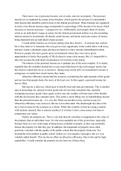
PSY-102 Topic 4 DQ 1 Outline the main differences between classical and operant conditioning. Which of these seems to occur more accidentally, and which is more intentional? Please explain your response and provide examples. One of the simplest ways to remember the differences between classical and operant conditioning is to focus on whether the behavior is involuntary or voluntary. Classical conditioning involves associating an involuntary response and a stimulus. For an example of a stimulus that evokes an unconditioned response, let's imagine a kiss. Kissing creates involuntary arousal responses; it causes you to experience an elevated heart rate, for example. This is a natural response, it is not learned, and it happens automatically. The unconditioned stimulus in this example is the kiss, and the elevated heart rate is the unconditioned response. While operant conditioning is about associating a voluntary behavior and a consequence. Back to the example of the kiss. What would happen if the person put their arms around you and kissed you back enthusiastically? This would be an example of reinforcement and would probably increase the likelihood that you would seek another kiss from the person. What if you attempt to kiss a person and they become upset and they push you away? This would be an example of consequence and would probably decrease the likelihood you would seek a kiss from that person again. This happens intentionally.
Written for
- Institution
-
Grand Canyon University
- Course
-
PSY 102
Document information
- Uploaded on
- December 4, 2021
- Number of pages
- 1
- Written in
- 2021/2022
- Type
- CASE
- Professor(s)
- Proffessor
- Grade
- A+
Subjects
-
psy 102 topic 4 dq 1 outline the main differences between classical and operant conditioning which of these seems to occur more accidentally
-
and which is more intentional please explain your respo

Also available in package deal