INTRODUCTION
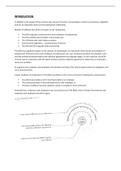
In addition to the impact of the common law, the law of contact, and workplace customs and practices, legislation
also has an important impact on the employment relationship.
Number of different Acts which all impact on the relationship:
The BCEA regulates minimum terms and conditions of employment
The EFA prohibits discrimination and promotes AA
The LRA deals with unfair labour practices
Social Security legislation – unemployment insurance
The SDA and SDLA regulate skills and training
The BCEA has significant impact on the contract of employment, as it lays down minim terms and condition of
employment. Minimum terms and conditions of employment can, over and above the BCEA, be included in sect
oral and ministerial determinations and collective agreements that regulate wages. In such instances, the BCEA
must be read in conjunction with the determinations and the collective agreement to determine an employee’s
terms and condition.
As a general rule, employer and employees may deviate from these T&C only to improve them for employees, but
not to decrease them.
A basic condition of employment in the BCEA constitutes a term of any contract of employment, except where:
Any other law provides a term more favourable to an employee
The contract provides a more favrouble term to the employee, or
The basic conditions has been replaced, varied or excluded in terms of the Act.
Generally then, employers and employees may not contract out of the BCEA. Only in limited circumstances will
employers and employees be able to agree
, SCOPE OF APPLICATION
In essence the BCEA gives effect to and regulates the constitutional right to fair labour practices, in order to do
this, the Act:
Establishes and enforces basic conditions of employment and
Regulates the variation of such conditions by way of various mechanisms and within a framework of
regulated flexibility
The BCEA is applicable to almost all employees. Certain employees are excluded from the act:
Members of the national intelligence agency
The South African Secret Service
The South African National Academy of Intelligence
Unpaid volunteers
The directors and staff of comsec
People under going vocational training except to the extent that any term of their employment is
regulated by the provisions of any other law
People employed on vessels at sea
Independent contractors
In addition to these exclusions there are also partial exclusion: certain groups of people are excluded from certain
chapters of the Act, for example, senior managerial employees are excluded from chapter 2 of the BCEA (which
regulates working time) Another example is employees who work for less than 24 hours a month who are excluded
from chapter 3 of the BCEA (which regulates leave)
MINIMUM CONDITIONS OF EMPLOYEMENT
WORKING TIME
Exclusion: Chapter 2 of the BCEA, which deals with working time, does not apply to senior managerial employees,
sales staffs who travel to the premises of customer and who regulate their own hours of work, employees who
work less than 24 hours a month, and employees who earn more than R172, 000 per year
In addition to the impact of the common law, the law of contact, and workplace customs and practices, legislation
also has an important impact on the employment relationship.
Number of different Acts which all impact on the relationship:
The BCEA regulates minimum terms and conditions of employment
The EFA prohibits discrimination and promotes AA
The LRA deals with unfair labour practices
Social Security legislation – unemployment insurance
The SDA and SDLA regulate skills and training
The BCEA has significant impact on the contract of employment, as it lays down minim terms and condition of
employment. Minimum terms and conditions of employment can, over and above the BCEA, be included in sect
oral and ministerial determinations and collective agreements that regulate wages. In such instances, the BCEA
must be read in conjunction with the determinations and the collective agreement to determine an employee’s
terms and condition.
As a general rule, employer and employees may deviate from these T&C only to improve them for employees, but
not to decrease them.
A basic condition of employment in the BCEA constitutes a term of any contract of employment, except where:
Any other law provides a term more favourable to an employee
The contract provides a more favrouble term to the employee, or
The basic conditions has been replaced, varied or excluded in terms of the Act.
Generally then, employers and employees may not contract out of the BCEA. Only in limited circumstances will
employers and employees be able to agree
, SCOPE OF APPLICATION
In essence the BCEA gives effect to and regulates the constitutional right to fair labour practices, in order to do
this, the Act:
Establishes and enforces basic conditions of employment and
Regulates the variation of such conditions by way of various mechanisms and within a framework of
regulated flexibility
The BCEA is applicable to almost all employees. Certain employees are excluded from the act:
Members of the national intelligence agency
The South African Secret Service
The South African National Academy of Intelligence
Unpaid volunteers
The directors and staff of comsec
People under going vocational training except to the extent that any term of their employment is
regulated by the provisions of any other law
People employed on vessels at sea
Independent contractors
In addition to these exclusions there are also partial exclusion: certain groups of people are excluded from certain
chapters of the Act, for example, senior managerial employees are excluded from chapter 2 of the BCEA (which
regulates working time) Another example is employees who work for less than 24 hours a month who are excluded
from chapter 3 of the BCEA (which regulates leave)
MINIMUM CONDITIONS OF EMPLOYEMENT
WORKING TIME
Exclusion: Chapter 2 of the BCEA, which deals with working time, does not apply to senior managerial employees,
sales staffs who travel to the premises of customer and who regulate their own hours of work, employees who
work less than 24 hours a month, and employees who earn more than R172, 000 per year