EXPONENTIAL AND LOGARITHMIC FUNCTIONS
Recall: An exponential function 𝑦 = 𝑎. 𝑏𝑥 is defined for 𝑏 > 0; 𝑏 ≠ 1.
(A revision of Exponential functions can be found on pages 55-58 of your text book)
Considering only exponential functions with 𝑎 = 1 for the moment, the inverse function of
𝑦 = b𝑥 is 𝑥 = by, but we do not yet have the mathematics to write 𝑥 = by in the form
𝑦 =…
The logarithmic function is a new function used to describe the inverse of the exponential
function i.e. we can use logarithms (called logs for short) to make the exponent the subject
of the equation.
𝑦 = log𝑏𝑥 means exactly the same as 𝑥 = 𝑏𝑦
e.g.1 Consider the function 𝑦 = 2𝑥:
function: 𝑦 = 2𝑥:
Inverse function (with 𝑥 the subject): 𝑥 = 2𝑦
Logarithmic form (with 𝑦 the subject): 𝑦 = log2 𝑥
In function notation:
Function 𝑓(𝑥) = 2𝑥
Inverse function 𝑓−1(𝑥) = log2𝑥
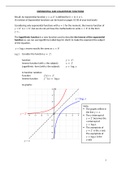
As graphs:
y = log2 x
Note:
The graphs reflect in
the line 𝑦 = 𝑥.
y = 2x The 𝑦-intercept of
𝑦 = 2𝑥 becomes the
𝑥-intercept of
𝑦 = log2𝑥.
The asymptote of
𝑦 = 2𝑥 is the 𝑥-axis.
The asymptote of
𝑦 = log2𝑥 is the
𝑦-axis
y=x
1
, e.g.2 Function: f ( x )=¿𝑦 i.e. y=¿
Inverse function (with 𝑥 the subject): 𝑥 = ( 1)
2
Logarithmic form (with 𝑦 the subject): 𝑦 = 𝑙𝑜𝑔1 𝑥
2
In function notation: 𝑓−1(𝑥) = 𝑙𝑜𝑔1 𝑥
2
As graphs:
y=¿
y=x Note:
The graphs reflect in
the line 𝑦 = 𝑥.
The 𝑦-intercept in
1 𝑥
𝑦 = ( ) becomes the
2
𝑥-intercept of
𝑦 = log1𝑥.
2
The asymptote
1 𝑥
of
𝑦
2
= ( ) is the 𝑥-axis.
The asymptote
of
𝑦 = log1𝑥 Is the
𝑦 = log1 𝑥 2
2 𝑦-axis
Let’s take a closer look at LOGARITHMS
We need to be able to convert from exponential form to log form and vice versa.
LOG FORM log𝑎𝑏 = 𝑥
number bas Logarithm/exponent
e
EXPONENTIAL FORM 𝑎𝑥 = 𝑏
2
Recall: An exponential function 𝑦 = 𝑎. 𝑏𝑥 is defined for 𝑏 > 0; 𝑏 ≠ 1.
(A revision of Exponential functions can be found on pages 55-58 of your text book)
Considering only exponential functions with 𝑎 = 1 for the moment, the inverse function of
𝑦 = b𝑥 is 𝑥 = by, but we do not yet have the mathematics to write 𝑥 = by in the form
𝑦 =…
The logarithmic function is a new function used to describe the inverse of the exponential
function i.e. we can use logarithms (called logs for short) to make the exponent the subject
of the equation.
𝑦 = log𝑏𝑥 means exactly the same as 𝑥 = 𝑏𝑦
e.g.1 Consider the function 𝑦 = 2𝑥:
function: 𝑦 = 2𝑥:
Inverse function (with 𝑥 the subject): 𝑥 = 2𝑦
Logarithmic form (with 𝑦 the subject): 𝑦 = log2 𝑥
In function notation:
Function 𝑓(𝑥) = 2𝑥
Inverse function 𝑓−1(𝑥) = log2𝑥
As graphs:
y = log2 x
Note:
The graphs reflect in
the line 𝑦 = 𝑥.
y = 2x The 𝑦-intercept of
𝑦 = 2𝑥 becomes the
𝑥-intercept of
𝑦 = log2𝑥.
The asymptote of
𝑦 = 2𝑥 is the 𝑥-axis.
The asymptote of
𝑦 = log2𝑥 is the
𝑦-axis
y=x
1
, e.g.2 Function: f ( x )=¿𝑦 i.e. y=¿
Inverse function (with 𝑥 the subject): 𝑥 = ( 1)
2
Logarithmic form (with 𝑦 the subject): 𝑦 = 𝑙𝑜𝑔1 𝑥
2
In function notation: 𝑓−1(𝑥) = 𝑙𝑜𝑔1 𝑥
2
As graphs:
y=¿
y=x Note:
The graphs reflect in
the line 𝑦 = 𝑥.
The 𝑦-intercept in
1 𝑥
𝑦 = ( ) becomes the
2
𝑥-intercept of
𝑦 = log1𝑥.
2
The asymptote
1 𝑥
of
𝑦
2
= ( ) is the 𝑥-axis.
The asymptote
of
𝑦 = log1𝑥 Is the
𝑦 = log1 𝑥 2
2 𝑦-axis
Let’s take a closer look at LOGARITHMS
We need to be able to convert from exponential form to log form and vice versa.
LOG FORM log𝑎𝑏 = 𝑥
number bas Logarithm/exponent
e
EXPONENTIAL FORM 𝑎𝑥 = 𝑏
2