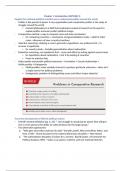
Economic incentives:
Choosing outcomes that improve your (or groups) economic welfare and how those choices are
shaped by markets and other circumstances
Microeconomics
The study of individual incentives
Macroeconomics
The study of aggregate outcomes (inequality, economic growth and development, economic
crisis, inflation and unemployment, and trade and investment)
Nominal GDP (gdp growth)
Gross domestic product measured in currency amount
Does not account for inflation or purchasing power
“Sticker price”
Real GDP (constant GDP)
Measuring changes over time
Adjusts for inflation
Applies for any type of price measure
Purchasing power parity
Measures changes across countries & time
Adjusts for differences in currencies
Consumer price index
GDP
Measures the market value of all finished goods within a country
● Finished good: goods that will not be sold again as part of another good
● Intermediate goods: goods that will be used to make something else that will be sold
● Capital goods: goods that are used to produce other goods but not a part of other goods
Does not include imports or exports
How big an economy is
GDP per capita
GDP/ population
Tells us how wealthy the country is
GDP only measures material values but helps to show development
Faults of GDP
Does not show inequality, the distribution of wealth in a country
, Economic systems
Capitalism:
An economic system in which private property, markets, and firms play an important role.
Three elements of capitalism
● Private property
● Markets
● Firms
Things that capitalism creates
Divisions of labour
The specialization of workers to carry out different jobs
Specialization
This takes place when a country or some other entity produces a more narrow range of goods
and services than it consumes, acquiring the goods and services that it does not produce by
trade
● The gains of specialization and division of labor are increased when individuals are
incentivized to do what they’re best at
● Incentives lead to innovation and new technology
● But also lead to winners and losers creating inequality
Some capitalist country aren't full capitalist, they lack;
● Secure property rights
● Competitive markets (gov intervention or other failures)
● Firms are organized by non-market factors
To secure property rights we need political institutions (democracy)
● They help control who benefits and restrict others
● They also help inequality through non market means
Social welfare
Trade protections
Choosing outcomes that improve your (or groups) economic welfare and how those choices are
shaped by markets and other circumstances
Microeconomics
The study of individual incentives
Macroeconomics
The study of aggregate outcomes (inequality, economic growth and development, economic
crisis, inflation and unemployment, and trade and investment)
Nominal GDP (gdp growth)
Gross domestic product measured in currency amount
Does not account for inflation or purchasing power
“Sticker price”
Real GDP (constant GDP)
Measuring changes over time
Adjusts for inflation
Applies for any type of price measure
Purchasing power parity
Measures changes across countries & time
Adjusts for differences in currencies
Consumer price index
GDP
Measures the market value of all finished goods within a country
● Finished good: goods that will not be sold again as part of another good
● Intermediate goods: goods that will be used to make something else that will be sold
● Capital goods: goods that are used to produce other goods but not a part of other goods
Does not include imports or exports
How big an economy is
GDP per capita
GDP/ population
Tells us how wealthy the country is
GDP only measures material values but helps to show development
Faults of GDP
Does not show inequality, the distribution of wealth in a country
, Economic systems
Capitalism:
An economic system in which private property, markets, and firms play an important role.
Three elements of capitalism
● Private property
● Markets
● Firms
Things that capitalism creates
Divisions of labour
The specialization of workers to carry out different jobs
Specialization
This takes place when a country or some other entity produces a more narrow range of goods
and services than it consumes, acquiring the goods and services that it does not produce by
trade
● The gains of specialization and division of labor are increased when individuals are
incentivized to do what they’re best at
● Incentives lead to innovation and new technology
● But also lead to winners and losers creating inequality
Some capitalist country aren't full capitalist, they lack;
● Secure property rights
● Competitive markets (gov intervention or other failures)
● Firms are organized by non-market factors
To secure property rights we need political institutions (democracy)
● They help control who benefits and restrict others
● They also help inequality through non market means
Social welfare
Trade protections