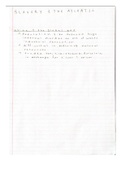
Re Rose
- Transfer of shares to wife before death to avoid inheritance tax — 7 year period
- Courts held that he had done all the required formalities and held it on
constructive trust for her
- Garton (2003) argues that Rose type of cases, the transferor has ‘relinquished
the right to stop the legal transfer, and any attempt to prevent its completion
would therefore have been unconscionable’
Pennington v Waine
- Aunt wanted to gift shares to nephew and make him director of company
- In her will also mentioned shares
- Donor had filled out all the relevant forms, which was similar to Re Rose
- Shares became effective when the aunt signed the documents
- Held by judge at first instance
- Arden LJ dismissed the appeal and upheld first instance
- Would have be unconscionable to deny it
- “EQUITY TEMPERS THE WIND OF THE SHORN LAMB”
- Traditional maxim is that equity will not perfect an imperfect gift
- Arden says despite the fact that there is an incomplete gift here, it was
completed to such an extent that there was no further assistance required by
the donor
- Follows the maxim, what has been done, ought to have been done —
benevolent construction. The aunt held the shares on constructive trust for
her nephew
- Oakley has issues with Arden’s decision and reasoning
- Said that it is a misuse of Lord Goff’s approach in Choithram
- Arden has seized the wrong element of what makes a gift void
- Contradicts all previous authorities
Milroy v Lord
- ‘there is no equity in this court to perfect an imperfect gift’ — per Turner LJ
- Shares in bank = 50
- Intangible property
- Shares for 2 nieces
- One on trust
- One by will
- Given to Lord to be in charge of: didn't do anything and did not register them
properly, therefore they were not constituted
- Therefore was void
, - This decision makes sure that people meet all of the requirements necessary for
it to be void
- There was no self declaration — intention to create a trust is vested in Lord
- Shares were never legally vested in Lord as he did not meet the bank formalities
for transfer
Quistclose
- Commercial case
- Rolls Razor going to make a dividends distribution
- Time progressed this was held to be insufficient liquidity to make dividends
- Got loan from Q
- RR became insolvent
- There was a battle for value
- Waterfall of creditors
- Q argued that they should not have to participate in waterfall hierarchy of
creditors but should be able to establish an equitable interest by virtue of a trust,
to come above the ranking waterfall structure
- Q was not involved in the group of assets as the money loaned was always
segregated for a specific purpose that never happened
- Reverted back to Q by resulting trust
Stack v Dowden
- Equitable maxim: equity follows the law
IRC v Broadway Cottages
- Objects
- Test
- How do you define all objects in fixed trust?
- If you can’t do it, it is void for uncertainty
- Jenkins LJ gave a fixed list
- No divide in equal shares if all are not known
- Clause by the company was too wide
- Aggregate of objects was too wide
- RT back to settlor as equity avoids a vacuum
- Been said that a fixed list is too onerous
Midland Bank v Cooke
- Married couple CICT
- Sole legal owner
- Transfer of shares to wife before death to avoid inheritance tax — 7 year period
- Courts held that he had done all the required formalities and held it on
constructive trust for her
- Garton (2003) argues that Rose type of cases, the transferor has ‘relinquished
the right to stop the legal transfer, and any attempt to prevent its completion
would therefore have been unconscionable’
Pennington v Waine
- Aunt wanted to gift shares to nephew and make him director of company
- In her will also mentioned shares
- Donor had filled out all the relevant forms, which was similar to Re Rose
- Shares became effective when the aunt signed the documents
- Held by judge at first instance
- Arden LJ dismissed the appeal and upheld first instance
- Would have be unconscionable to deny it
- “EQUITY TEMPERS THE WIND OF THE SHORN LAMB”
- Traditional maxim is that equity will not perfect an imperfect gift
- Arden says despite the fact that there is an incomplete gift here, it was
completed to such an extent that there was no further assistance required by
the donor
- Follows the maxim, what has been done, ought to have been done —
benevolent construction. The aunt held the shares on constructive trust for
her nephew
- Oakley has issues with Arden’s decision and reasoning
- Said that it is a misuse of Lord Goff’s approach in Choithram
- Arden has seized the wrong element of what makes a gift void
- Contradicts all previous authorities
Milroy v Lord
- ‘there is no equity in this court to perfect an imperfect gift’ — per Turner LJ
- Shares in bank = 50
- Intangible property
- Shares for 2 nieces
- One on trust
- One by will
- Given to Lord to be in charge of: didn't do anything and did not register them
properly, therefore they were not constituted
- Therefore was void
, - This decision makes sure that people meet all of the requirements necessary for
it to be void
- There was no self declaration — intention to create a trust is vested in Lord
- Shares were never legally vested in Lord as he did not meet the bank formalities
for transfer
Quistclose
- Commercial case
- Rolls Razor going to make a dividends distribution
- Time progressed this was held to be insufficient liquidity to make dividends
- Got loan from Q
- RR became insolvent
- There was a battle for value
- Waterfall of creditors
- Q argued that they should not have to participate in waterfall hierarchy of
creditors but should be able to establish an equitable interest by virtue of a trust,
to come above the ranking waterfall structure
- Q was not involved in the group of assets as the money loaned was always
segregated for a specific purpose that never happened
- Reverted back to Q by resulting trust
Stack v Dowden
- Equitable maxim: equity follows the law
IRC v Broadway Cottages
- Objects
- Test
- How do you define all objects in fixed trust?
- If you can’t do it, it is void for uncertainty
- Jenkins LJ gave a fixed list
- No divide in equal shares if all are not known
- Clause by the company was too wide
- Aggregate of objects was too wide
- RT back to settlor as equity avoids a vacuum
- Been said that a fixed list is too onerous
Midland Bank v Cooke
- Married couple CICT
- Sole legal owner