Meeting 4: experimentation and
feedback
Pre-recorded lecture
Different research approaches
Article: weather can change your mood?
Descriptive research = it describes a relationship between one variable and another variable. For
example weather and mood.
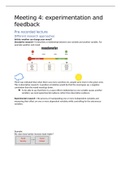
There was indicated that when there was more sunshine etc. people were more in the green zone.
This is descriptive research. A positive correlation would be that the mood goes up, a negative
correlation than the mood would go down.
To be able to say that there is a cause-effect relationship (so one variable causes another
variable), we need experimental evidence rather than descriptive evidence.
Experimental research = the process of manipulating one or more independent variables and
measuring their effect on one or more dependent variables while controlling for the extraneous
variables.
Example:
RQ: does food variety increase food intake?
, There are different types of experimental designs you can apply:
- One shot case study
- One-group pretest-posttest design: only one group, you measure before and after this
group. So, measurement of food intake before ‘treatment’ and after. The difference is the
treatment effect.
Extraneous variables = are undesirable variables that influence the relationship between the
variables that an experimenter is examining. Extraneous variables are there without you being aware
or interested in them. They can add error/noise to your research.
An example of extraneous variables that influence food
intake can be: gender, time of the day etc.
Two ways of dealing with extraneous variables:
- A potentially influential variable is kept the same for all subjects, e.g.
keep for example the time for all participants exact the same time.
feedback
Pre-recorded lecture
Different research approaches
Article: weather can change your mood?
Descriptive research = it describes a relationship between one variable and another variable. For
example weather and mood.
There was indicated that when there was more sunshine etc. people were more in the green zone.
This is descriptive research. A positive correlation would be that the mood goes up, a negative
correlation than the mood would go down.
To be able to say that there is a cause-effect relationship (so one variable causes another
variable), we need experimental evidence rather than descriptive evidence.
Experimental research = the process of manipulating one or more independent variables and
measuring their effect on one or more dependent variables while controlling for the extraneous
variables.
Example:
RQ: does food variety increase food intake?
, There are different types of experimental designs you can apply:
- One shot case study
- One-group pretest-posttest design: only one group, you measure before and after this
group. So, measurement of food intake before ‘treatment’ and after. The difference is the
treatment effect.
Extraneous variables = are undesirable variables that influence the relationship between the
variables that an experimenter is examining. Extraneous variables are there without you being aware
or interested in them. They can add error/noise to your research.
An example of extraneous variables that influence food
intake can be: gender, time of the day etc.
Two ways of dealing with extraneous variables:
- A potentially influential variable is kept the same for all subjects, e.g.
keep for example the time for all participants exact the same time.