NSG 6020 Cardiovascular Disorders
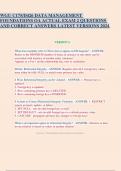
NSG 6020 Cardiovascular Disorders 1. In order to bring the ventricular apex closer to the chest wall when assessing the point of maximal impulse (PMI), ask the patient to: turn to the left side 2. The tonsillar, submandibular, and submental nodes drain the lymphatic fluid from portions of the: mouth, throat, and face 3. When screening a patient for peripheral arterial disease (PAD), one risk factor would include a history of: smoking 4. Heart sounds produced by turbulence due to a temporary increase in blood flow in predisposing conditions, such as hyperthyroidism, is considered: a physiologic murmur 5. A patient complains of a tight, bursting pain in the calf that increases with walking. Elevation of the leg sometimes relieves the pain. These symptoms may be consistent with: deep venous thrombosis 6. On assessment, which one of the following symptoms would be noted as a compensatory response to chronic hypoxia? Hematocrit (HCT) of 55% 7. A patient describes chest pain as persistent, sharp, and knife-like. These symptoms are more characteristic of: pericarditis 8. The horizontal superficial inguinal lymph nodes are located in the anterior thigh below the inguinal ligament and drain lymphatic fluid from all of these areas except: testes 9. When assessing the heart rate of a healthy 13-month-old child, which one of the following sites is the most appropriate for this child? Apical pulse between the 3rd and 4th intercostal space in the left midclavicular line 10. To assess the murmur of aortic insufficiency, position the patient: sitting leaning forward
Written for
- Institution
-
Walden University
Document information
- Uploaded on
- October 25, 2021
- Number of pages
- 12
- Written in
- 2021/2022
- Type
- Exam (elaborations)
- Contains
- Questions & answers
Subjects
- submandibular
- and su
-
1 in order to bring the ventricular apex closer to the chest wall when assessing the point of maximal impulse pmi
-
ask the patient to turn to the left side 2 the tonsillar